QUESTION IMAGE
Question
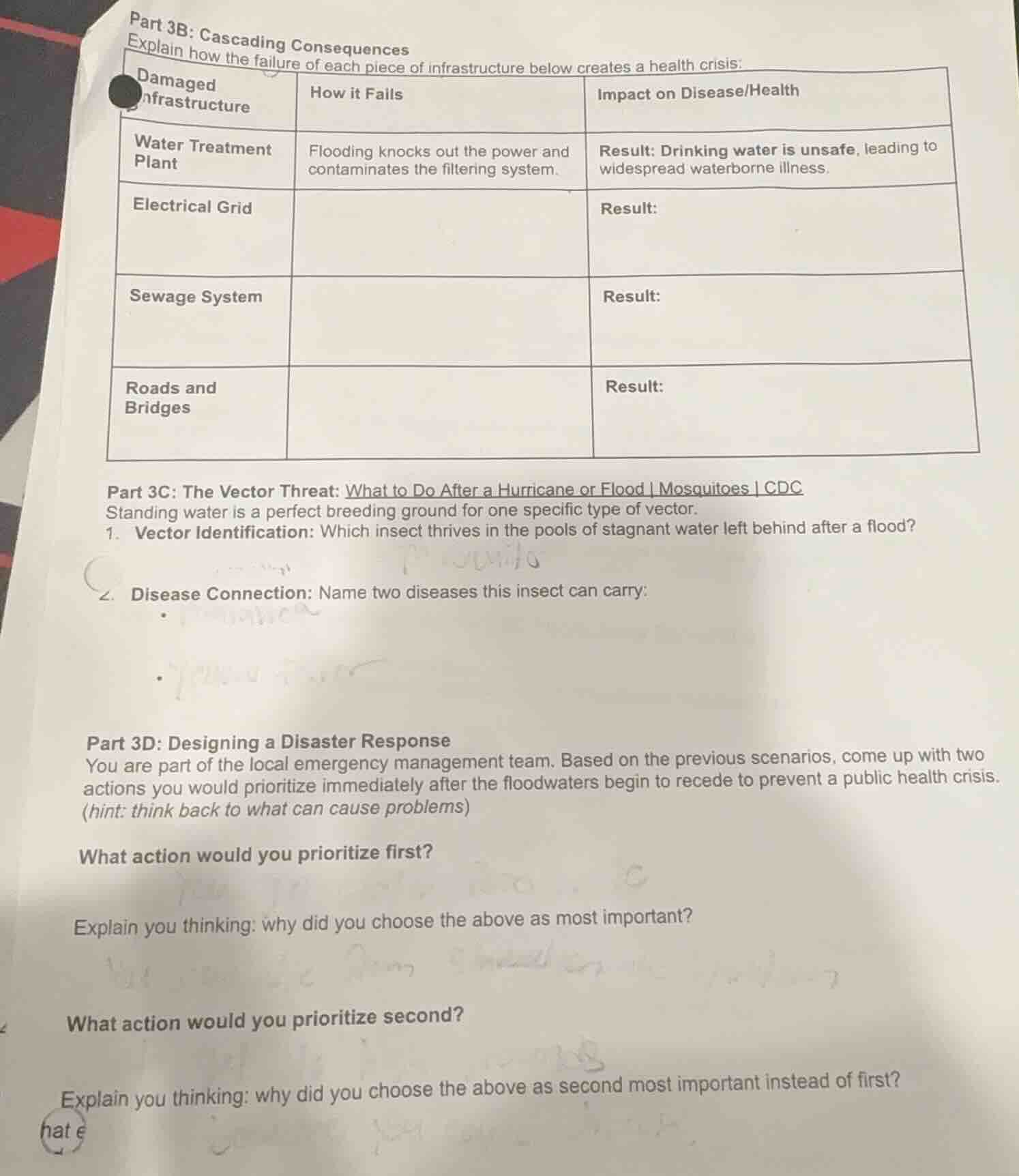
part 3b: cascading consequences
explain how the failure of each piece of infrastructure below creates a health crisis:
| damaged infrastructure | how it fails | impact on disease/health |
|---|---|---|
| electrical grid | result: | |
| sewage system | result: | |
| roads and bridges | result: |
part 3c: the vector threat: what to do after a hurricane or flood | mosquitoes | cdc
standing water is a perfect breeding ground for one specific type of vector.
- vector identification: which insect thrives in the pools of stagnant water left behind after a flood?
- disease connection: name two diseases this insect can carry:
part 3d: designing a disaster response
you are part of the local emergency management team. based on the previous scenarios, come up with two actions you would prioritize immediately after the floodwaters begin to recede to prevent a public health crisis. (hint: think back to what can cause problems)
what action would you prioritize first?
explain you thinking: why did you choose the above as most important?
what action would you prioritize second?
explain you thinking: why did you choose the above as second most important instead of first?
Part 3B: Cascading Consequences
- Electrical Grid: Flooding can short-circuit power lines and disable power stations, cutting power to critical health infrastructure. This loss of power removes access to medical equipment, refrigeration for medications/vaccines, and safe lighting for sanitation, increasing risk of illness, preventable deaths, and spread of disease.
- Sewage System: Flooding overwhelms sewage lines, causing raw sewage to leak into standing water and contaminate drinking water sources. This leads to widespread waterborne illnesses like cholera, dysentery, and giardiasis.
- Roads and Bridges: Flooding washes out or damages roads/bridges, blocking access to hospitals, clinics, and clean water/food supplies. This delays medical care for injured or ill people, and prevents distribution of public health resources, worsening health outcomes.
Part 3C: The Vector Threat
- The insect that thrives in stagnant floodwater is the mosquito.
- Mosquitoes carry diseases like dengue fever and Zika virus (alternatives: West Nile virus, malaria).
Part 3D: Designing a Disaster Response
- First priority action: Deploy teams to assess and repair water treatment and sewage systems.
- Explanation: Unsafe drinking water and sewage contamination cause immediate, widespread waterborne illness, which is the fastest-growing public health risk post-flood. Fixing these systems stops the source of disease transmission at its root.
- Second priority action: Conduct widespread stagnant water removal and mosquito control (e.g., larvicide treatment).
- Explanation: While vector-borne diseases take longer to spread than waterborne illnesses, they become a major long-term risk. Addressing this after securing safe water ensures the most immediate health crisis is contained first, then prevents a secondary outbreak.

Snap & solve any problem in the app
Get step-by-step solutions on Sovi AI
Photo-based solutions with guided steps
Explore more problems and detailed explanations
Part 3B
| Damaged Infrastructure | How it Fails | Impact on Disease/Health |
|---|---|---|
| Electrical Grid | Flooding short-circuits lines, disables power stations. | Result: Loss of power to medical facilities, refrigeration for meds, and sanitation tools; increases preventable illness/death. |
| Sewage System | Flooding overwhelms lines, raw sewage leaks into water sources. | Result: Widespread waterborne illnesses (cholera, dysentery, giardiasis). |
| Roads and Bridges | Flooding washes out/damages structures. | Result: Blocks access to medical care and supplies; delays treatment and resource distribution. |
Part 3C
- Mosquitoes
- - Dengue fever
- Zika virus
Part 3D
- First priority action: Assess and repair water treatment/sewage systems
- Explanation: Stops immediate, widespread waterborne disease.
- Second priority action: Stagnant water removal + mosquito control
- Explanation: Prevents secondary vector-borne outbreaks after addressing the most urgent risk.