QUESTION IMAGE
Question
part c
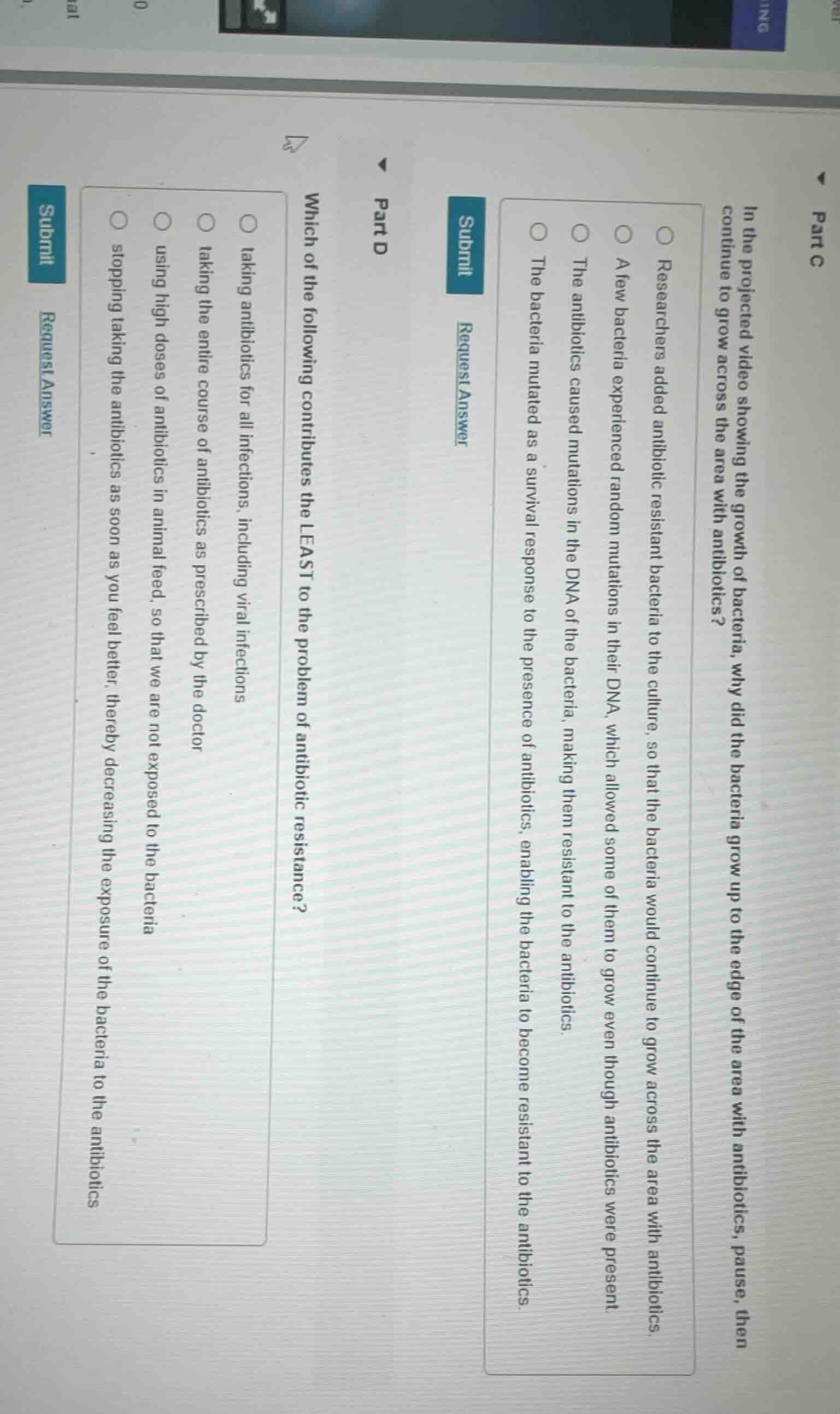
in the projected video showing the growth of bacteria, why did the bacteria grow up to the edge of the area with antibiotics, pause, then continue to grow across the area with antibiotics?
researchers added antibiotic resistant bacteria to the culture, so that the bacteria would continue to grow across the area with antibiotics.
a few bacteria experienced random mutations in their dna, which allowed some of them to grow even though antibiotics were present.
the antibiotics caused mutations in the dna of the bacteria, making them resistant to the antibiotics.
the bacteria mutated as a survival response to the presence of antibiotics, enabling the bacteria to become resistant to the antibiotics.
submit request answer
part d
which of the following contributes the least to the problem of antibiotic resistance?
taking antibiotics for all infections, including viral infections
taking the entire course of antibiotics as prescribed by the doctor
using high doses of antibiotics in animal feed, so that we are not exposed to the bacteria
stopping taking the antibiotics as soon as you feel better, thereby decreasing the exposure of the bacteria to the antibiotics
submit request answer
Part C:
Bacteria develop resistance through pre-existing random mutations. When antibiotics are present, only bacteria with resistance mutations survive, reproduce, and spread. This matches the pattern of growth pause (non-resistant bacteria die) then growth (resistant bacteria multiply across the antibiotic area).
Part D:
Taking the full prescribed course of antibiotics ensures all targeted bacteria are eliminated, reducing the chance of resistant bacteria surviving and multiplying. The other options either overuse antibiotics, use them inappropriately, or stop treatment early, all of which promote resistance.

Snap & solve any problem in the app
Get step-by-step solutions on Sovi AI
Photo-based solutions with guided steps
Explore more problems and detailed explanations
Part C:
A few bacteria experienced random mutations in their DNA, which allowed some of them to grow even though antibiotics were present.
Part D:
taking the entire course of antibiotics as prescribed by the doctor