QUESTION IMAGE
Question
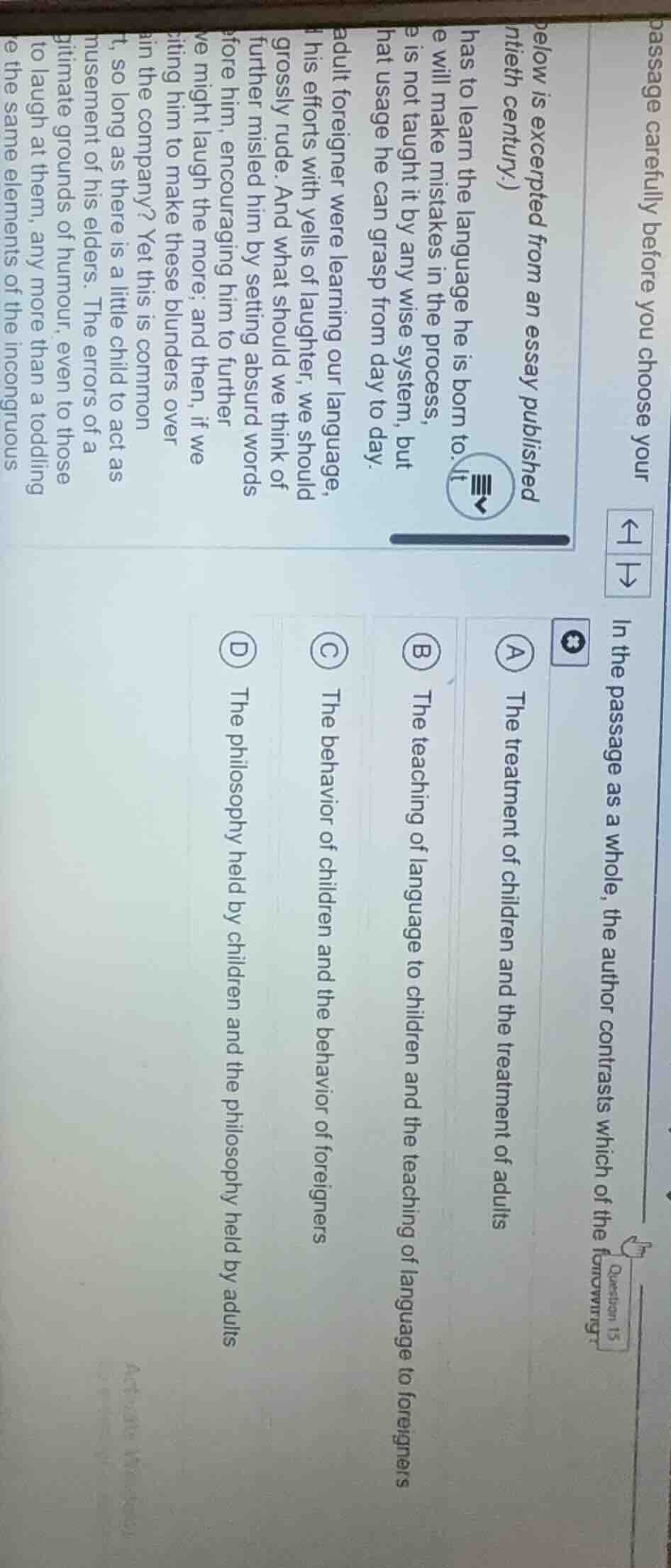
passage carefully before you choose your below is excerpted from an essay published entieth century)
has to learn the language he is born to. it e will make mistakes in the process,
e is not taught it by any wise system, but hat usage he can grasp from day to day.
adult foreigner were learning our language, his efforts with yells of laughter, we should grossly rude. and what should we think of further misled him by setting absurd words efore him, encouraging him to further
e might laugh the more; and then, if we cting him to make these blunders over ain the company? yet this is common
, so long as there is a little child to act as musement of his elders. the errors of a ultimate grounds of humour, even to those
to laugh at them, any more than a toddling
e the same elements of the incongruous
in the passage as a whole, the author contrasts which of the following?
a the treatment of children and the treatment of adults
b the teaching of language to children and the teaching of language to foreigners
c the behavior of children and the behavior of foreigners
d the philosophy held by children and the philosophy held by adults
The passage first notes that children's language mistakes are seen as a legitimate source of humor, while an adult foreigner's language errors are mocked in a rude, discouraging way. It draws a contrast between how children (learning their native language naturally) and adult foreigners (learning a new language) are treated when making language errors, which aligns with comparing the behavior toward these two groups.

Snap & solve any problem in the app
Get step-by-step solutions on Sovi AI
Photo-based solutions with guided steps
Explore more problems and detailed explanations
C. The behavior of children and the behavior of foreigners