QUESTION IMAGE
Question
4* plastic surgery
a. gautam
- dramatic media portrayals often offer glimpses of science that are hard to believe. this applies to the medical field of plastic surgery as well. many myths surround this specialty, and people know few facts about it. plastic surgery is a centuries-old medical specialty like many specialties otherwise taken seriously by people. the surgeons who perform these procedures are highly trained experts.
- the word \plastic\ comes from greek plastikē meaning
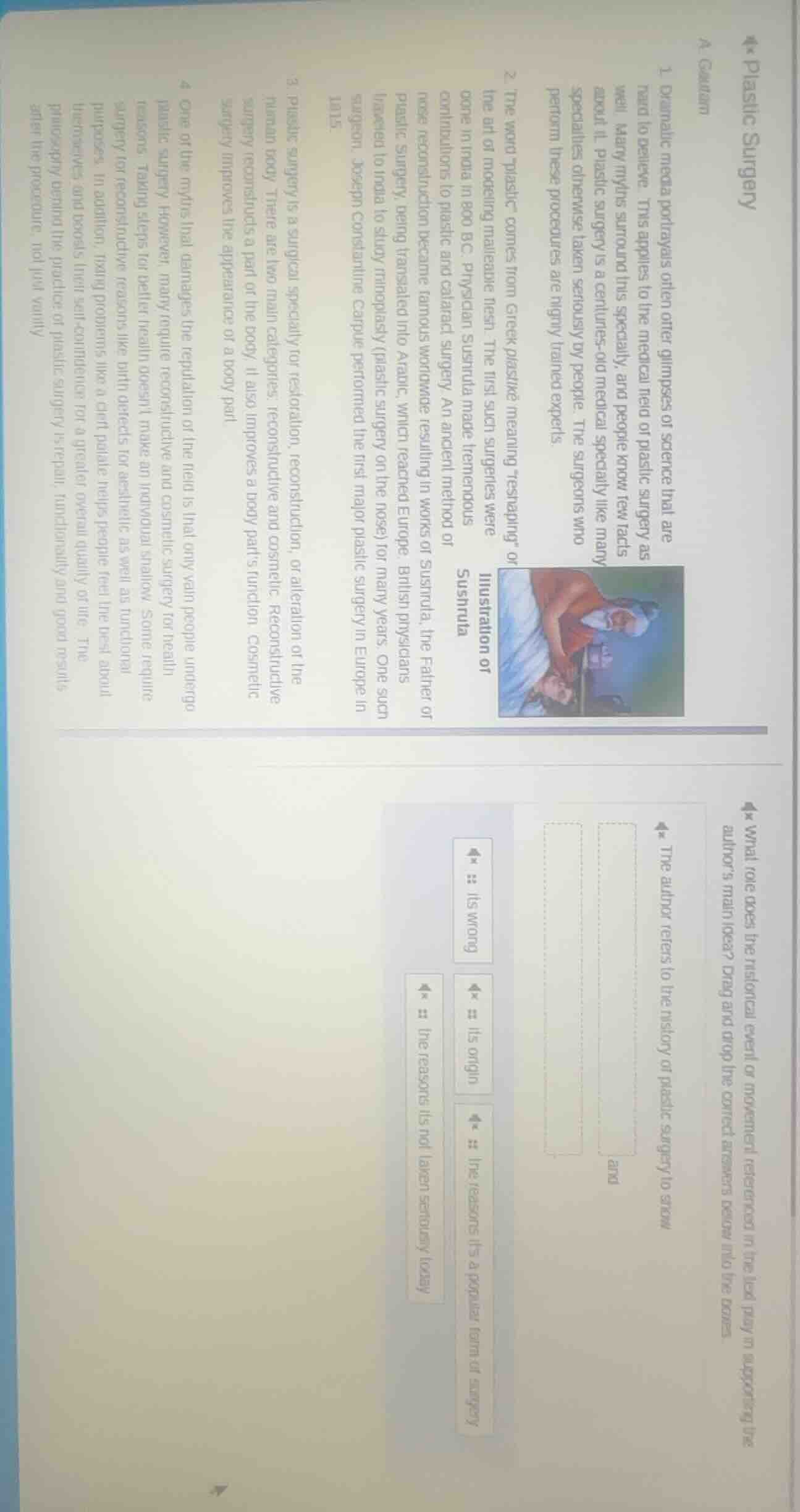
eshaping\ or the art of modeling malleable flesh. the first such surgeries were done in india in 800 b.c. physician sushruta made tremendous contributions to plastic and cataract surgery. an ancient method of nose reconstruction became famous worldwide resulting in works of sushruta, the father of plastic surgery, being translated into arabic, which reached europe. british physicians traveled to india to study rhinoplasty (plastic surgery on the nose) for many years. one such surgeon, joseph constantine carpue performed the first major plastic surgery in europe in 1815.
- plastic surgery is a surgical specialty for restoration, reconstruction, or alteration of the human body. there are two main categories: reconstructive and cosmetic. reconstructive surgery reconstructs a part of the body. it also improves a body parts function. cosmetic surgery improves the appearance of a body part.
- one of the myths that damages the reputation of the field is that only vain people undergo plastic surgery. however, many require reconstructive and cosmetic surgery for health reasons. taking steps for better health doesnt make an individual shallow. some require surgery for reconstructive reasons like birth defects for aesthetic as well as functional purposes. in addition, fixing problems like a cleft palate helps people feel the best about themselves and boosts self-confidence for a greater overall quality of life. the philosophy behind the practice of plastic surgery is repair, functionality and good results after the procedure, not just vanity
4* what role does the historical event or movement referenced in the text play in supporting the authors main idea? drag and drop the correct answers below into the boxes.
4* the author refers to the history of plastic surgery to show _____________ and _____________
4* :: its origin
4* :: its wrong
4* :: the reasons its a popular form of surgery
4* :: the reasons its not taken seriously today
- The author references the long history of plastic surgery (starting in 800 BC with Sushruta, and early European surgery in 1815) to counter the myth that it is not a serious, established medical field, showing it has deep, respected roots.
- The historical events/movements support the author's main idea by first establishing the ancient origin of plastic surgery, then addressing the myth that it is not taken seriously today by showing it was studied by respected physicians and performed by trained experts historically.

Snap & solve any problem in the app
Get step-by-step solutions on Sovi AI
Photo-based solutions with guided steps
Explore more problems and detailed explanations
- First blank: the reasons it's not taken seriously today
Second blank: its origin
- The historical references play the following roles:
- Its origin: Establishes plastic surgery as an ancient, established medical practice with serious, early contributions.
- The reasons it's not taken seriously today: Counters the myth that it is not a serious specialty by showing it was studied by respected physicians and performed by highly trained experts throughout history.