QUESTION IMAGE
Question
question 1 of 12
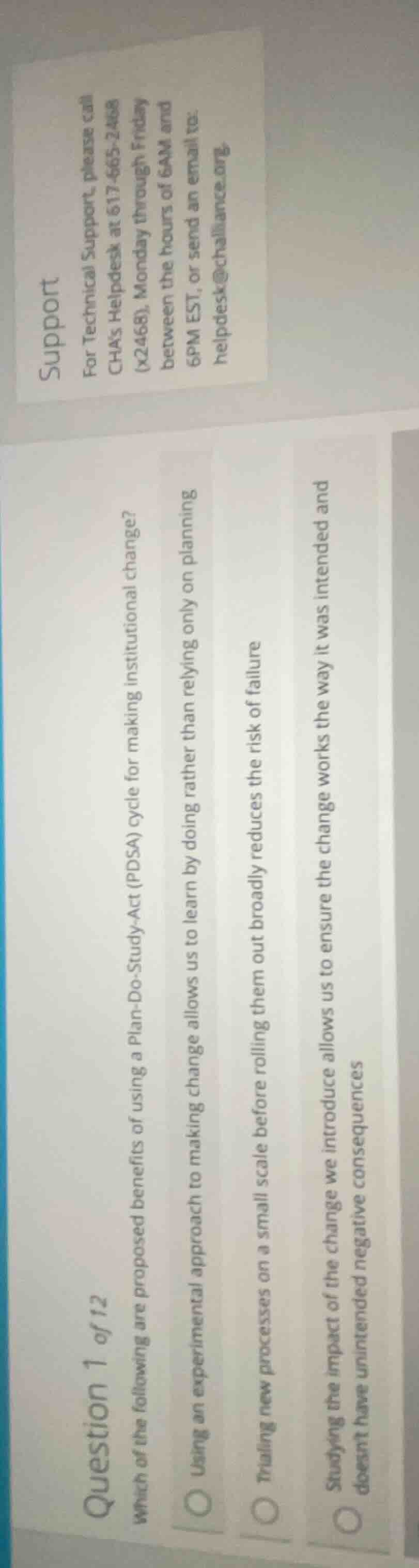
which of the following proposed benefits of using a plan - do - study - act (pdsa) cycle for making institutional change?
- using an experimental approach to making change allows us to learn by doing rather than relying only on planning
- trying new processes on a small scale before rolling them out broadly reduces the risk of failure
- studying the impact of the change we introduce allows us to ensure the change works the way it was intended and doesnt have unintended negative consequences
support
for technical support please call
chas helpdesk at 617 - 665 - 2468 (x2468), monday through friday
between the hours of 6am and
6pm est, or send an email to:
helpdesk@challiance.org
The PDSA (Plan - Do - Study - Act) cycle is a method for quality improvement and change management. When we use it for institutional change, trialing new processes on a small scale before a full roll - out is a key benefit. This is because by testing on a small scale, we can identify potential issues and areas of failure early. If we find problems during the small - scale trial, we can address them before implementing the change more broadly, thus reducing the risk of failure when we roll out the change on a larger scale. The other options: the first option is incorrect as PDSA involves both planning and doing (and studying and acting), not just doing instead of planning. The third option is incorrect because the PDSA cycle is about learning from the change (including unintended consequences) during the 'Study' phase, not ensuring there are no unintended consequences.

Snap & solve any problem in the app
Get step-by-step solutions on Sovi AI
Photo-based solutions with guided steps
Explore more problems and detailed explanations
Trialing new processes on a small scale before rolling them out broadly reduces the risk of failure