QUESTION IMAGE
Question
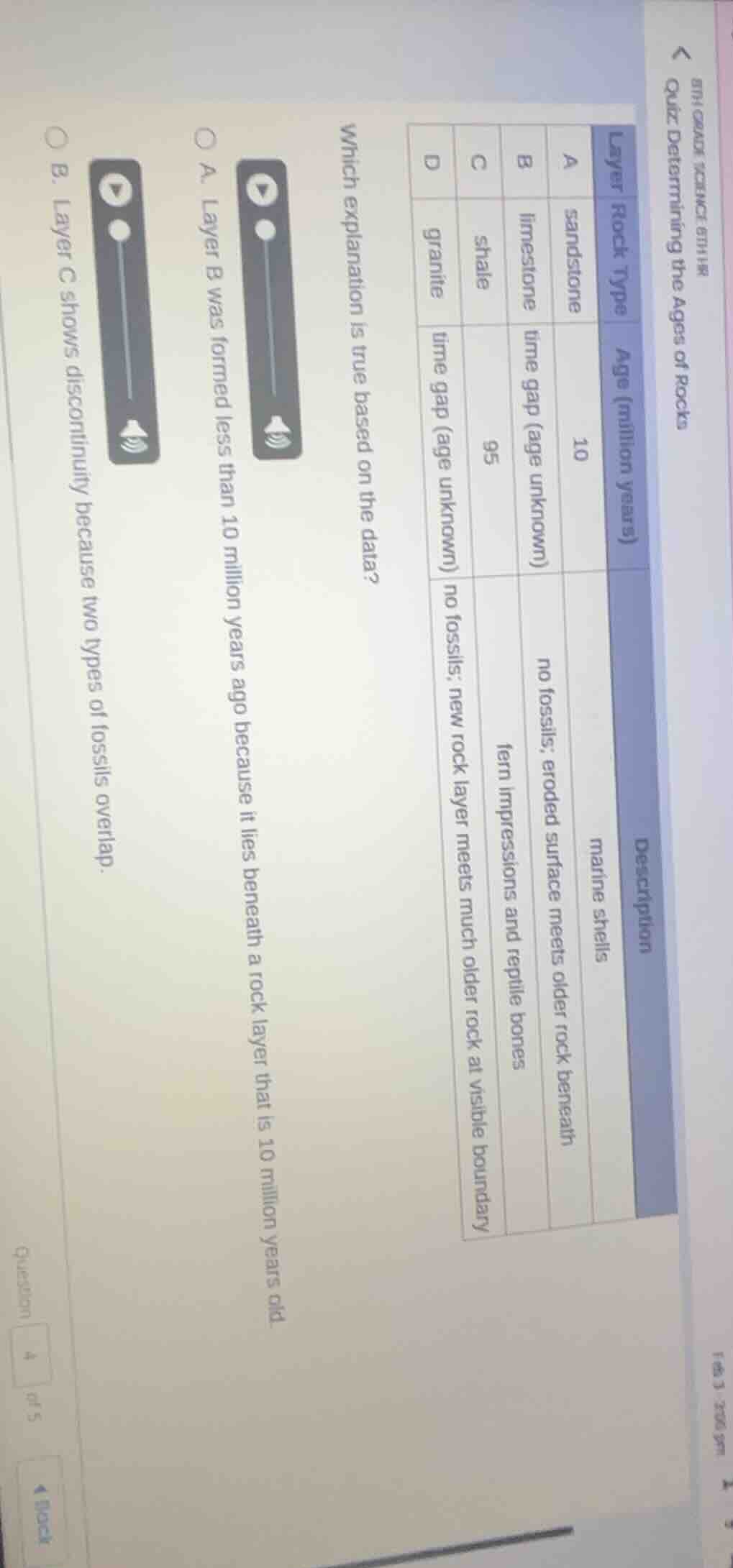
quiz determining the ages of rocks 8th grade science 6thhr layer rock type age (million years) description a sandstone 10 marine shells b limestone time gap (age unknown) no fossils; eroded surface meets older rock beneath c shale 95 fern impressions and reptile bones d granite time gap (age unknown) no fossils; new rock layer meets much older rock at visible boundary which explanation is true based on the data? a. layer b was formed less than 10 million years ago because it lies beneath a rock layer that is 10 million years old. b. layer c shows discontinuity because two types of fossils overlap.
First, analyze each option:
- For Option A: Layer B has an unknown age (time gap) and lies above Layer A (10 million years old). There is no data to confirm it is less than 10 million years old; in fact, rock layers are typically older as you go deeper, so this is false.
- For Option B: Layer C has fern and reptile fossils, with no indication of overlapping fossil types or a discontinuity from that cause. Discontinuity would relate to erosion/time gaps, not overlapping fossils, so this is false.
(Note: Assuming these are the only options provided, if there were correct options not fully visible, based on the table, the valid true statement would relate to Layer B or D representing an unconformity (time gap/erosion), but from the given options, neither A nor B is correct. However, based on the visible content, we evaluate the given choices.)

Snap & solve any problem in the app
Get step-by-step solutions on Sovi AI
Photo-based solutions with guided steps
Explore more problems and detailed explanations
Neither Option A nor Option B is correct based on the provided rock layer data.
- A. Layer B was formed less than 10 million years ago because it lies beneath a rock layer that is 10 million years old. (Incorrect: Rock layers are older deeper; B's age is unknown)
- B. Layer C shows discontinuity because two types of fossils overlap. (Incorrect: C has consistent fossils, discontinuity is not from overlapping fossils)