QUESTION IMAGE
Question
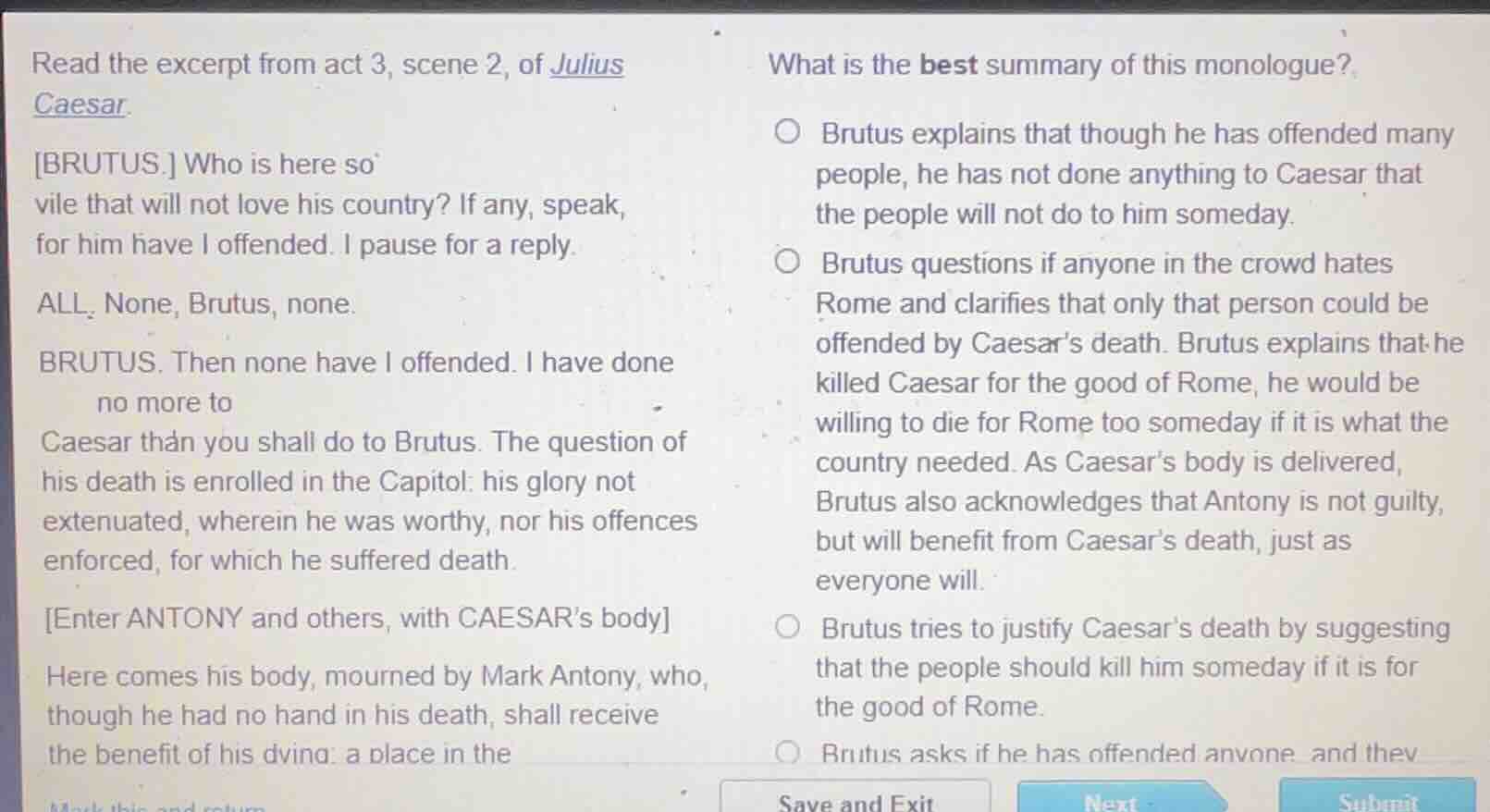
read the excerpt from act 3, scene 2, of julius caesar.
brutus. who is here so vile that will not love his country? if any, speak, for him have i offended. i pause for a reply.
all. none, brutus, none.
brutus. then none have i offended. i have done no more to
caesar than you shall do to brutus. the question of his death is enrolled in the capitol: his glory not extenuated, wherein he was worthy, nor his offences enforced, for which he suffered death.
enter antony and others, with caesar’s body
here comes his body, mourned by mark antony, who, though he had no hand in his death, shall receive the benefit of his dying: a place in the
what is the best summary of this monologue?
○ brutus explains that though he has offended many people, he has not done anything to caesar that the people will not do to him someday.
○ brutus questions if anyone in the crowd hates rome and clarifies that only that person could be offended by caesar’s death. brutus explains that he killed caesar for the good of rome, he would be willing to die for rome too someday if it is what the country needed. as caesar’s body is delivered, brutus also acknowledges that antony is not guilty, but will benefit from caesar’s death, just as everyone will.
○ brutus tries to justify caesar’s death by suggesting that the people should kill him someday if it is for the good of rome.
○ brutus asks if he has offended anyone and they
Brutus first asks if anyone present values Rome less than personal loyalty, clarifying only such a person could be offended by Caesar's death. He states he killed Caesar for Rome's good and would accept the same fate for Rome. When Antony enters with Caesar's body, Brutus notes Antony had no role in the death but will benefit from it, just as all will. This matches the second option, while others omit key details or misstate his message.

Snap & solve any problem in the app
Get step-by-step solutions on Sovi AI
Photo-based solutions with guided steps
Explore more problems and detailed explanations
Brutus questions if anyone in the crowd hates Rome and clarifies that only that person could be offended by Caesar's death. Brutus explains that he killed Caesar for the good of Rome, he would be willing to die for Rome too someday if it is what the country needed. As Caesar's body is delivered, Brutus also acknowledges that Antony is not guilty, but will benefit from Caesar's death, just as everyone will.