QUESTION IMAGE
Question
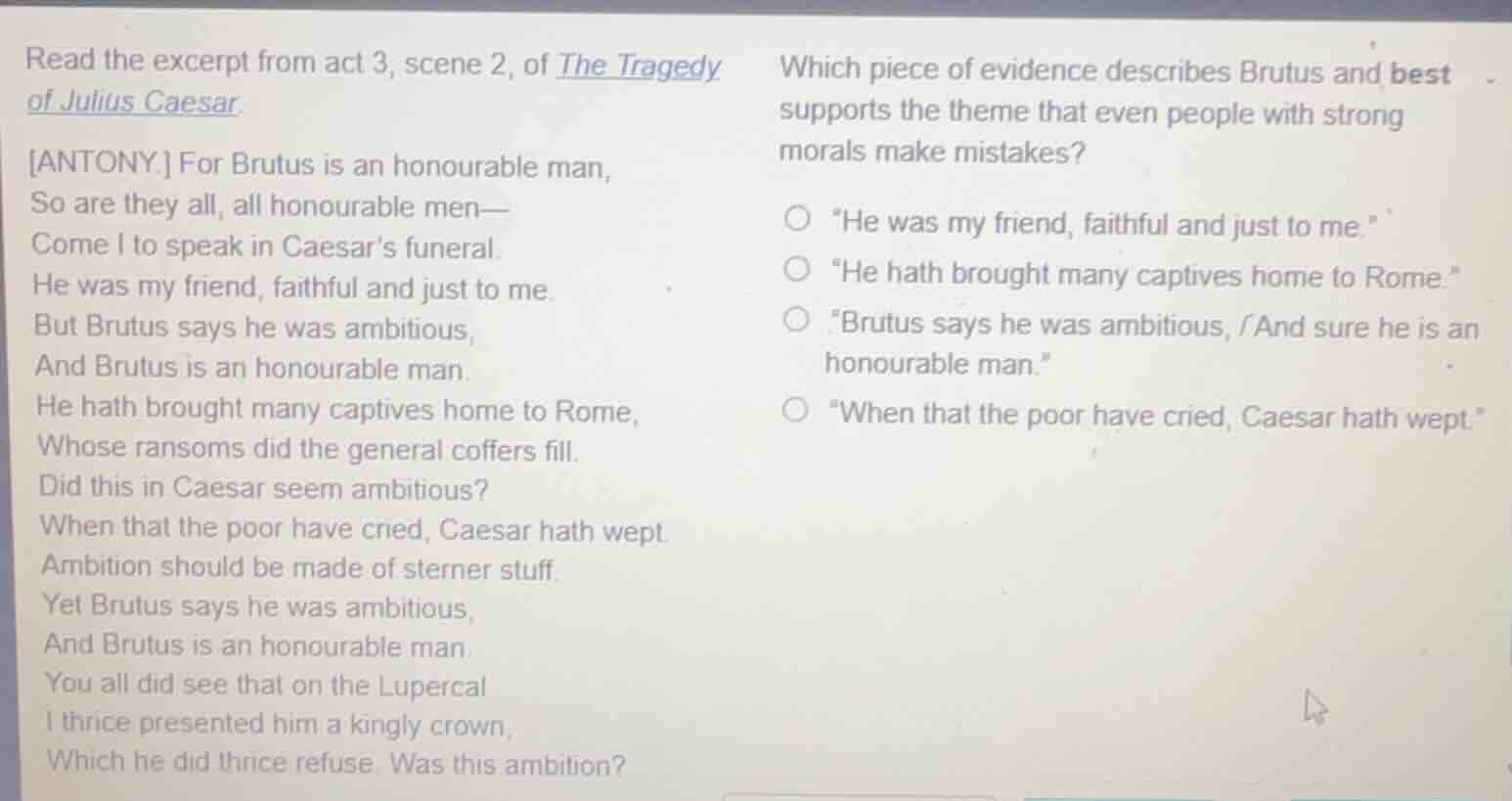
read the excerpt from act 3, scene 2, of the tragedy of julius caesar. antony. for brutus is an honourable man, so are they all, all honourable men— come i to speak in caesar’s funeral. he was my friend, faithful and just to me. but brutus says he was ambitious, and brutus is an honourable man. he hath brought many captives home to rome, whose ransoms did the general coffers fill. did this in caesar seem ambitious? when that the poor have cried, caesar hath wept. ambition should be made of sterner stuff. yet brutus says he was ambitious, and brutus is an honourable man. you all did see that on the lupercal i thrice presented him a kingly crown, which he did thrice refuse. was this ambition? which piece of evidence describes brutus and best supports the theme that even people with strong morals make mistakes? “he was my friend, faithful and just to me.” “he hath brought many captives home to rome.” “brutus says he was ambitious, / and sure he is an honourable man.” “when that the poor have cried, caesar hath wept.”
The question requires evidence that shows Brutus (a man framed as honourable/moral) made a mistake. The option "Brutus says he was ambitious, /And sure he is an honourable man." pairs Brutus' claim that Caesar was ambitious with Antony's sarcastic repetition of Brutus' honour, while Antony's other points prove Caesar was not ambitious. This reveals Brutus' moral error in judging Caesar as ambitious. The other options only describe Caesar's positive traits or Antony's view of Caesar, not Brutus' mistake.

Snap & solve any problem in the app
Get step-by-step solutions on Sovi AI
Photo-based solutions with guided steps
Explore more problems and detailed explanations
"Brutus says he was ambitious, /And sure he is an honourable man."