QUESTION IMAGE
Question
read the excerpt from the interview with e.y. (yip) harburg.
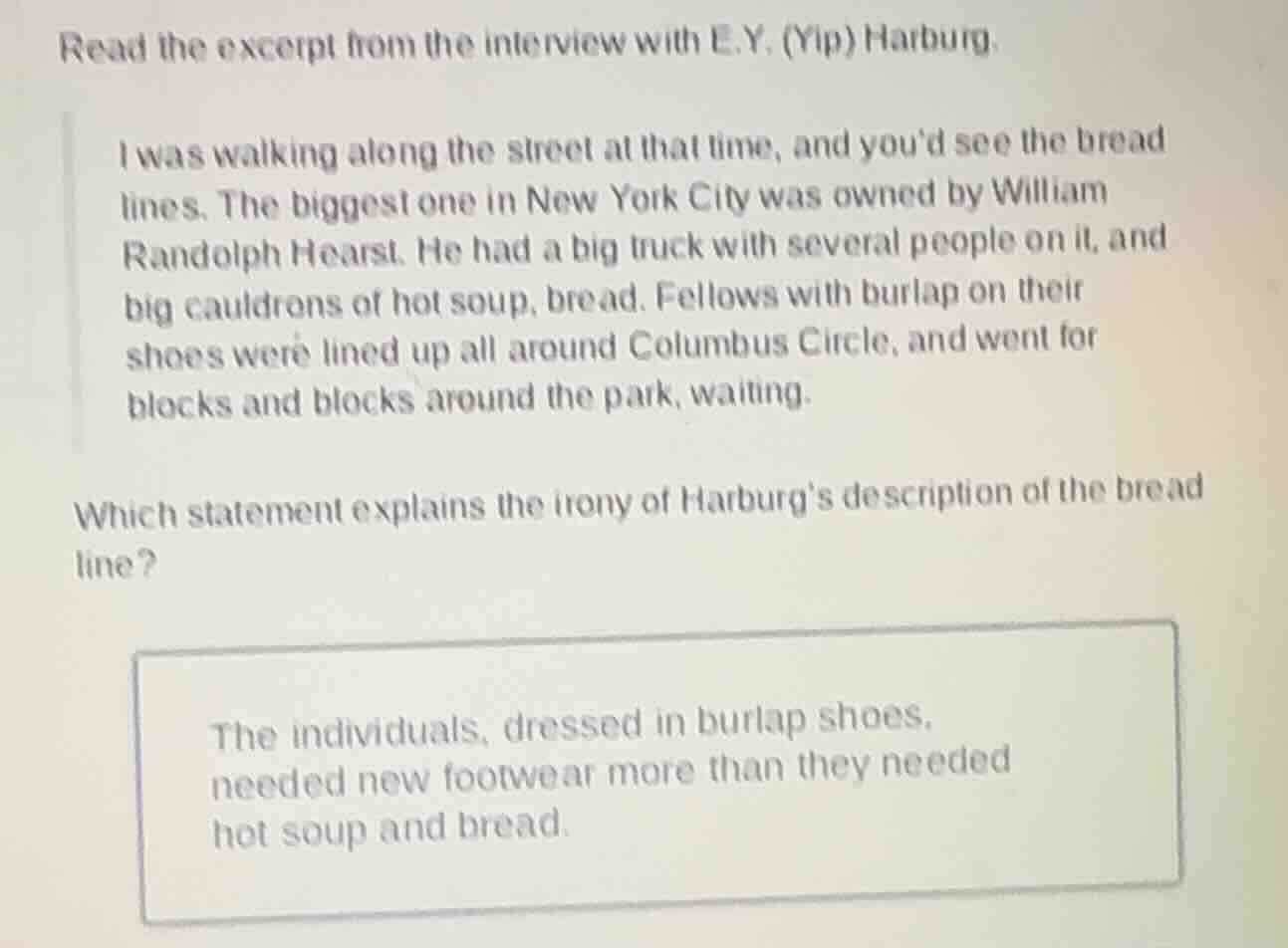
i was walking along the street at that time, and youd see the bread lines. the biggest one in new york city was owned by william randolph hearst. he had a big truck with several people on it, and big cauldrons of hot soup, bread. fellows with burlap on their shoes were lined up all around columbus circle, and went for blocks and blocks around the park, waiting.
which statement explains the irony of harburgs description of the bread line?
the individuals, dressed in burlap shoes, needed new footwear more than they needed hot soup and bread.
To solve this, we analyze the irony in Harburg’s description:
The bread line is for food (soup, bread), but the people have burlap on their shoes—implying they lack proper footwear. The irony is that in a situation centered on food aid, their unmet need for basic footwear (more urgent for survival/dignity than soup/bread? No—wait, no, the key is: The bread line is run by Hearst (a wealthy media mogul) to provide food, but the people’s shoes (a basic necessity) are so inadequate (burlap) that their need for footwear is as critical as (or more visible than) their need for food. The given option claims they “needed new footwear more than they needed hot soup and bread”—this explains the irony: the context is a bread line (for food), but the people’s most striking visible need is for shoes, highlighting a contradiction between the aid provided (food) and the equally pressing need (footwear).

Snap & solve any problem in the app
Get step-by-step solutions on Sovi AI
Photo-based solutions with guided steps
Explore more problems and detailed explanations
The individuals, dressed in burlap shoes, needed new footwear more than they needed hot soup and bread.