QUESTION IMAGE
Question
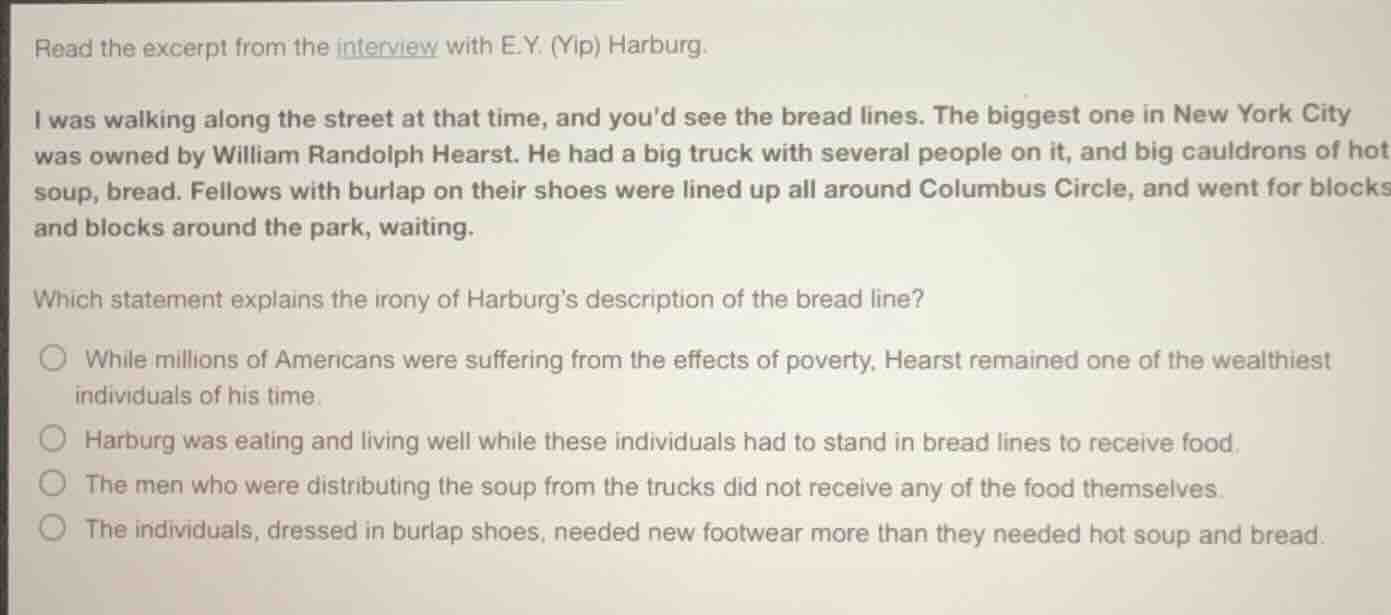
read the excerpt from the interview with e.y. (yip) harburg.
i was walking along the street at that time, and youd see the bread lines. the biggest one in new york city was owned by william randolph hearst. he had a big truck with several people on it, and big cauldrons of hot soup, bread. fellows with burlap on their shoes were lined up all around columbus circle, and went for blocks and blocks around the park, waiting.
which statement explains the irony of harburg’s description of the bread line?
○ while millions of americans were suffering from the effects of poverty, hearst remained one of the wealthiest individuals of his time.
○ harburg was eating and living well while these individuals had to stand in bread lines to receive food.
○ the men who were distributing the soup from the trucks did not receive any of the food themselves.
○ the individuals, dressed in burlap shoes, needed new footwear more than they needed hot soup and bread.
To determine the irony, we analyze each option:
- Option 1: The bread line is owned by Hearst, a wealthy person, while many Americans are in poverty. This contrast (wealthy owning a bread line for the poor) is ironic.
- Option 2: The excerpt doesn't mention Harburg's living conditions, so this is not supported.
- Option 3: There's no info about the distributors not getting food, so this is irrelevant.
- Option 4: The focus is on the bread line, not the need for footwear over food, so this misses the irony of the bread line's ownership/context.

Snap & solve any problem in the app
Get step-by-step solutions on Sovi AI
Photo-based solutions with guided steps
Explore more problems and detailed explanations
A. While millions of Americans were suffering from the effects of poverty, Hearst remained one of the wealthiest individuals of his time.