QUESTION IMAGE
Question
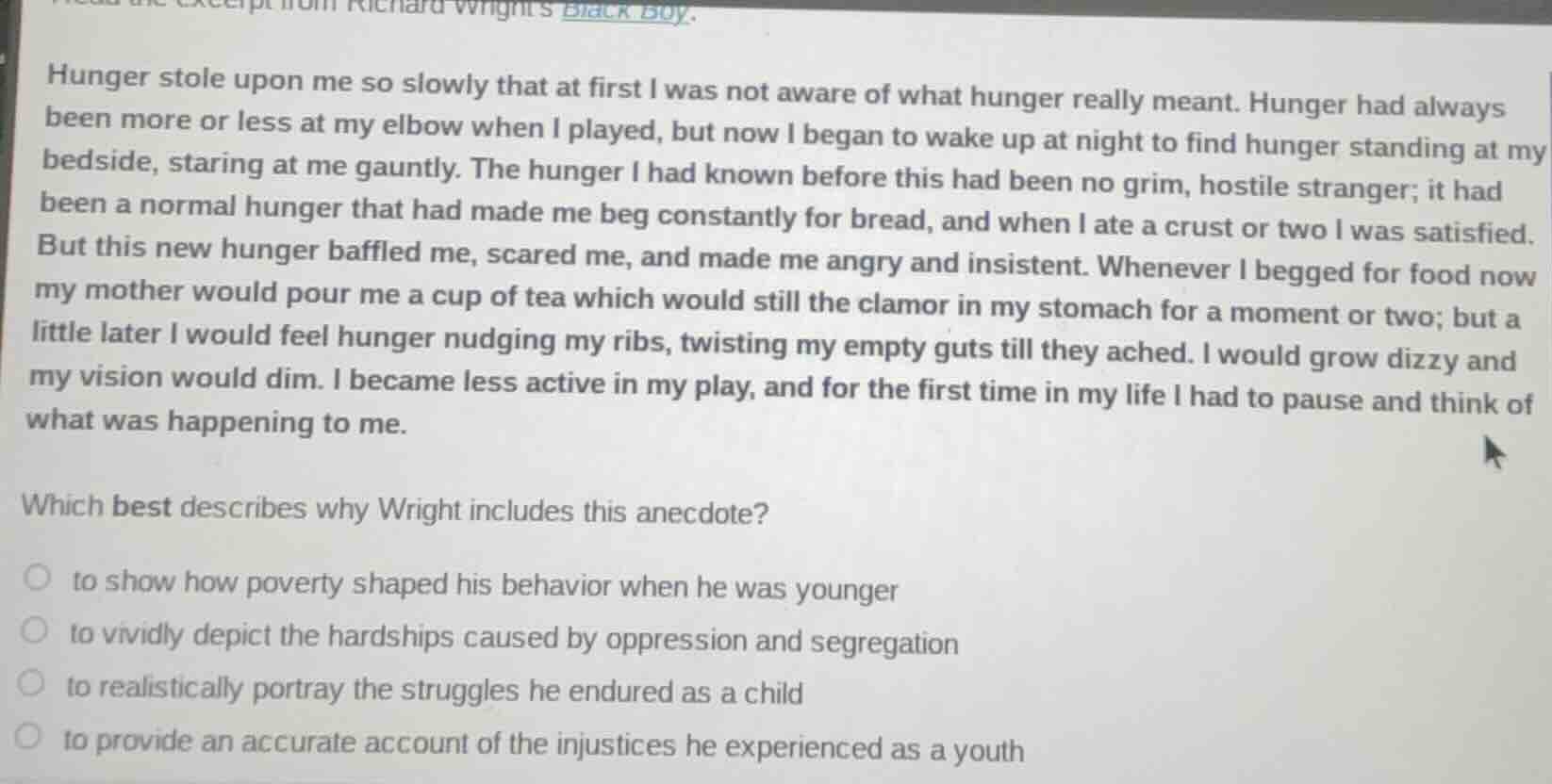
read the excerpt from richard wrights black boy. hunger stole upon me so slowly that at first i was not aware of what hunger really meant. hunger had always been more or less at my elbow when i played, but now i began to wake up at night to find hunger standing at my bedside, staring at me gauntly. the hunger i had known before this had been no grim, hostile stranger; it had been a normal hunger that had made me beg constantly for bread, and when i ate a crust or two i was satisfied. but this new hunger baffled me, scared me, and made me angry and insistent. whenever i begged for food now my mother would pour me a cup of tea which would still the clamor in my stomach for a moment or two; but a little later i would feel hunger nudging my ribs, twisting my empty guts till they ached. i would grow dizzy and my vision would dim. i became less active in my play, and for the first time in my life i had to pause and think of what was happening to me. which best describes why wright includes this anecdote?
- to show how poverty shaped his behavior when he was younger
- to vividly depict the hardships caused by oppression and segregation
- to realistically portray the struggles he endured as a child
- to provide an accurate account of the injustices he experienced as a youth
The anecdote focuses on the intense, physical experience of hunger Wright faced as a child, detailing how it altered his daily life and made him confront his suffering. It centers on the personal, day-to-day struggles of his childhood rather than broader systemic oppression/injustice or just behavioral changes.

Snap & solve any problem in the app
Get step-by-step solutions on Sovi AI
Photo-based solutions with guided steps
Explore more problems and detailed explanations
to realistically portray the struggles he endured as a child