QUESTION IMAGE
Question
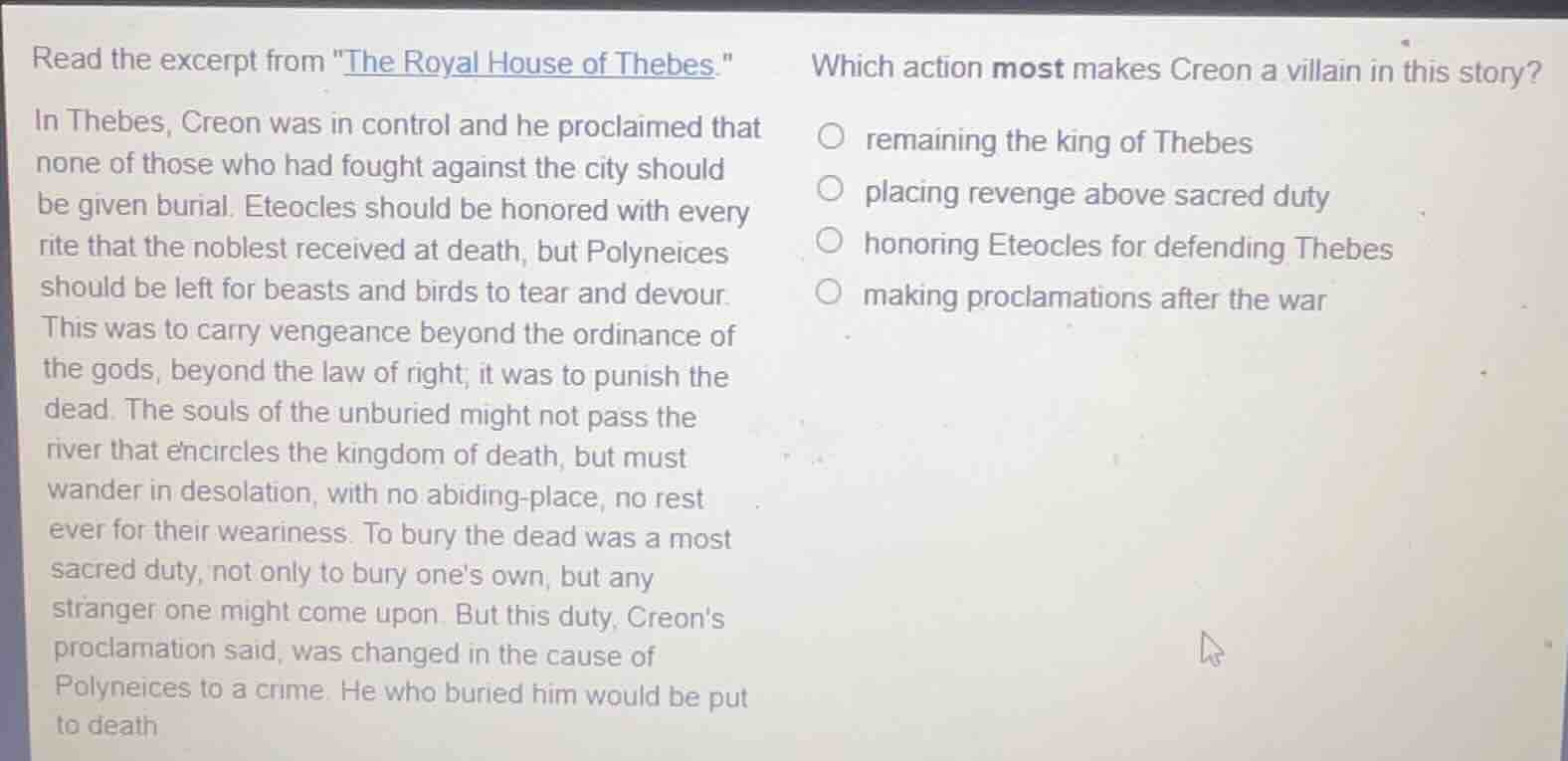
read the excerpt from \the royal house of thebes.\
in thebes, creon was in control and he proclaimed that
none of those who had fought against the city should
be given burial. eteocles should be honored with every
rite that the noblest received at death, but polyneices
should be left for beasts and birds to tear and devour.
this was to carry vengeance beyond the ordinance of
the gods, beyond the law of right; it was to punish the
dead. the souls of the unburied might not pass the
river that encircles the kingdom of death, but must
wander in desolation, with no abiding - place, no rest
ever for their weariness. to bury the dead was a most
sacred duty, not only to bury ones own, but any
stranger one might come upon. but this duty, creons
proclamation said, was changed in the cause of
polyneices to a crime. he who buried him would be put
to death
which action most makes creon a villain in this story?
○ remaining the king of thebes
○ placing revenge above sacred duty
○ honoring eteocles for defending thebes
○ making proclamations after the war
To determine the action that makes Creon a villain, we analyze each option:
- "Remaining the king of Thebes" does not inherently make him a villain.
- "Placing revenge above sacred duty": The excerpt states that burying the dead was a sacred duty, but Creon's proclamation (to not bury Polyneices due to revenge) went against this, showing villainous behavior.
- "Honoring Eteocles for defending Thebes" is a just action, not villainous.
- "Making proclamations after the war" is a normal act of governance, not villainous.

Snap & solve any problem in the app
Get step-by-step solutions on Sovi AI
Photo-based solutions with guided steps
Explore more problems and detailed explanations
B. placing revenge above sacred duty