QUESTION IMAGE
Question
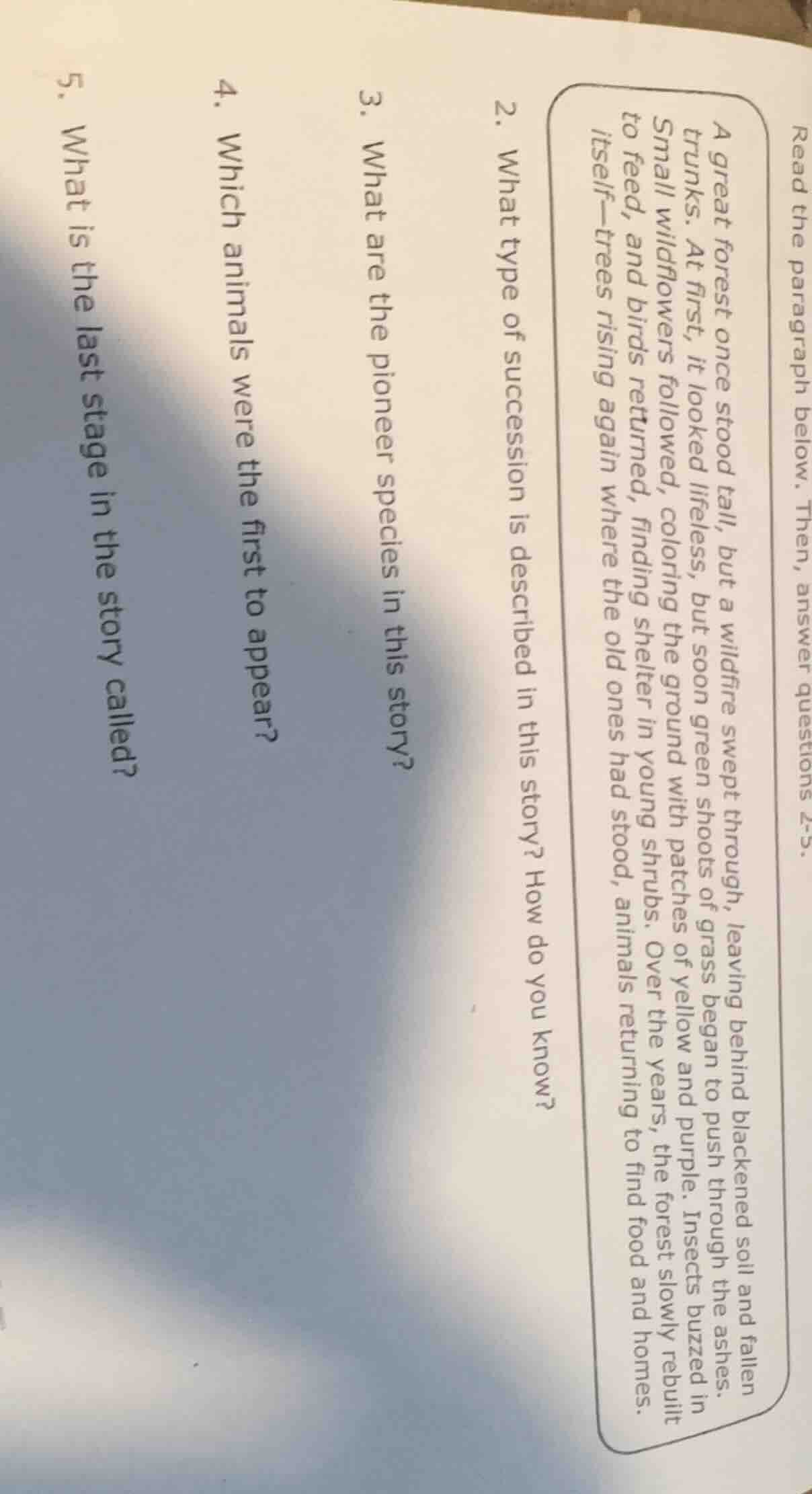
read the paragraph below. then, answer questions 2-5.
a great forest once stood tall, but a wildfire swept through, leaving behind blackened soil and fallen trunks. at first, it looked lifeless, but soon green shoots of grass began to push through the ashes. small wildflowers followed, coloring the ground with patches of yellow and purple. insects buzzed in to feed, and birds returned, finding shelter in young shrubs. over the years, the forest slowly rebuilt itself—trees rising again where the old ones had stood, animals returning to find food and homes.
- what type of succession is described in this story? how do you know?
- what are the pioneer species in this story?
- which animals were the first to appear?
- what is the last stage in the story called?
Question 2
The story describes ecological succession after a wildfire. Secondary succession occurs in an area where a disturbance (wildfire) has destroyed an ecosystem but left the soil intact, which matches the scenario here (blackened soil and fallen trunks remain, then life returns).
Pioneer species are the first to colonize a disturbed area. In the story, green shoots of grass, small wildflowers (yellow and purple) appeared first after the wildfire, so these are the pioneer species as they are the first to grow in the post - wildfire (disturbed) forest area.
After the plants (grass, wildflowers) started to grow, the text says "Insects buzzed in to feed, and birds returned, finding shelter in young shrubs". So insects were the first animals to appear as they came in to feed on the early - growing plants.

Snap & solve any problem in the app
Get step-by-step solutions on Sovi AI
Photo-based solutions with guided steps
Explore more problems and detailed explanations
The type of succession is secondary succession. We know this because the forest was disturbed by a wildfire (not a new, lifeless area like primary succession which starts on bare rock/lava), and soil (blackened soil) and some organic matter (fallen trunks) remained, allowing new life to start from that existing base.