QUESTION IMAGE
Question
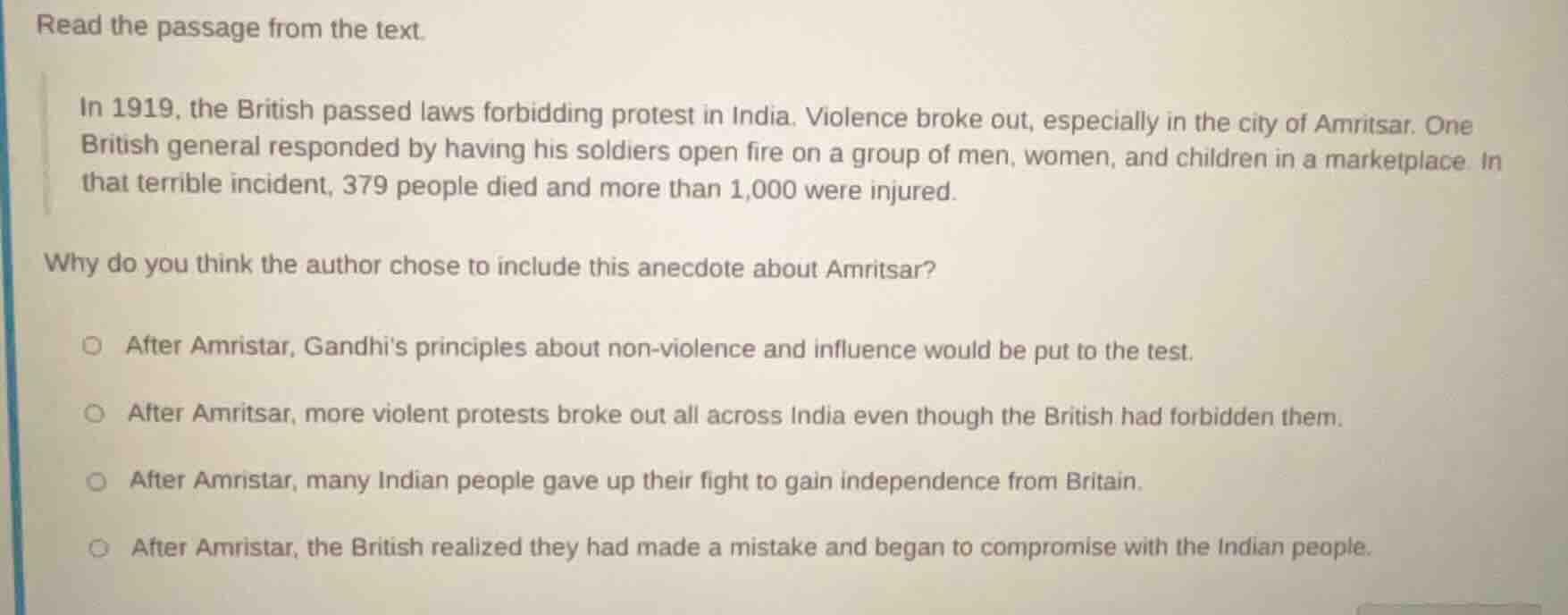
read the passage from the text.
in 1919, the british passed laws forbidding protest in india. violence broke out, especially in the city of amritsar. one british general responded by having his soldiers open fire on a group of men, women, and children in a marketplace. in that terrible incident, 379 people died and more than 1,000 were injured.
why do you think the author chose to include this anecdote about amritsar?
- after amristar, gandhis principles about non - violence and influence would be put to the test.
- after amritsar, more violent protests broke out all across india even though the british had forbidden them.
- after amristar, many indian people gave up their fight to gain independence from britain.
- after amristar, the british realized they had made a mistake and began to compromise with the indian people.
The Amritsar Massacre was a pivotal event in India's independence movement. It intensified calls for self-rule, and Gandhi's non-violent approach became a central, tested strategy to counter British repression. The other options are historically inaccurate: violent protests did not become widespread in this immediate aftermath, Indians did not abandon independence efforts, and the British did not immediately compromise.

Snap & solve any problem in the app
Get step-by-step solutions on Sovi AI
Photo-based solutions with guided steps
Explore more problems and detailed explanations
A. After Amristar, Gandhi's principles about non-violence and influence would be put to the test.