QUESTION IMAGE
Question
- read the text.
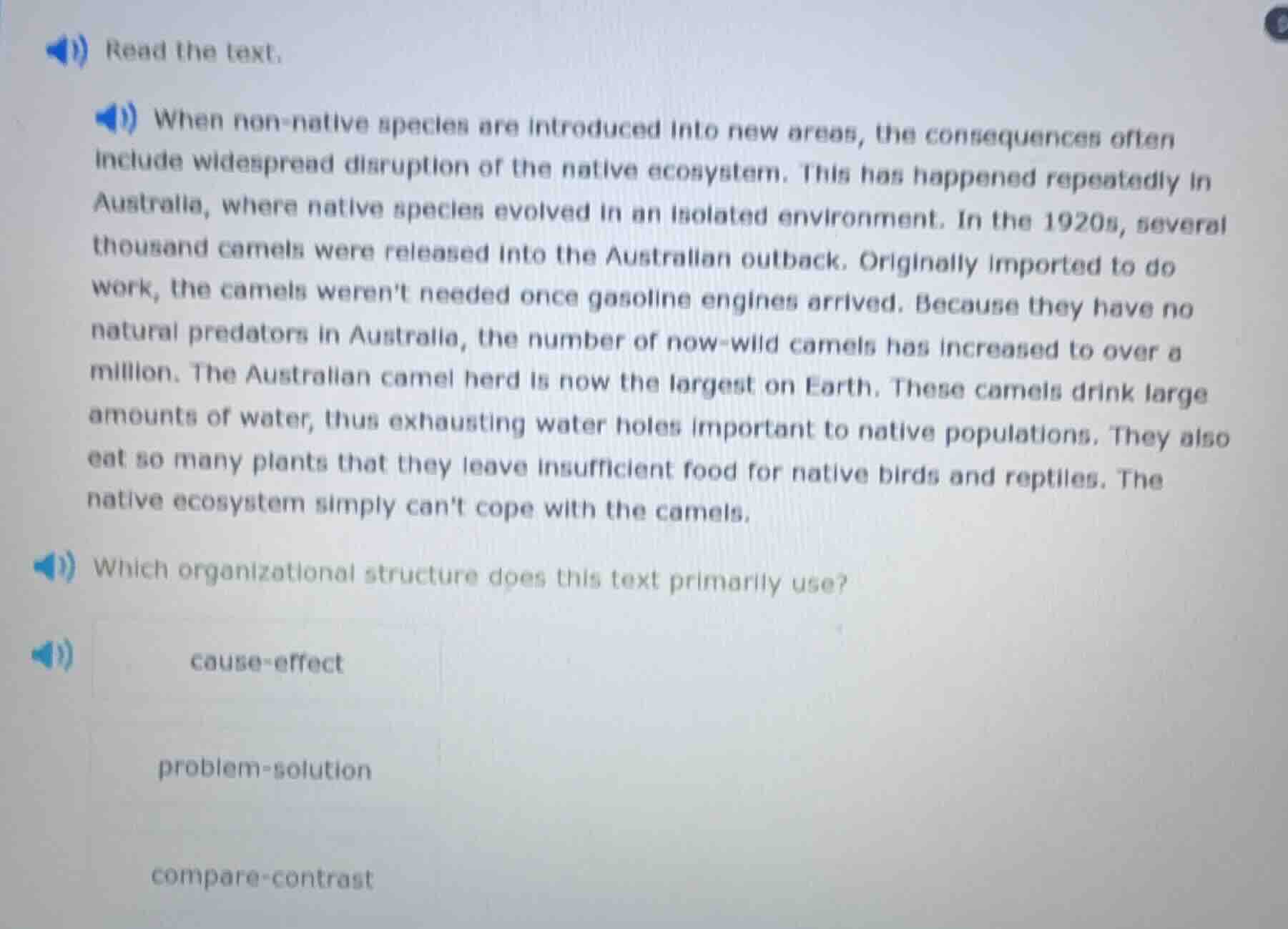
- when non-native species are introduced into new areas, the consequences often include widespread disruption of the native ecosystem. this has happened repeatedly in australia, where native species evolved in an isolated environment. in the 1920s, several thousand camels were released into the australian outback. originally imported to do work, the camels werent needed once gasoline engines arrived. because they have no natural predators in australia, the number of now-wild camels has increased to over a million. the australian camel herd is now the largest on earth. these camels drink large amounts of water, thus exhausting water holes important to native populations. they also eat so many plants that they leave insufficient food for native birds and reptiles. the native ecosystem simply cant cope with the camels.
- which organizational structure does this text primarily use?
- cause-effect
problem-solution
compare-contrast
Brief Explanations
The text first states the general cause (introducing non-native species) and its effect (disrupting native ecosystems). It then uses the example of camels in Australia: the causes (no natural predators, being released) lead to effects (population boom, exhausting water, depleting food for native species). No solutions are proposed, nor is there a comparison between two distinct subjects.

Snap & solve any problem in the app
Get step-by-step solutions on Sovi AI
Photo-based solutions with guided steps
Explore more problems and detailed explanations
cause-effect