QUESTION IMAGE
Question
related reading
read about magnetism in nature. if anything you read helps you answer the guiding question, record it as an observation.
1 according to the text, what makes lodestone a permanent magnet?
□ lodestone is formed during volcanic eruptions
□ lodestone is long - lasting and difficult to remove
□ lodestone continuously produces it own magnetic field
□ lodestone only produces a magnetic field when it is near steel
about 2,600 years ago, farmers in the greek city of magnesia noticed strange stones in their fields. although gray and dull, these stones did something incredible: they moved! the rocks were pulled towards the farmers’ iron tools by an invisible force. to some, this was evidence of the stones’ soul. to others, the rocks remained a mystery.
centuries later, similar stones were discovered in china. scholars named them tzuh - shih, or “loving stones,” because of the way they “hugged” iron. in english, these remarkable rocks are called lodestones.
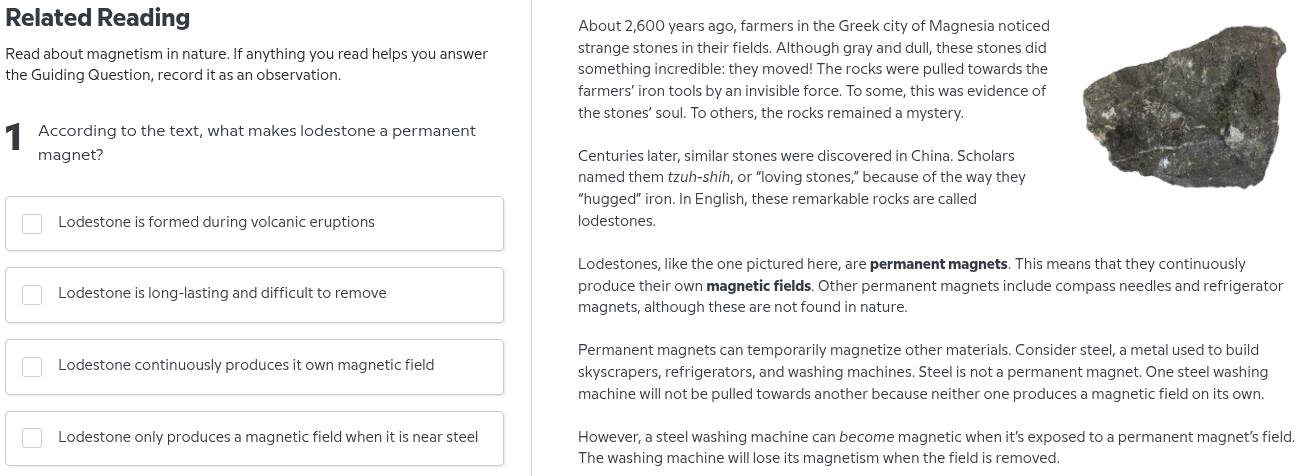
lodestones, like the one pictured here, are permanent magnets. this means that they continuously produce their own magnetic fields. other permanent magnets include compass needles and refrigerator magnets, although these are not found in nature.
permanent magnets can temporarily magnetize other materials. consider steel, a metal used to build skyscrapers, refrigerators, and washing machines. steel is not a permanent magnet. one steel washing machine will not be pulled towards another because neither one produces a magnetic field on its own.
however, a steel washing machine can become magnetic when it’s exposed to a permanent magnet’s field. the washing machine will lose its magnetism when the field is removed.
The text explicitly states that lodestones are permanent magnets which "continuously produce their own magnetic fields", which directly answers the question. The other options are incorrect: volcanic formation is not mentioned, "long-lasting and difficult to remove" describes magnetism retention not the cause of being a permanent magnet, and the text notes lodestone generates its own field independent of proximity to steel.

Snap & solve any problem in the app
Get step-by-step solutions on Sovi AI
Photo-based solutions with guided steps
Explore more problems and detailed explanations
Lodestone continuously produces its own magnetic field