QUESTION IMAGE
Question
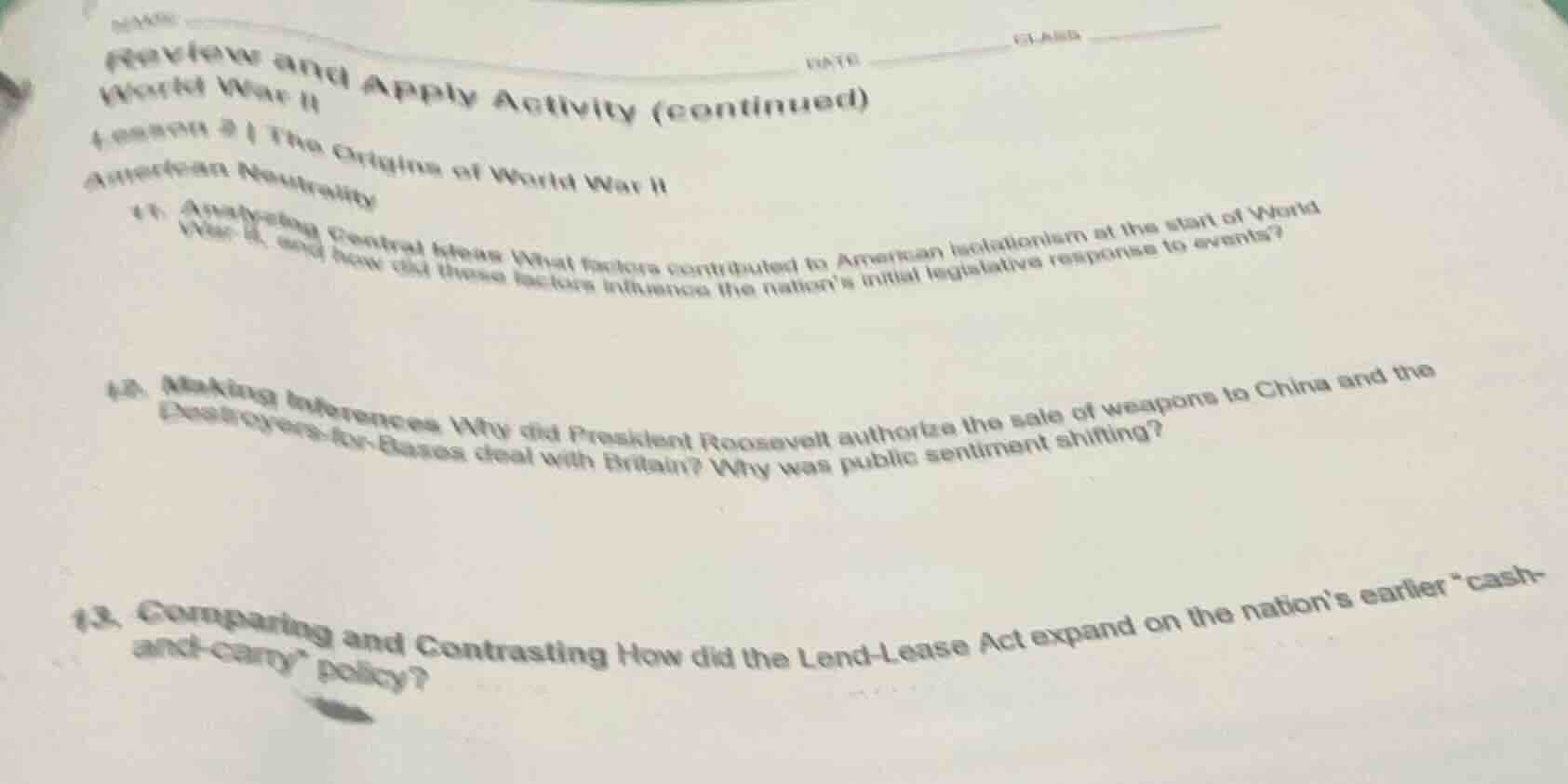
review and apply activity (continued)
world war ii
lesson 3 | the origins of world war ii
american neutrality
- analyzing central ideas what factors contributed to american isolationism at the start of world war ii, and how did those factors influence the nation’s initial legislative response to events?
- making inferences why did president roosevelt authorize the sale of weapons to china and the destroyers - for - bases deal with britain? why was public sentiment shifting?
- comparing and contrasting how did the lend - lease act expand on the nation’s earlier “cash - and - carry” policy?
Response
11. Analyzing Central Ideas
Brief Explanations
Factors for American isolationism at WWII’s start included:
- Domestic Trauma: The Great Depression (1929–1939) prioritized economic recovery over foreign conflicts.
- WWI Aftermath: Public disillusionment with WWI’s “war to end all wars” turned into anti - war sentiment, fearing repeat bloodshed.
- Geographic Isolation: Oceans separated the U.S. from Europe/Asia, creating a sense of security.
- Isolationist Groups: Movements like the America First Committee (led by Charles Lindbergh) advocated staying out of foreign wars.
These factors influenced legislation:
- Neutrality Acts (1935–1939): Banned arms sales/loans to warring nations, enforced strict neutrality to avoid entanglement.
Brief Explanations
Roosevelt’s Actions:
- Strategic Interest: China and Britain fought Axis powers (Japan, Germany). Supporting them weakened Axis, protecting U.S. interests (e.g., Asian trade, British naval power).
- Moral/Strategic Foresight: Believed Axis victory would threaten U.S. security long - term, so “cash - and - carry” (weapons for cash, no loans) and destroyers - for - bases (Britain got destroyers, U.S. got Caribbean bases) bypassed neutrality to aid allies.
Public Sentiment Shift:
- Axis Aggression: Japan’s China invasion, Germany’s Europe conquest (e.g., Poland, France) showed Axis expansion, alarming Americans.
- Media/Events: News of Axis atrocities and British resistance (e.g., Battle of Britain) swayed opinion toward aiding democracies, away from isolationism.
Brief Explanations
- Cash - and - Carry (1939): Required warring nations to pay cash and transport goods themselves (limited aid, as cash - strapped Britain/France struggled).
- Lend - Lease Act (1941): Allowed the U.S. to “lend/lease” weapons, food, and supplies to allies (e.g., Britain, USSR, China) without immediate payment. It replaced cash - and - carry, eliminating the cash requirement and enabling long - term, large - scale aid (e.g., tanks, planes) to sustain allied war efforts.

Snap & solve any problem in the app
Get step-by-step solutions on Sovi AI
Photo-based solutions with guided steps
Explore more problems and detailed explanations
Factors: Great Depression, WWI disillusionment, geographic isolation, isolationist groups.
Legislative impact: Led to Neutrality Acts (banning arms/loans to warring nations).