QUESTION IMAGE
Question
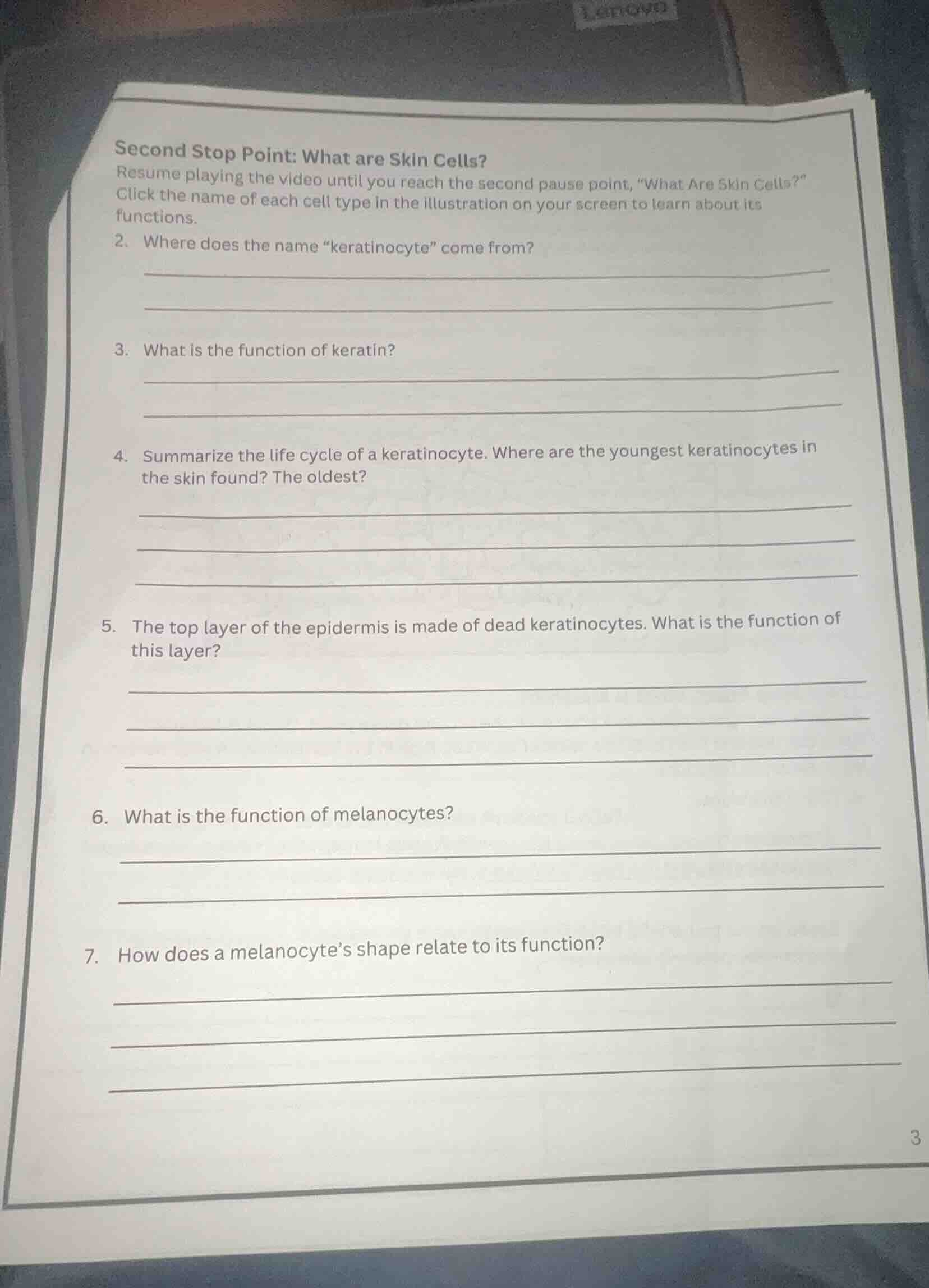
second stop point: what are skin cells? resume playing the video until you reach the second pause point, \what are skin cells?\ click the name of each cell type in the illustration on your screen to learn about its functions. 2. where does the name \keratinocyte\ come from? 3. what is the function of keratin? 4. summarize the life cycle of a keratinocyte. where are the youngest keratinocytes in the skin found? the oldest? 5. the top layer of the epidermis is made of dead keratinocytes. what is the function of this layer? 6. what is the function of melanocytes? 7. how does a melanocyte’s shape relate to its function?
- The name combines the protein it produces (keratin) with the suffix "-cyte" meaning cell.
- Keratin is a tough, fibrous protein that provides structural strength and waterproofing.
- Youngest keratinocytes form in the stratum basale (deepest epidermis layer), move upward as they mature, fill with keratin, die, and shed from the skin surface. Youngest: stratum basale; Oldest: stratum corneum (top layer).
- This dead, keratin-filled layer acts as a physical barrier to protect underlying tissue from damage, pathogens, and water loss.
- Melanocytes produce the pigment melanin, which protects skin cells from UV radiation damage and determines skin/hair color.
- Melanocytes have branching, finger-like extensions that allow them to transfer melanin granules to surrounding keratinocytes, ensuring wide coverage of UV protection across the epidermis.

Snap & solve any problem in the app
Get step-by-step solutions on Sovi AI
Photo-based solutions with guided steps
Explore more problems and detailed explanations
- It comes from the tough protein keratin that these cells produce, plus the suffix "-cyte" (meaning cell).
- It provides structural strength and waterproofing to skin, hair, and nails.
- Life cycle: Keratinocytes form in the deep epidermis, mature as they move upward, fill with keratin, die, and shed. Youngest: stratum basale (deepest epidermal layer); Oldest: stratum corneum (top epidermal layer).
- It creates a tough, waterproof physical barrier that protects underlying tissues from injury, pathogens, and water loss.
- Melanocytes produce melanin, a pigment that shields skin cells from harmful UV radiation and contributes to skin, hair, and eye color.
- Their branching, dendritic shape lets them extend to nearby keratinocytes, transferring melanin granules to provide UV protection across a broad area of the epidermis.