QUESTION IMAGE
Question
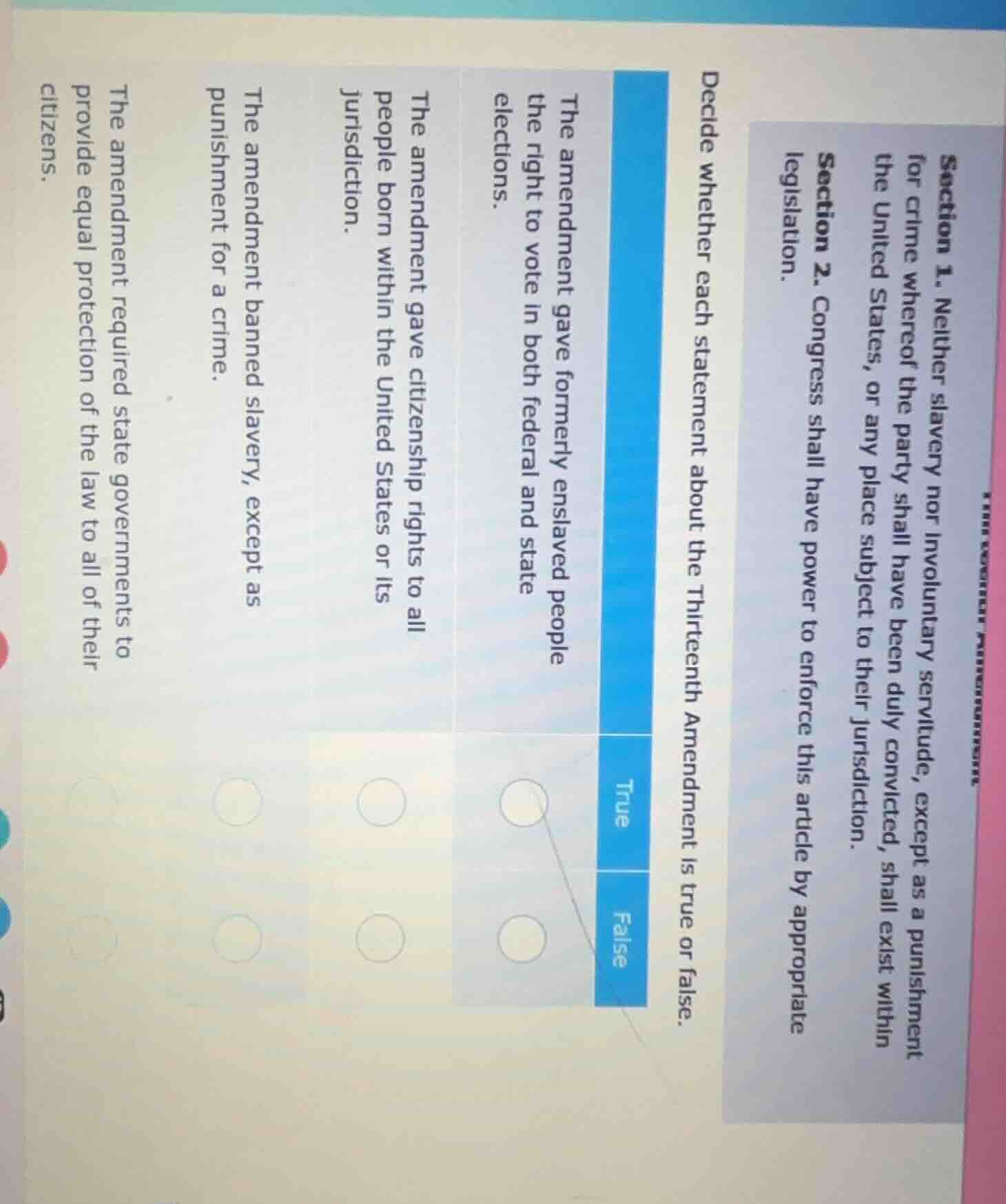
section 1. neither slavery nor involuntary servitude, except as a punishment for crime whereof the party shall have been duly convicted, shall exist within the united states, or any place subject to their jurisdiction.
section 2. congress shall have power to enforce this article by appropriate legislation.
decide whether each statement about the thirteenth amendment is true or false.
the amendment gave formerly enslaved people the right to vote in both federal and state elections.
the amendment gave citizenship rights to all people born within the united states or its jurisdiction.
the amendment banned slavery, except as punishment for a crime.
the amendment required state governments to provide equal protection of the law to all of their citizens.
- The right to vote for formerly enslaved people was established by the 15th Amendment, not the 13th.
- Citizenship rights for people born in the U.S. were granted by the 14th Amendment, not the 13th.
- The 13th Amendment explicitly bans slavery and involuntary servitude, except as punishment for a convicted crime.
- Equal protection under the law for citizens was required by the 14th Amendment, not the 13th.

Snap & solve any problem in the app
Get step-by-step solutions on Sovi AI
Photo-based solutions with guided steps
Explore more problems and detailed explanations
- The amendment gave formerly enslaved people the right to vote in both federal and state elections. → False
- The amendment gave citizenship rights to all people born within the United States or its jurisdiction. → False
- The amendment banned slavery, except as punishment for a crime. → True
- The amendment required state governments to provide equal protection of the law to all of their citizens. → False