QUESTION IMAGE
Question
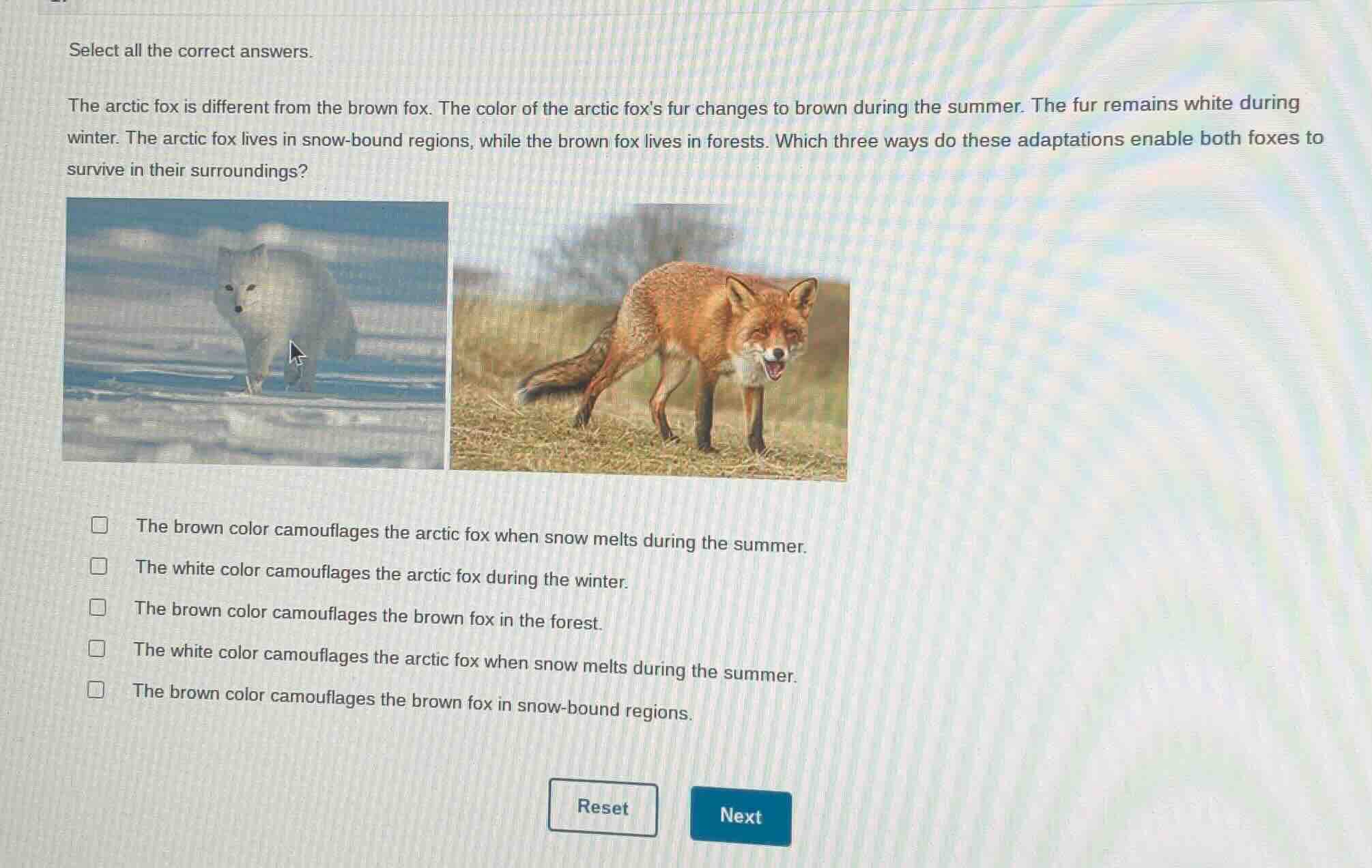
select all the correct answers. the arctic fox is different from the brown fox. the color of the arctic foxs fur changes to brown during the summer. the fur remains white during winter. the arctic fox lives in snow - bound regions, while the brown fox lives in forests. which three ways do these adaptations enable both foxes to survive in their surroundings? the brown color camouflages the arctic fox when snow melts during the summer. the white color camouflages the arctic fox during the winter. the brown color camouflages the brown fox in the forest. the white color camouflages the arctic fox when snow melts during the summer. the brown color camouflages the brown fox in snow - bound regions.
- For the first option: The arctic fox's fur turns brown in summer. When snow melts in summer, the surroundings (like tundra with brownish vegetation) match the brown fur, so this camouflage helps.
- For the second option: In winter, the arctic fox lives in snow - bound regions. Its white fur blends with the snow, providing camouflage.
- For the third option: The brown fox lives in forests. Its brown fur matches the forest environment (brown tree trunks, soil, etc.), so it is camouflaged.
The fourth option is wrong because white fur would not camouflage the arctic fox in summer (when surroundings are not white). The fifth option is wrong because the brown fox does not live in snow - bound regions, so brown fur can't camouflage it there.

Snap & solve any problem in the app
Get step-by-step solutions on Sovi AI
Photo-based solutions with guided steps
Explore more problems and detailed explanations
A. The brown color camouflages the arctic fox when snow melts during the summer.
B. The white color camouflages the arctic fox during the winter.
C. The brown color camouflages the brown fox in the forest.