QUESTION IMAGE
Question
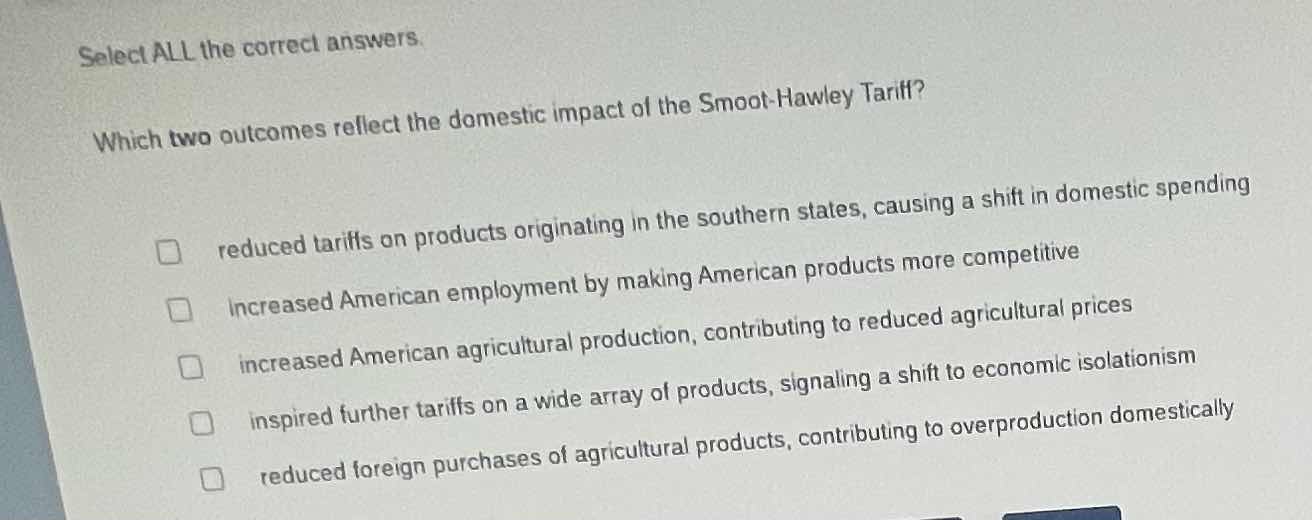
select all the correct answers.
which two outcomes reflect the domestic impact of the smoot - hawley tariff?
□ reduced tariffs on products originating in the southern states, causing a shift in domestic spending
□ increased american employment by making american products more competitive
□ increased american agricultural production, contributing to reduced agricultural prices
□ inspired further tariffs on a wide array of products, signaling a shift to economic isolationism
□ reduced foreign purchases of agricultural products, contributing to overproduction domestically
- Analyze "reduced foreign purchases of agricultural products, contributing to overproduction domestically": The Smoot - Hawley Tariff led to retaliatory tariffs from other countries. This meant foreign countries bought less American agricultural products. With less export demand, domestic supply exceeded demand, leading to overproduction.
- Analyze "inspired further tariffs on a wide array of products, signaling a shift to economic isolationism": The Smoot - Hawley Tariff was a major step towards economic isolationism. It inspired the US to impose more tariffs on various products, as the government tried to protect domestic industries, which was part of the move towards economic self - sufficiency and isolation from global trade.
Now, analyze the incorrect options:
- "reduced tariffs on products originating in the southern states, causing a shift in domestic spending": The Smoot - Hawley Tariff increased tariffs, not reduced them, and there was no specific focus on southern states' products in this way.
- "Increased American employment by making American products more competitive": The tariff led to retaliation, and American exports suffered, which actually hurt employment in export - related industries.
- "increased American agricultural production, contributing to reduced agricultural prices": The problem was overproduction due to reduced exports, not increased production. The reduced exports led to a surplus, which drove prices down, but production didn't increase; it was the demand side (exports) that was affected.

Snap & solve any problem in the app
Get step-by-step solutions on Sovi AI
Photo-based solutions with guided steps
Explore more problems and detailed explanations
- reduced foreign purchases of agricultural products, contributing to overproduction domestically
- inspired further tariffs on a wide array of products, signaling a shift to economic isolationism