QUESTION IMAGE
Question
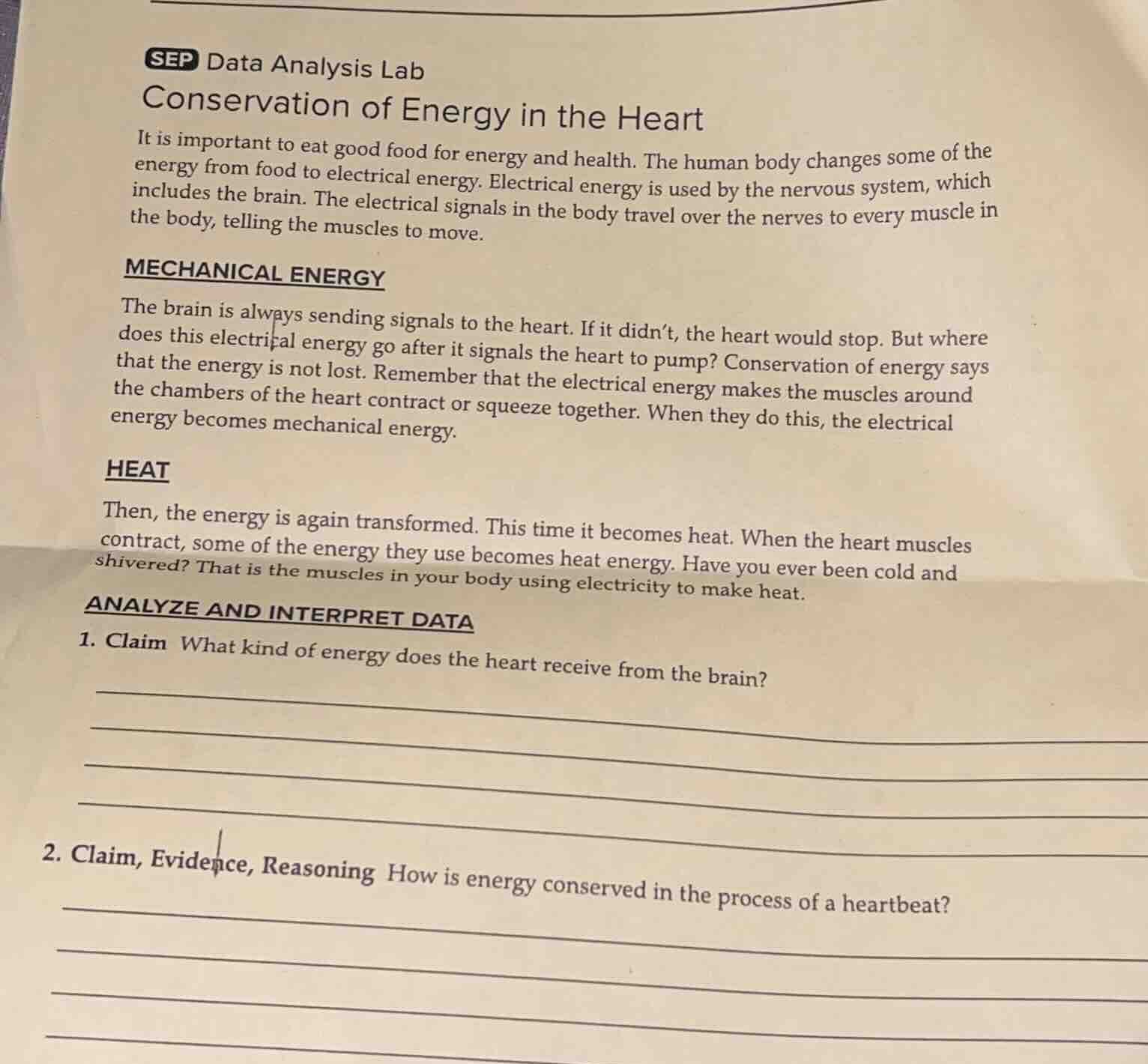
sep data analysis lab conservation of energy in the heart it is important to eat good food for energy and health. the human body changes some of the energy from food to electrical energy. electrical energy is used by the nervous system, which includes the brain. the electrical signals in the body travel over the nerves to every muscle in the body, telling the muscles to move. mechanical energy the brain is always sending signals to the heart. if it didn’t, the heart would stop. but where does this electrical energy go after it signals the heart to pump? conservation of energy says that the energy is not lost. remember that the electrical energy makes the muscles around the chambers of the heart contract or squeeze together. when they do this, the electrical energy becomes mechanical energy. heat then, the energy is again transformed. this time it becomes heat. when the heart muscles contract, some of the energy they use becomes heat energy. have you ever been cold and shivered? that is the muscles in your body using electricity to make heat. analyze and interpret data 1. claim what kind of energy does the heart receive from the brain? 2. claim, evidence, reasoning how is energy conserved in the process of a heartbeat?
- For the first question, the text explicitly states the brain sends electrical signals (electrical energy) to the heart to make it function.
- For the second question, the conservation of energy principle states energy is not lost, only transformed. The heart first receives electrical energy from the brain, which converts to mechanical energy to pump blood, then some of that mechanical energy converts to heat energy; no energy is destroyed in these transformations.

Snap & solve any problem in the app
Get step-by-step solutions on Sovi AI
Photo-based solutions with guided steps
Explore more problems and detailed explanations
- The heart receives electrical energy from the brain.
- Energy is conserved during a heartbeat through transformation: First, the heart receives electrical energy from the brain. This electrical energy is converted into mechanical energy to contract the heart chambers and pump blood. Then, some of this mechanical energy is transformed into heat energy. No energy is lost in these processes, which follows the conservation of energy principle.