QUESTION IMAGE
Question
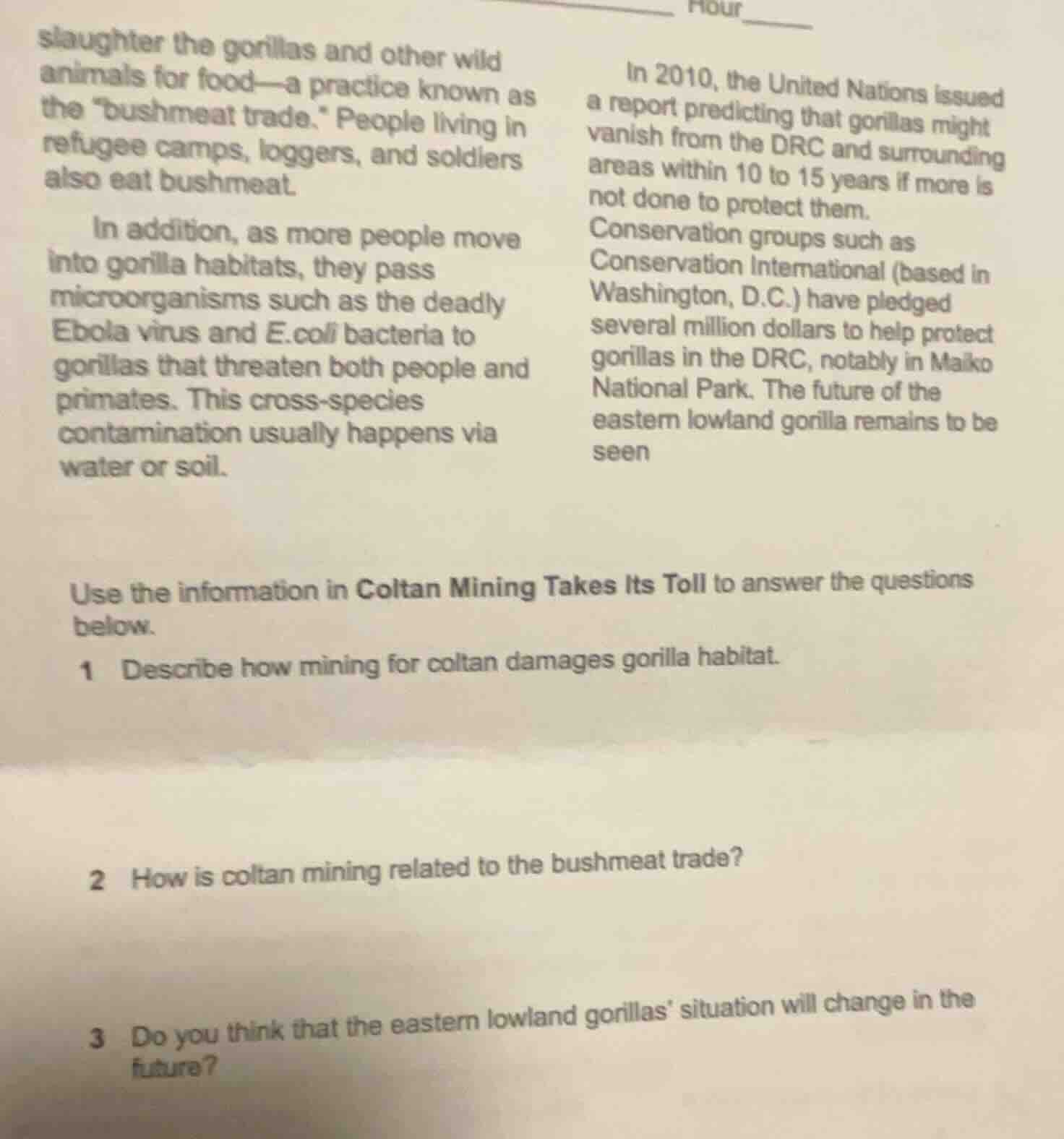
slaughter the gorillas and other wild animals for food—a practice known as the “bushmeat trade.” people living in refugee camps, loggers, and soldiers also eat bushmeat.
in addition, as more people move into gorilla habitats, they pass microorganisms such as the deadly ebola virus and e. coli bacteria to gorillas that threaten both people and primates. this cross - species contamination usually happens via water or soil.
in 2010, the united nations issued a report predicting that gorillas might vanish from the drc and surrounding areas within 10 to 15 years if more is not done to protect them.
conservation groups such as conservation international (based in washington, d.c.) have pledged several million dollars to help protect gorillas in the drc, notably in maiko national park. the future of the eastern lowland gorilla remains to be seen
use the information in coltan mining takes its toll to answer the questions below.
1 describe how mining for coltan damages gorilla habitat.
2 how is coltan mining related to the bushmeat trade?
3 do you think that the eastern lowland gorillas’ situation will change in the future?

Snap & solve any problem in the app
Get step-by-step solutions on Sovi AI
Photo-based solutions with guided steps
Explore more problems and detailed explanations
- Mining for coltan damages gorilla habitat as more people move into these areas, leading to the spread of deadly microorganisms like Ebola and E. coli through water or soil.
- Coltan mining is related to the bushmeat trade because the influx of people into gorilla habitats, including loggers and soldiers, leads to the slaughter of gorillas and other wild animals for food.
- The future of the eastern lowland gorilla remains uncertain; while they face extinction within 10 to 15 years, conservation groups have pledged millions of dollars to protect them.