QUESTION IMAGE
Question
sold or traded, or who owed
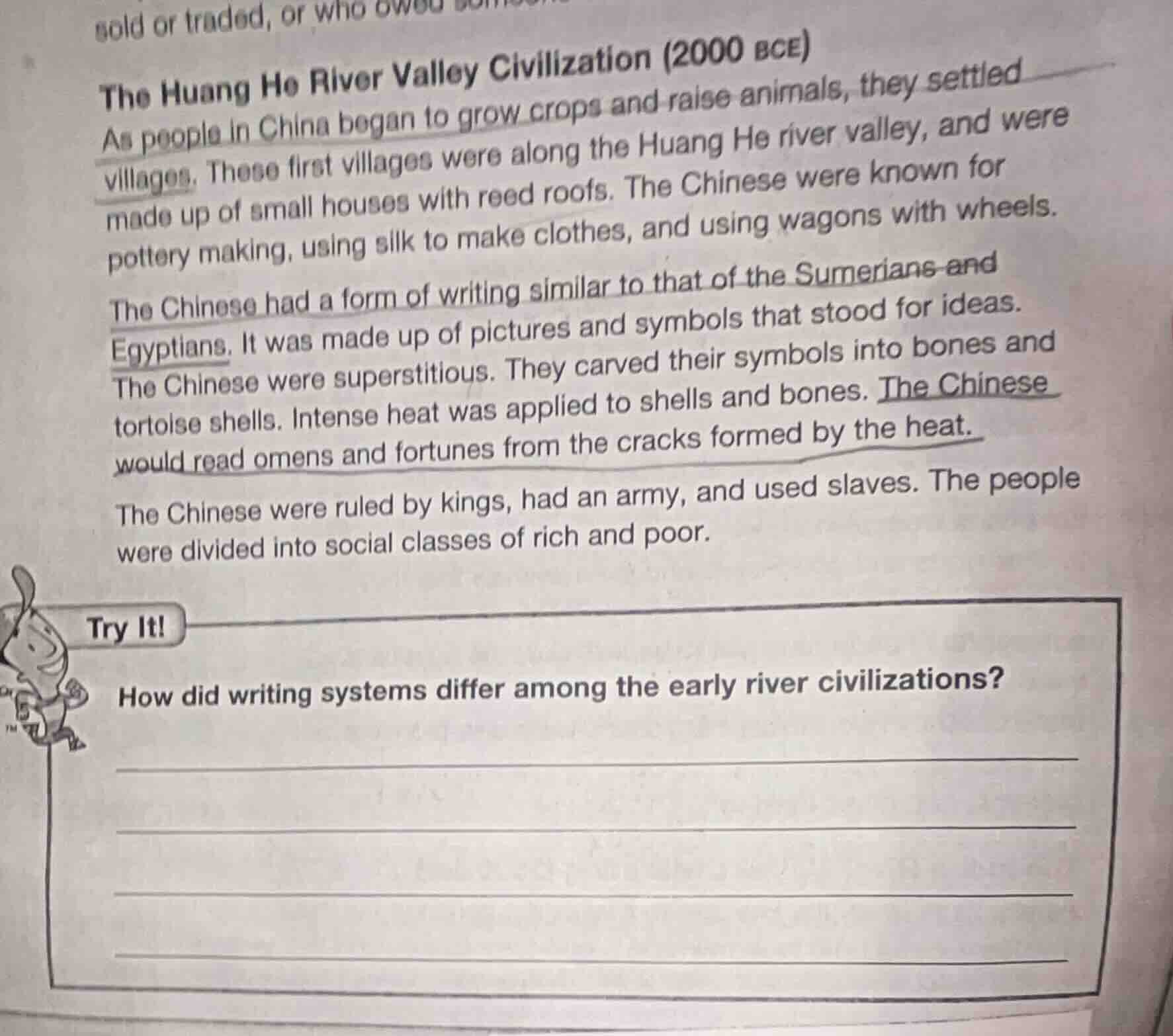
the huang he river valley civilization (2000 bce)
as people in china began to grow crops and raise animals, they settled
villages. these first villages were along the huang he river valley, and were
made up of small houses with reed roofs. the chinese were known for
pottery making, using silk to make clothes, and using wagons with wheels.
the chinese had a form of writing similar to that of the sumerians and
egyptians. it was made up of pictures and symbols that stood for ideas.
the chinese were superstitious. they carved their symbols into bones and
tortoise shells. intense heat was applied to shells and bones. the chinese
would read omens and fortunes from the cracks formed by the heat.
the chinese were ruled by kings, had an army, and used slaves. the people
were divided into social classes of rich and poor.
try it!
how did writing systems differ among the early river civilizations?
- Huang He (Chinese) Civilization: Used a logographic system, with symbols/pictures representing ideas, carved into oracle bones (bones/tortoise shells) often for divination.
- Sumerian (Mesopotamian) Civilization: Used cuneiform, a wedge-shaped script pressed into clay tablets, primarily for record-keeping, laws, and administrative tasks.
- Egyptian (Nile) Civilization: Used hieroglyphs, a combination of logographic, syllabic, and alphabetic symbols, often inscribed on stone monuments, papyrus, and used for religious, royal, and daily texts.
- Indus Valley Civilization: Their script (undeciphered) uses distinct, short symbols, primarily found on seals, likely for trade or identification, with no clear link to other contemporary systems.

Snap & solve any problem in the app
Get step-by-step solutions on Sovi AI
Photo-based solutions with guided steps
Explore more problems and detailed explanations
Early river valley writing systems differed in their form, materials, and primary use:
- The Huang He (Chinese) civilization used a logographic system of picture-symbols for ideas, carved into bones/shells often for divination.
- Sumerian (Mesopotamian) cuneiform was wedge-shaped marks on clay tablets, focused on record-keeping and administration.
- Egyptian (Nile) hieroglyphs combined idea and sound symbols, used on stone and papyrus for religious and royal texts.
- The undeciphered Indus Valley script used unique short symbols on seals, likely for trade identification.