QUESTION IMAGE
Question
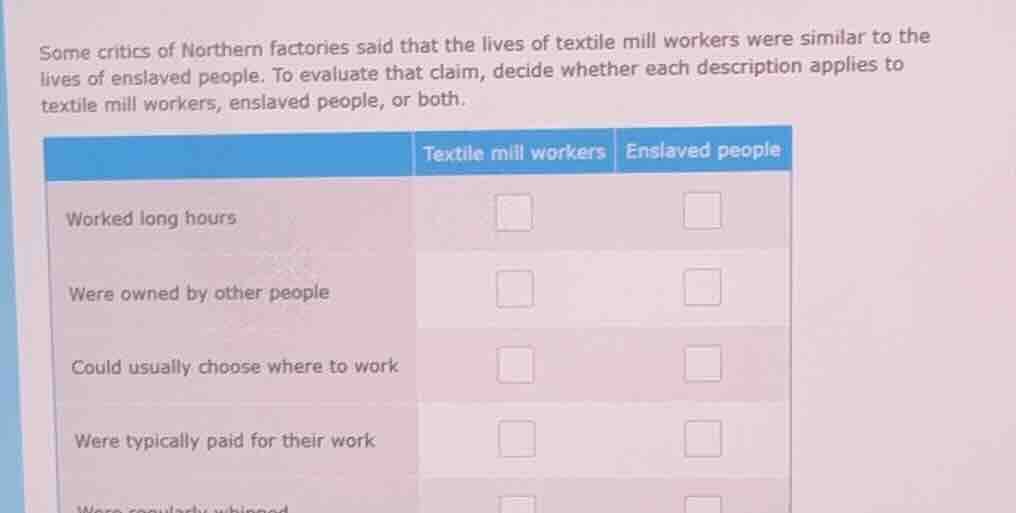
some critics of northern factories said that the lives of textile mill workers were similar to the lives of enslaved people. to evaluate that claim, decide whether each description applies to textile mill workers, enslaved people, or both.
worked long hours
were owned by other people
could usually choose where to work
were typically paid for their work
Brief Explanations
- Worked long hours: Both groups faced grueling, extended workdays due to labor demands of their respective systems.
- Were owned by other people: Enslaved people were legally considered property, while textile mill workers were free laborers who sold their work.
- Could usually choose where to work: Textile mill workers (as free labor) could seek other employment, while enslaved people had no control over their work location.
- Were typically paid for their work: Textile mill workers received wages (often low) for their labor, while enslaved people received no formal pay, only basic survival provisions.
- Were regularly whipped: Enslaved people were frequently subjected to physical punishment like whipping as a control method; this was not a standard practice for textile mill workers.

Snap & solve any problem in the app
Get step-by-step solutions on Sovi AI
Photo-based solutions with guided steps
Explore more problems and detailed explanations
| Description | Textile mill workers | Enslaved people |
|---|---|---|
| Were owned by other people | ❌ | ✅ |
| Could usually choose where to work | ✅ | ❌ |
| Were typically paid for their work | ✅ | ❌ |
| Were regularly whipped | ❌ | ✅ |