QUESTION IMAGE
Question
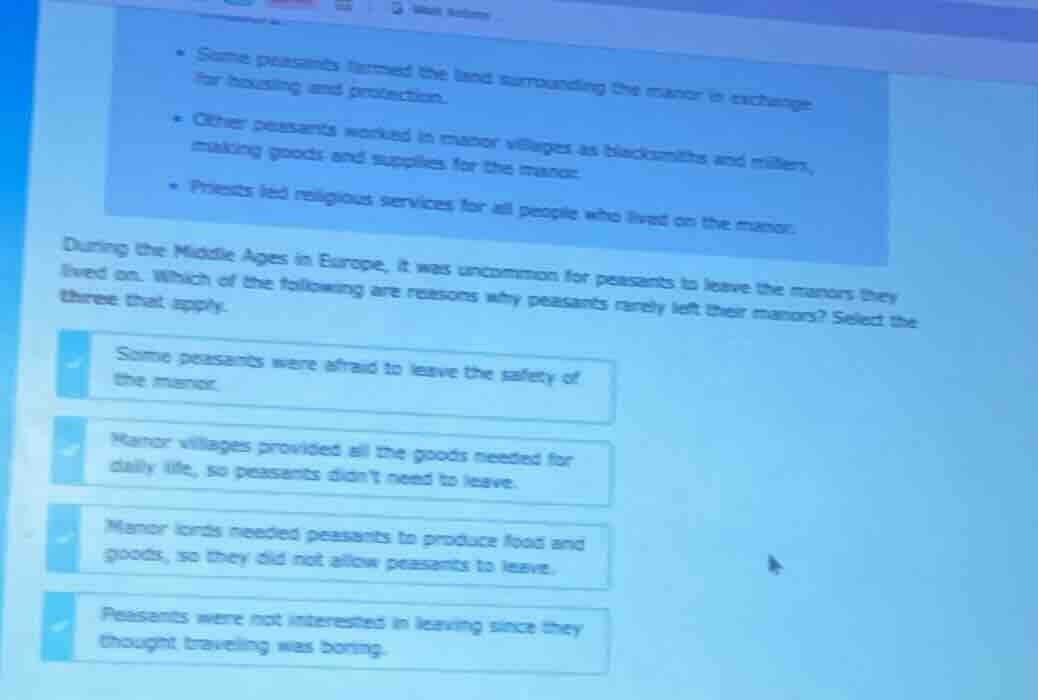
- some peasants farmed the land surrounding the manor in exchange for housing and protection. • other peasants worked in manor villages as blacksmiths and millers, making goods and supplies for the manor. • priests led religious services for all people who lived on the manor. during the middle ages in europe, it was uncommon for peasants to leave the manors they lived on. which of the following are reasons why peasants rarely left their manors? select the three that apply. some peasants were afraid to leave the safety of the manor. manor villages provided all the goods needed for daily life, so peasants didn’t need to leave. manor lords needed peasants to produce food and goods, so they did not allow peasants to leave. peasants were not interested in leaving since they thought traveling was boring.
Brief Explanations
- "Some peasants were afraid to leave the safety of the manor" - Manors offered protection, so fear of danger outside made them stay.
- "Manor villages provided all the goods needed for daily life, so peasants didn’t need to leave" - Self - sufficiency of manors (with peasants as farmers, blacksmiths, millers etc.) meant no need to go elsewhere for goods.
- "Manor lords needed peasants to produce food and goods, so they did not allow peasants to leave" - Lords relied on peasants for labor, so restricted their movement.
The option "Peasants were not interested in leaving since they thought traveling was boring" is incorrect as there's no historical basis for this; travel in the Middle Ages was not about "boredom" but about practical concerns like safety and lack of need.

Snap & solve any problem in the app
Get step-by-step solutions on Sovi AI
Photo-based solutions with guided steps
Explore more problems and detailed explanations
A. Some peasants were afraid to leave the safety of the manor
B. Manor villages provided all the goods needed for daily life, so peasants didn't need to leave
C. Manor lords needed peasants to produce food and goods, so they did not allow peasants to leave