QUESTION IMAGE
Question
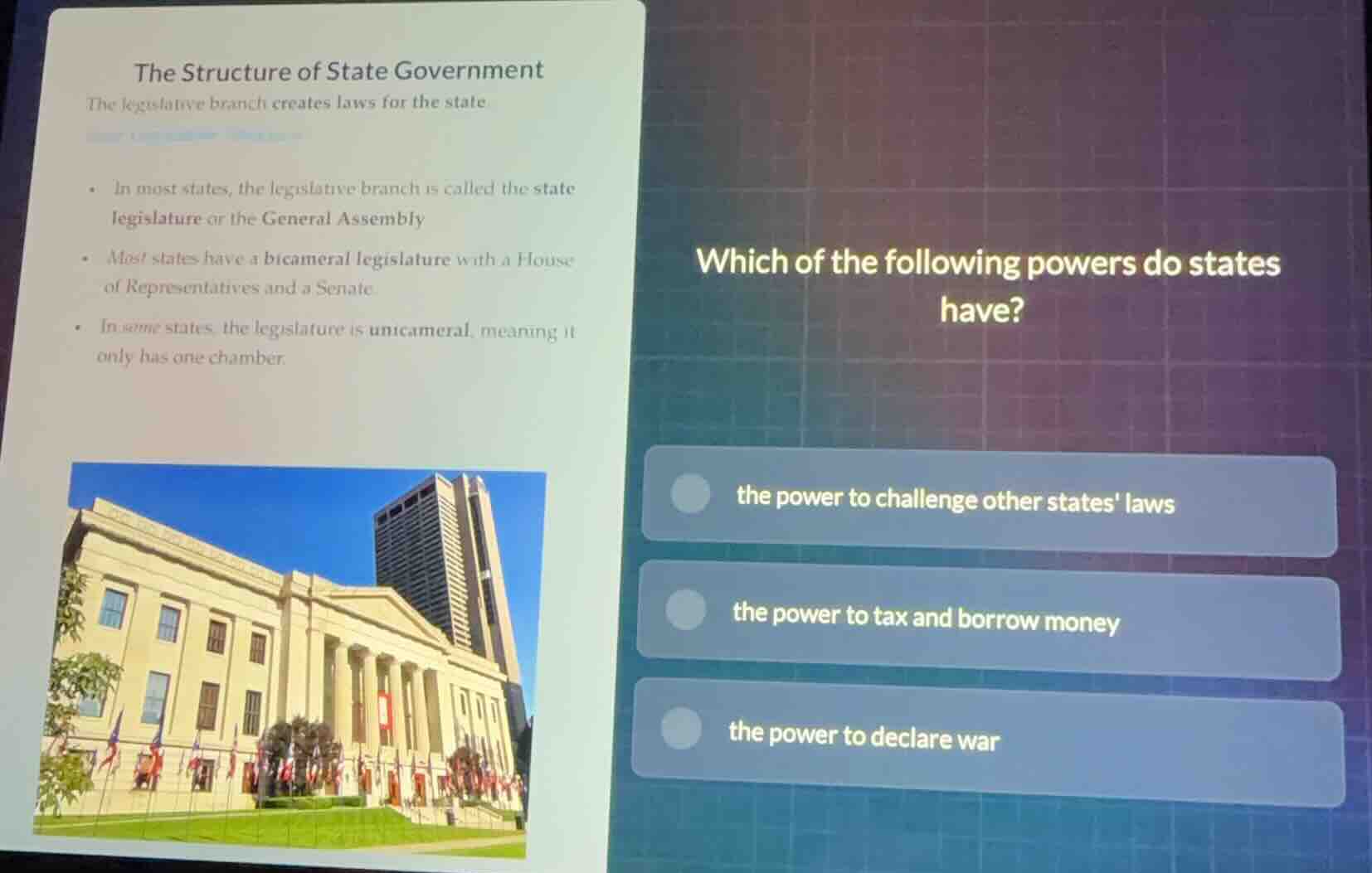
the structure of state government
the legislative branch creates laws for the state.
- in most states, the legislative branch is called the state legislature or the general assembly
- most states have a bicameral legislature with a house of representatives and a senate
- in some states, the legislature is unicameral, meaning it only has one chamber.
which of the following powers do states have?
- the power to challenge other states laws
- the power to tax and borrow money
- the power to declare war
Brief Explanations
Under the U.S. system of federalism, states retain reserved powers to govern their internal affairs, which include levying taxes and borrowing funds to support state operations and services. Declaring war is an exclusive federal power, and states do not have the authority to challenge the laws of other states (interstate legal disputes are handled by federal courts or through interstate compacts).

Snap & solve any problem in the app
Get step-by-step solutions on Sovi AI
Photo-based solutions with guided steps
Explore more problems and detailed explanations
the power to tax and borrow money