QUESTION IMAGE
Question
supporting an inference with evidence
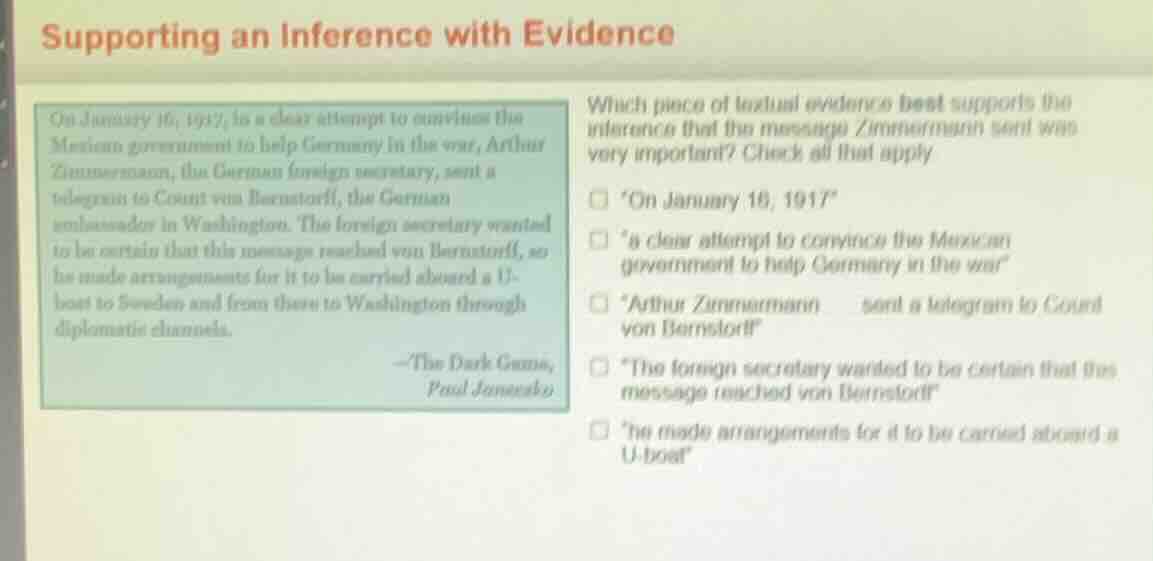
on january 16, 1917, in a clear attempt to convince the mexican government to help germany in the war, arthur zimmermann, the german foreign secretary, sent a telegram to count von bernstorff, the german ambassador in washington. the foreign secretary wanted to be certain that this message reached von bernstorff, so he made arrangements for it to be carried aboard a u-boat to sweden and from there to washington through diplomatic channels.
—the dark game,
paul janeczko
which piece of textual evidence best supports the inference that the message zimmermann sent was very important? check all that apply
☐ on january 16, 1917
☐ a clear attempt to convince the mexican government to help germany in the war
☐ arthur zimmermann sent a telegram to count von bernstorff
☐ the foreign secretary wanted to be certain that the message reached von bernstorff
☐ he made arrangements for it to be carried aboard a u-boat
- The date alone does not indicate importance, so the first option is irrelevant.
- The content of the message shows its purpose but not its prioritized handling, so the second option does not support the inference of importance.
- The basic act of sending a telegram does not signal special importance, so the third option is not evidence.
- Wanting to ensure the message reaches its recipient shows the sender viewed it as critical, supporting the inference.
- Using a U-boat (a secure, unusual method) for delivery demonstrates the message was highly important, as special, careful arrangements were made.

Snap & solve any problem in the app
Get step-by-step solutions on Sovi AI
Photo-based solutions with guided steps
Explore more problems and detailed explanations
- "The foreign secretary wanted to be certain that the message reached von Bernstorff"
- "he made arrangements for it to be carried aboard a U-boat"