QUESTION IMAGE
Question
text reading
directions: students are asked to read the following text and complete the side questions.
text reading
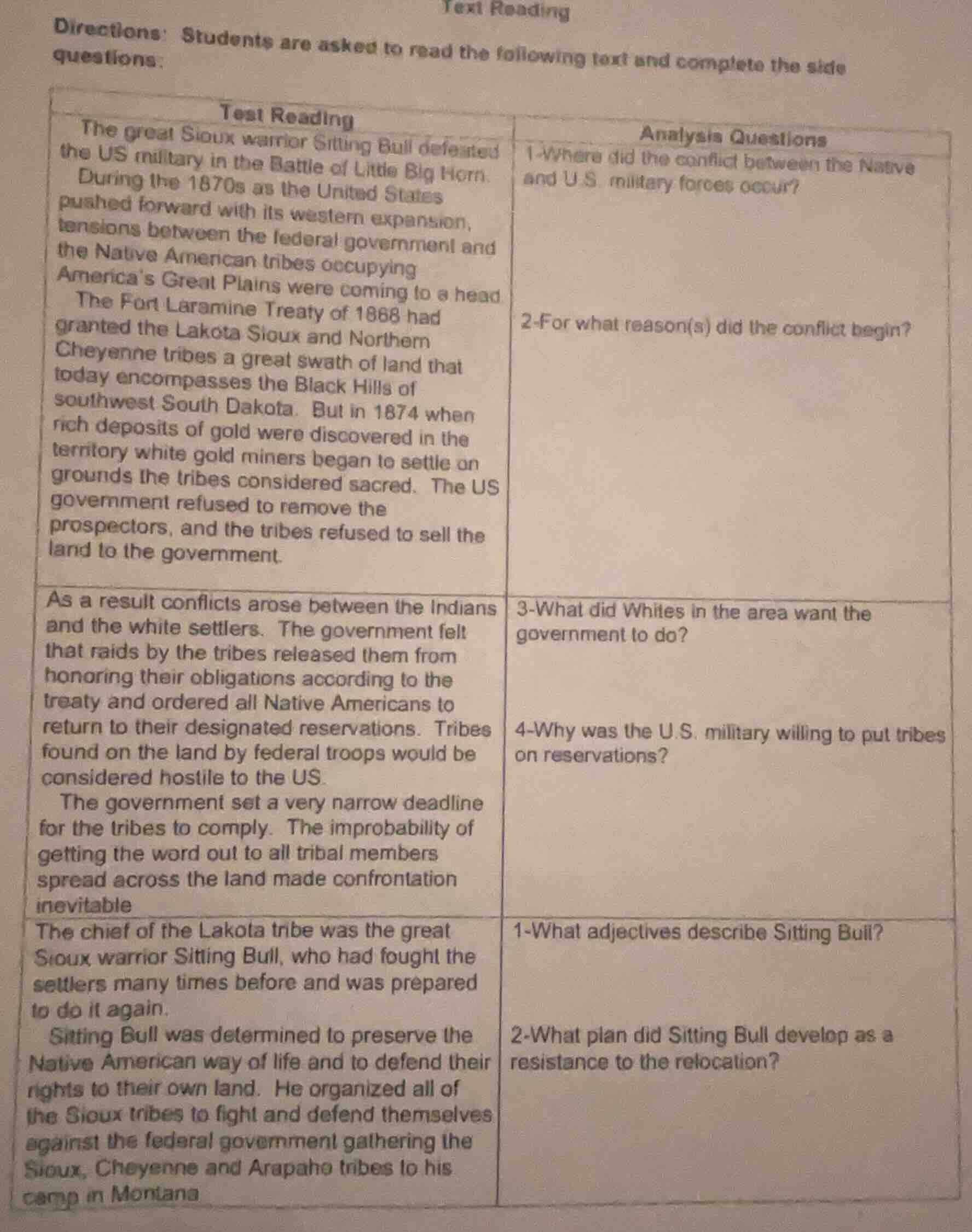
the great sioux warrior sitting bull defeated the us military in the battle of little big horn.
during the 1870s as the united states pushed forward with its western expansion, tensions between the federal government and the native american tribes occupying america’s great plains were coming to a head
the fort laramie treaty of 1868 had granted the lakota sioux and northern cheyenne tribes a great swath of land that today encompasses the black hills of southwest south dakota. but in 1874 when rich deposits of gold were discovered in the territory white gold miners began to settle on grounds the tribes considered sacred. the us government refused to remove the prospectors, and the tribes refused to sell the land to the government.
as a result conflicts arose between the indians and the white settlers. the government felt that raids by the tribes released them from honoring their obligations according to the treaty and ordered all native americans to return to their designated reservations. tribes found on the land by federal troops would be considered hostile to the us.
the government set a very narrow deadline for the tribes to comply. the improbability of getting the word out to all tribal members spread across the land made confrontation inevitable
the chief of the lakota tribe was the great sioux warrior sitting bull, who had fought the settlers many times before and was prepared to do it again.
sitting bull was determined to preserve the native american way of life and to defend their rights to their own land. he organized all of the sioux tribes to fight and defend themselves against the federal government gathering the sioux, cheyenne and arapaho tribes to his camp in montana
analysis questions
1-where did the conflict between the native and u.s. military forces occur?
2-for what reason(s) did the conflict begin?
3-what did whites in the area want the government to do?
4-why was the u.s. military willing to put tribes on reservations?
1-what adjectives describe sitting bull?
2-what plan did sitting bull develop as a resistance to the relocation?
All answers are derived directly from the provided reading text, extracting key details for each question.

Snap & solve any problem in the app
Get step-by-step solutions on Sovi AI
Photo-based solutions with guided steps
Explore more problems and detailed explanations
First Set of Questions
- The conflict occurred in the Black Hills of southwest South Dakota (and surrounding Great Plains areas, with confrontation tied to the land granted by the Fort Laramine Treaty of 1868).
- The conflict began because the U.S. pushed westward, gold was discovered in the Black Hills (sacred land granted to the Lakota Sioux and Northern Cheyenne via treaty), white miners settled there, the U.S. refused to remove the prospectors, and the tribes refused to sell the land.
- White gold miners wanted the government to let them stay on and access the gold-rich land in the Black Hills (they did not want to be removed from the territory).
- The U.S. military was willing to put tribes on reservations because the government felt tribal raids released them from treaty obligations, and they wanted to take control of the land with gold deposits for white settlers/miners, while enforcing federal control over the Great Plains for westward expansion.
Second Set of Questions
- Sitting Bull is described as great, determined, and prepared (to fight for his people's land and way of life).
- Sitting Bull organized all of the Sioux tribes, plus Cheyenne and Arapaho tribes, to gather at his camp in Montana and fight together to defend their land and resist relocation.