QUESTION IMAGE
Question
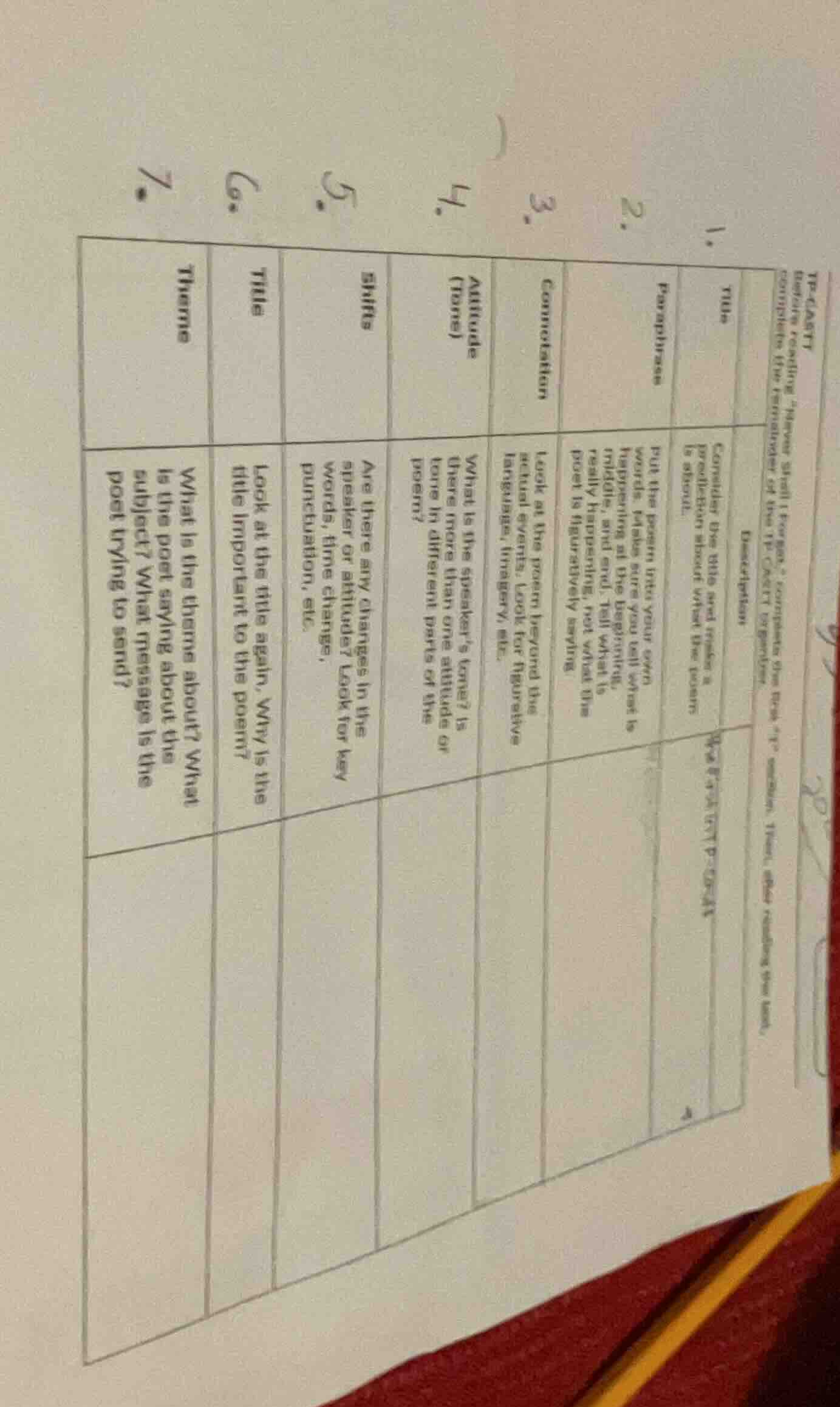
tp - castt
before reading “shall i compare thee to a summers day?”, complete the first “t” section. then, after reading the poem, complete the remainder of the tp - castt by yourself.
| description | your analysis | |
|---|---|---|
| 2. paraphrase | put the poem into your own words. first, tell what is happening at the beginning, middle, and end. then, tell what is really happening, not what the poet is literally saying. | |
| 3. connotation | look at the poem beyond the actual events. look for figurative language, imagery, etc. | |
| 4. attitude (tone) | what is the speaker’s tone? is there more than one attitude or tone in different parts of the poem? | |
| 5. shifts | are there any changes in the speaker or attitude? look for key words, time changes, punctuation, etc. | |
| 6. title | look at the title again. why is the title important to the poem? | |
| 7. theme | what is the theme about? what is the poet saying about the subject? what message is the poet trying to send? |

Snap & solve any problem in the app
Get step-by-step solutions on Sovi AI
Photo-based solutions with guided steps
Explore more problems and detailed explanations
- Prediction: The poem is a reflective, solemn piece about a significant, unforgettable personal or collective memory, likely tied to loss or a pivotal event.
- Paraphrase: The speaker recounts the horror of the Battle of the Somme, describing soldiers' deaths, the betrayal of false hope, and vows to never let the sacrifice be forgotten.
- Connotation: Words like "blood-dimmed tide," "broken jaw," and "lie" carry dark, violent, and betrayed tones; "torch," "faith," and "remember" hold connotations of duty, hope, and remembrance.
- Attitude (Tone): The speaker's tone shifts from bitter, angry condemnation of the war's lies to solemn, resolute determination to honor the fallen.
- Shifts: There is a shift from graphic, horrified depiction of the battle to a fierce, defiant vow of remembrance; the attitude moves from despair to unyielding resolve, marked by the turn to "we will not forget."
- Title: The title "Never Shall I Forget" is critical as it establishes the poem's core promise of remembrance, framing the entire narrative of loss and duty, and emphasizes the speaker's unbreakable commitment to honoring the dead.
- Theme: The poem's theme is the imperative of remembering the sacrifices of war, condemning the deception that leads to loss, and asserting that forgetting the fallen is a betrayal of their memory and the truth of war's cost.