QUESTION IMAGE
Question
unit 11: europe and russia mapping lab
guiding question: what are the physical and human characteristics of europe and russia?
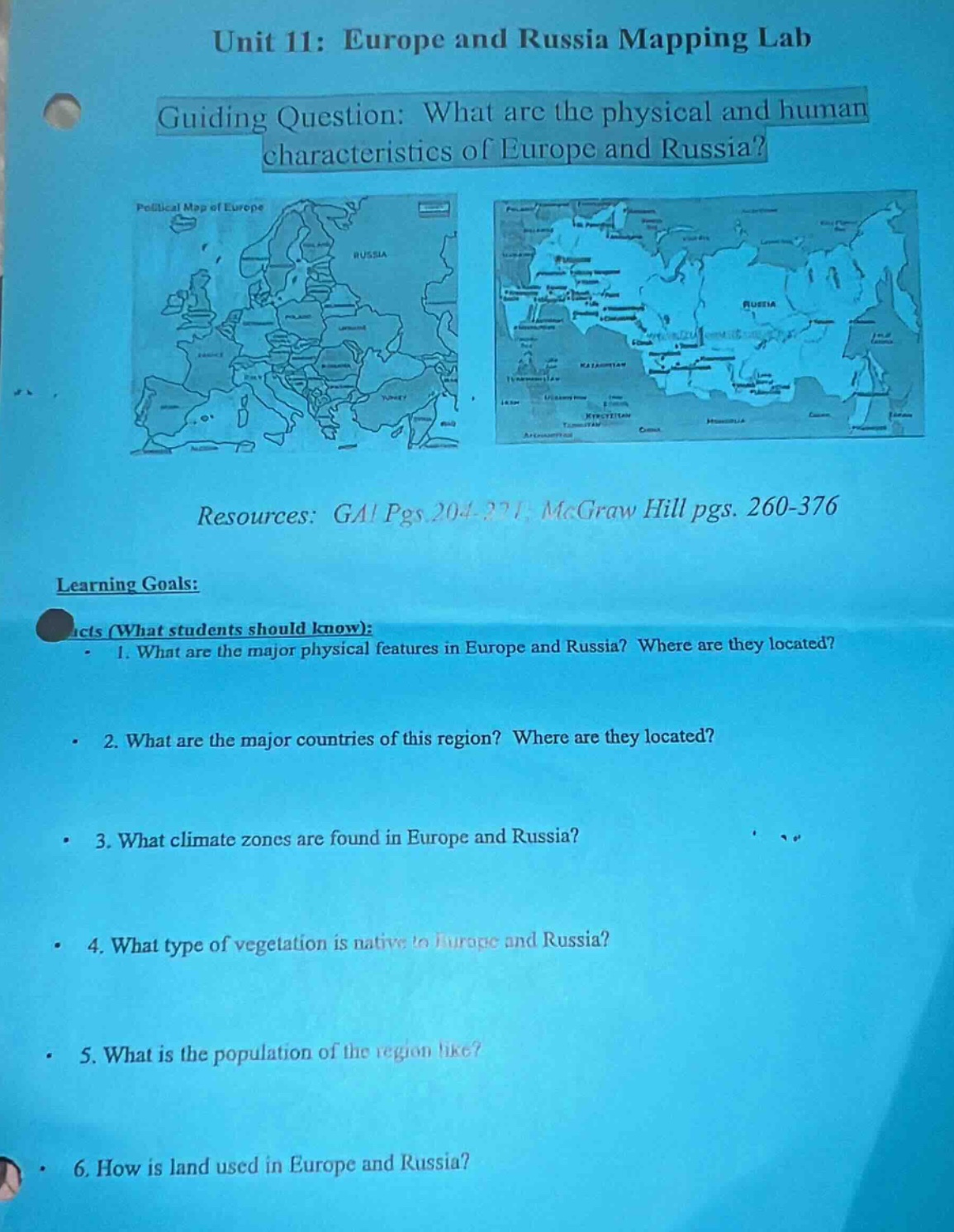
two maps: political map of europe and a map of russia with labeled locations
resources: gai pgs.204 - 221; mcgraw hill pgs. 260 - 376
learning goals:
- 1. what are the major physical features in europe and russia? where are they located?
- 2. what are the major countries of this region? where are they located?
- 3. what climate zones are found in europe and russia?
- 4. what type of vegetation is native to europe and russia?
- 5. what is the population of the region like?
- 6. how is land used in europe and russia?
Brief Explanations
- Physical Features: Key physical features include the Alps (central Europe), Pyrenees (southwest Europe), Ural Mountains (divides Europe and Russia), Volga River (Russia's longest river), North European Plain (stretches across northern Europe to western Russia), and the Caspian Sea (bordering southern Russia).
- Major Countries: Europe: Germany (central), France (western), UK (northwestern islands), Italy (southern peninsula), Spain (southwestern). Russia: spans eastern Europe and northern Asia, with Moscow as its western core.
- Climate Zones: Europe has marine west coast (western Europe), Mediterranean (southern Europe), humid continental (central/eastern Europe). Russia has humid continental (western Russia), subarctic (northern Russia), tundra (Arctic coast), and semi-arid/arid (southern Russia).
- Native Vegetation: Europe: deciduous forests (western/central), Mediterranean scrub (south), coniferous forests (northern). Russia: taiga (vast coniferous forests across northern Russia), tundra (Arctic mosses/lichens), steppe grasslands (southern Russia).
- Population: Europe has high population density (especially western/central), aging populations, urbanized centers. Russia has lower density overall, concentrated in western European Russia, declining population in rural eastern regions.
- Land Use: Europe: intensive agriculture (western plains), urban development (major cities), forestry (northern regions). Russia: large-scale agriculture (southern steppes), forestry (taiga), industrial/urban use (western Russia), undeveloped wilderness (eastern Siberia).

Snap & solve any problem in the app
Get step-by-step solutions on Sovi AI
Photo-based solutions with guided steps
Explore more problems and detailed explanations
- Major physical features and locations:
- Alps: Central Europe (France, Switzerland, Austria)
- Ural Mountains: Eastern Europe/Western Russia
- Volga River: Western Russia
- North European Plain: Northern Europe to Western Russia
- Caspian Sea: Southern Russia border
- Major countries and locations:
- Germany: Central Europe
- France: Western Europe
- United Kingdom: Northwestern European Islands
- Russia: Eastern Europe + Northern Asia
- Italy: Southern European Peninsula
- Climate zones:
- Europe: Marine west coast, Mediterranean, humid continental
- Russia: Humid continental, subarctic, tundra, semi-arid/arid
- Native vegetation:
- Europe: Deciduous forests, Mediterranean scrub, boreal forests
- Russia: Taiga (boreal forest), Arctic tundra, steppe grasslands
- Population traits:
- Europe: High density, aging, highly urbanized
- Russia: Low overall density, concentrated in western Russia, rural population decline
- Land use:
- Europe: Intensive agriculture, urban development, forestry
- Russia: Commercial agriculture, large-scale forestry, industrial/urban use, undeveloped wilderness