QUESTION IMAGE
Question
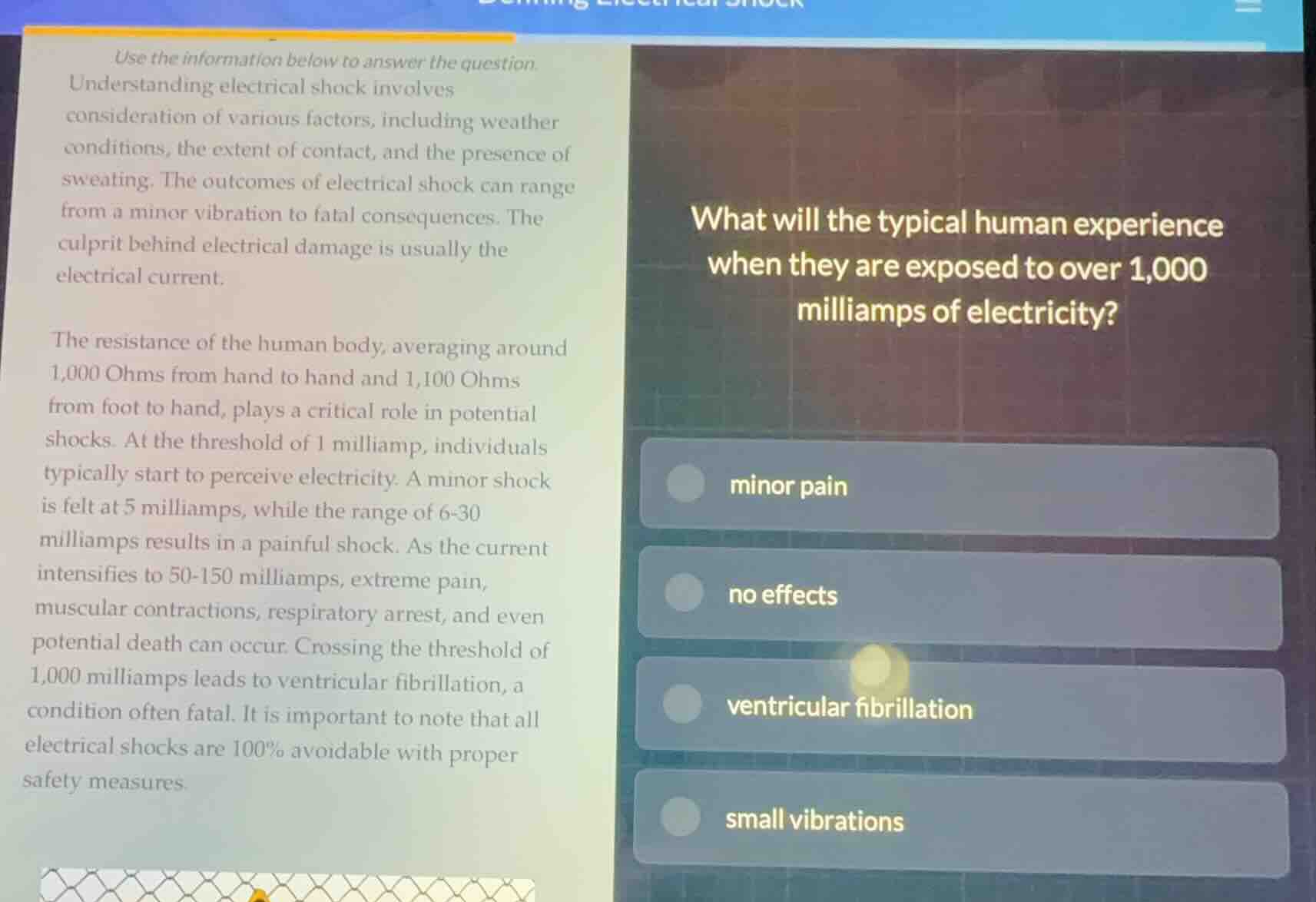
use the information below to answer the question. understanding electrical shock involves consideration of various factors, including weather conditions, the extent of contact, and the presence of sweating. the outcomes of electrical shock can range from a minor vibration to fatal consequences. the culprit behind electrical damage is usually the electrical current. the resistance of the human body, averaging around 1,000 ohms from hand to hand and 1,100 ohms from foot to hand, plays a critical role in potential shocks. at the threshold of 1 milliamp, individuals typically start to perceive electricity. a minor shock is felt at 5 milliamps, while the range of 6 - 30 milliamps results in a painful shock. as the current intensifies to 50 - 150 milliamps, extreme pain, muscular contractions, respiratory arrest, and even potential death can occur. crossing the threshold of 1,000 milliamps leads to ventricular fibrillation, a condition often fatal. it is important to note that all electrical shocks are 100% avoidable with proper safety measures. what will the typical human experience when they are exposed to over 1,000 milliamps of electricity? options: minor pain, no effects, ventricular fibrillation, small vibrations
The provided text states that exposure to over 1,000 milliamps of electricity leads to ventricular fibrillation, a often fatal condition. The other options correspond to lower current levels: small vibrations/minor perception at 1 milliamp, minor pain at 5 milliamps, and no effects is not associated with this high current.

Snap & solve any problem in the app
Get step-by-step solutions on Sovi AI
Photo-based solutions with guided steps
Explore more problems and detailed explanations
ventricular fibrillation