QUESTION IMAGE
Question
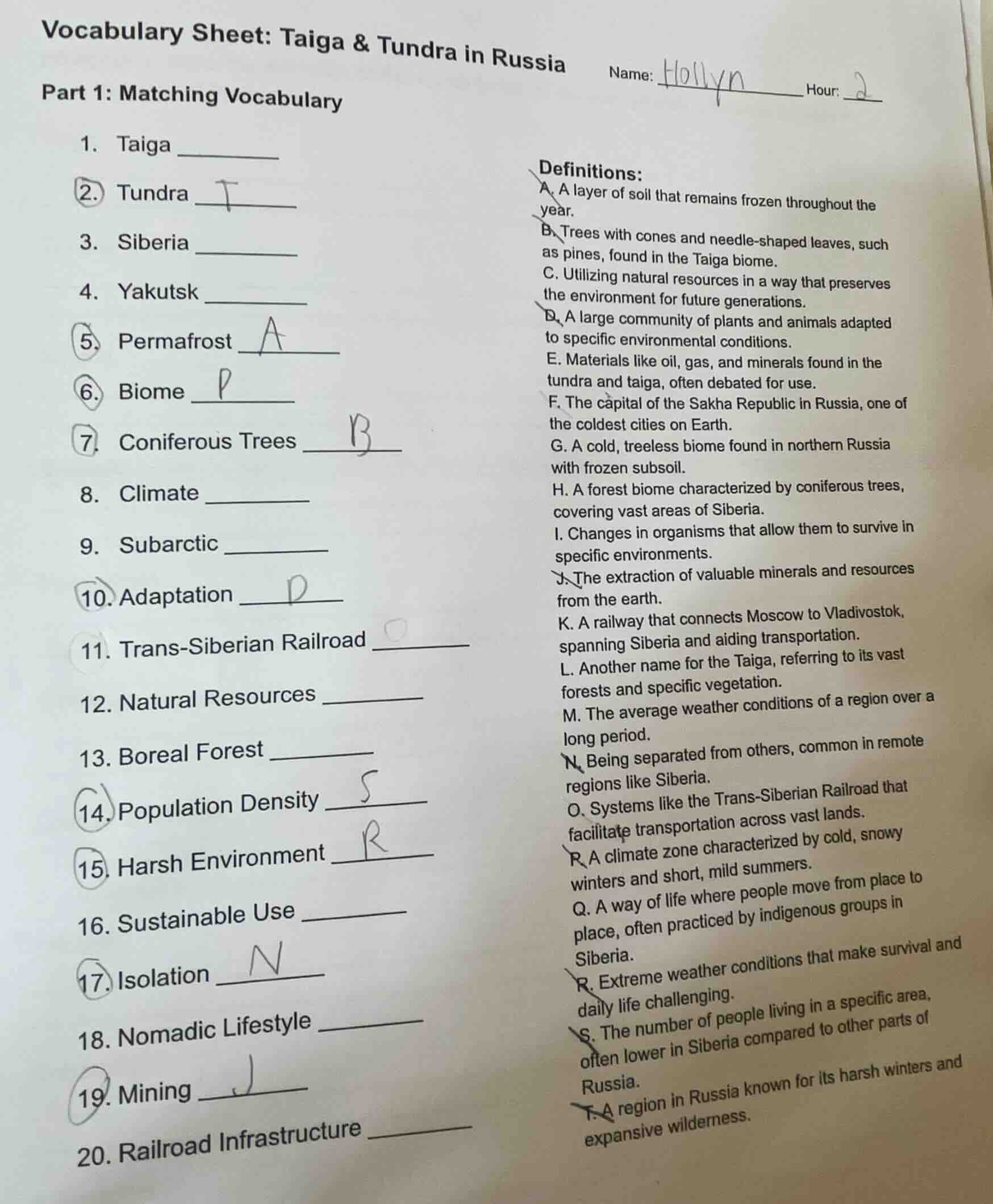
vocabulary sheet: taiga & tundra in russia
name: hollyn hour: 2
part 1: matching vocabulary
- taiga
- tundra
- siberia
- yakutsk
- permafrost
- biome
- coniferous trees
- climate
- subarctic
- adaptation
- trans - siberian railroad
- natural resources
- boreal forest
- population density
- harsh environment
- sustainable use
- isolation
- nomadic lifestyle
- mining
- railroad infrastructure
definitions:
a. a layer of soil that remains frozen throughout the year.
b. trees with cones and needle - shaped leaves, such as pines, found in the taiga biome.
c. utilizing natural resources in a way that preserves the environment for future generations.
d. a large community of plants and animals adapted to specific environmental conditions.
e. materials like oil, gas, and minerals found in the tundra and taiga, often debated for use.
f. the capital of the sakha republic in russia, one of the coldest cities on earth.
g. a cold, treeless biome found in northern russia with frozen subsoil.
h. a forest biome characterized by coniferous trees, covering vast areas of siberia.
i. changes in organisms that allow them to survive in specific environments.
j. the extraction of valuable minerals and resources from the earth.
k. a railway that connects moscow to vladivostok, spanning siberia and aiding transportation.
l. another name for the taiga, referring to its vast forests and specific vegetation.
m. the average weather conditions of a region over a long period.
n. being separated from others, common in remote regions like siberia.
o. systems like the trans - siberian railroad that facilitate transportation across vast lands.
r. a climate zone characterized by cold, snowy winters and short, mild summers.
q. a way of life where people move from place to place, often practiced by indigenous groups in siberia.
r. extreme weather conditions that make survival and daily life challenging.
s. the number of people living in a specific area, often lower in siberia compared to other parts of russia.
t. a region in russia known for its harsh winters and expansive wilderness.
Each term is matched to its corresponding definition based on geographic and environmental knowledge of Russia's taiga and tundra regions:
- Taiga matches the forest biome defined by coniferous trees in Siberia.
- Tundra matches the cold, treeless northern Russian biome.
- Siberia matches the remote, harsh Russian wilderness region.
- Yakutsk matches the cold capital of the Sakha Republic.
- Permafrost matches the permanently frozen soil layer.
- Biome matches the community of adapted plants/animals.
- Coniferous Trees matches cone/needle-shaped taiga trees.
- Climate matches long-term regional average weather.
- Subarctic matches the cold, snowy climate zone.
- Adaptation matches organism survival changes.
- Trans-Siberian Railroad matches the Moscow-Vladivostok railway.
- Natural Resources matches taiga/tundra minerals/oil.
- Boreal Forest matches the alternate name for taiga.
- Population Density matches the count of people in an area.
- Harsh Environment matches survival-challenging conditions.
- Sustainable Use matches preserving resources for future generations.
- Isolation matches separation in remote regions.
- Nomadic Lifestyle matches moving from place to place.
- Mining matches extracting earth's valuable resources.
- Railroad Infrastructure matches transportation systems like the Trans-Siberian.

Snap & solve any problem in the app
Get step-by-step solutions on Sovi AI
Photo-based solutions with guided steps
Explore more problems and detailed explanations
- Taiga - H
- Tundra - G
- Siberia - T
- Yakutsk - F
- Permafrost - A
- Biome - D
- Coniferous Trees - B
- Climate - M
- Subarctic - R
- Adaptation - I
- Trans-Siberian Railroad - K
- Natural Resources - E
- Boreal Forest - L
- Population Density - S
- Harsh Environment - R (corrected to match definition R)
- Sustainable Use - C
- Isolation - N
- Nomadic Lifestyle - Q
- Mining - J
- Railroad Infrastructure - O