QUESTION IMAGE
Question
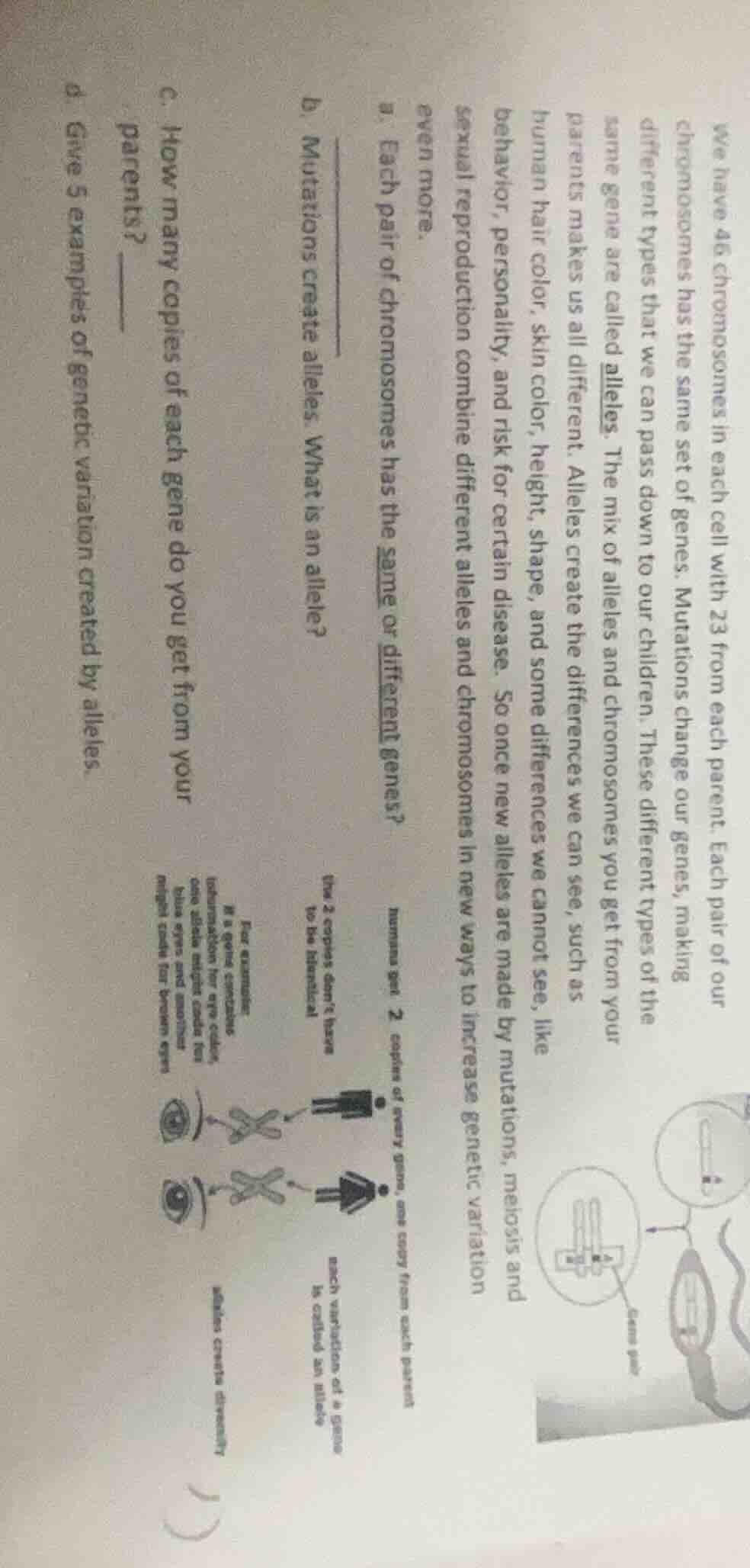
we have 46 chromosomes in each cell with 23 from each parent. each pair of our chromosomes has the same set of genes. mutations change our genes, making different types that we can pass down to our children. these different types of the same gene are called alleles. the mix of alleles and chromosomes you get from your parents makes us all different. alleles create the differences we can see, such as human hair color, skin color, height, shape, and some differences we cannot see, like behavior, personality, and risk for certain disease. so once new alleles are made by mutations, meiosis and sexual reproduction combine different alleles and chromosomes in new ways to increase genetic variation even more.a. each pair of chromosomes has the same or different genes?b. mutations create alleles. what is an allele?c. how many copies of each gene do you get from your parents?d. give 5 examples of genetic variation created by alleles.for example:humans get 2 copies of every gene, one copy from each parentthe 2 copies dont have to be identicalif a gene contains information for eye color, one allele might code for blue eyes and another might code for brown eyeseach variation of a gene is called an allelealleles create diversity
a. Se basa en la información sobre la composición de los cromosomas en las células humanas, donde cada par corresponde al mismo conjunto de genes.
b. Se define según la descripción de las variantes de un gen que se heredan y generan diferencias.
c. Se deriva del hecho de que cada célula recibe la mitad de su material genético de cada progenitor.
d. Se toman ejemplos de rasgos mencionados en el texto que son producto de la variación alélica.

Snap & solve any problem in the app
Get step-by-step solutions on Sovi AI
Photo-based solutions with guided steps
Explore more problems and detailed explanations
a. Each pair of chromosomes has the same set of genes.
b. An allele is a different type/variant of the same gene that can be passed from parents to offspring, which creates genetic differences.
c. 1 copy of each gene from each parent (total 2 copies per gene, 1 from each).
d. 1. Different human hair colors
- Different human skin colors
- Variations in human height
- Different facial shapes
- Variations in personality traits