QUESTION IMAGE
Question
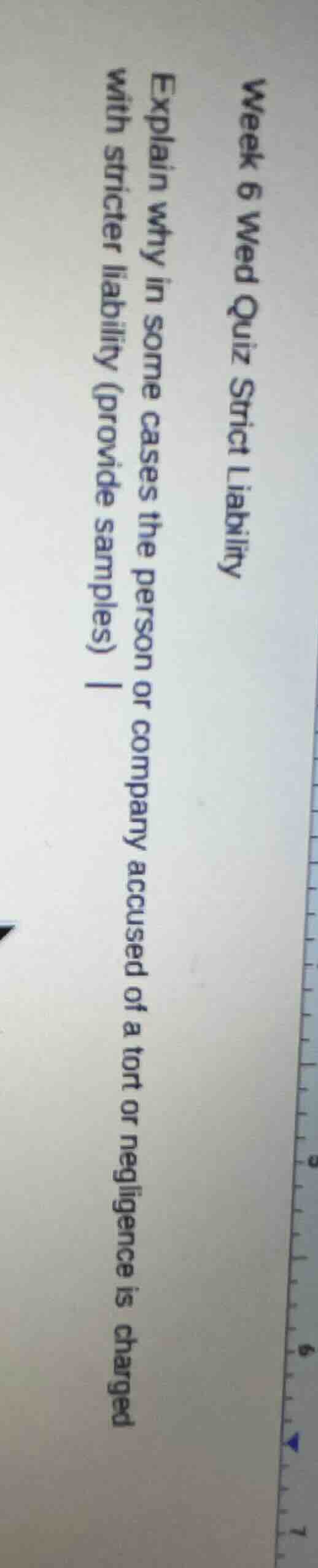
week 6 wed quiz strict liability
explain why in some cases the person or company accused of a tort or negligence is charged with stricter liability (provide samples)
Strict liability is used when activities are inherently dangerous, or when it is critical to prioritize public safety and accountability over proving intent or negligence. It shifts the burden to the party engaging in high-risk or regulated conduct, as they are in the best position to prevent harm.
- Inherently dangerous activities: These are acts that carry a high risk of harm even with reasonable care. For example, keeping wild, dangerous animals (like a venomous snake) as pets. If the snake escapes and bites someone, the owner is strictly liable, because the activity is so risky that society holds them accountable regardless of how careful they were.
- Regulated industries/products: For certain consumer products or industries, strict liability ensures companies prioritize safety. For example, defective manufacturing of a children's toy (like a toy with small, choking hazards that slip past quality checks). The manufacturer is strictly liable for injuries to a child, even if they claim they followed standard procedures, because the public relies on these products being safe, and the company has greater resources to prevent defects.
- Environmental harm: Cases involving toxic waste spills or pollution often use strict liability. If a company's storage tank leaks and contaminates local water, the company is liable even if they say they maintained the tank properly. This encourages companies to take extreme precautions to protect public health and the environment.

Snap & solve any problem in the app
Get step-by-step solutions on Sovi AI
Photo-based solutions with guided steps
Explore more problems and detailed explanations
Strict liability is applied in cases where:
- The activity is inherently dangerous (e.g., keeping dangerous wild animals; owners are liable for harm even with proper containment, as the activity carries unavoidable risk).
- The case involves defective consumer products (e.g., a poorly manufactured car part that causes an accident; the manufacturer is liable without proof of intentional negligence, to protect consumers and incentivize product safety).
- There is potential for serious environmental or public health harm (e.g., a chemical company's toxic spill; the company is liable regardless of care, to prioritize community safety and accountability for high-stakes, risk-prone operations).
This framework prioritizes public protection, places accountability on parties best able to prevent harm, and avoids the difficulty of proving intent or negligence in high-risk contexts.