QUESTION IMAGE
Question
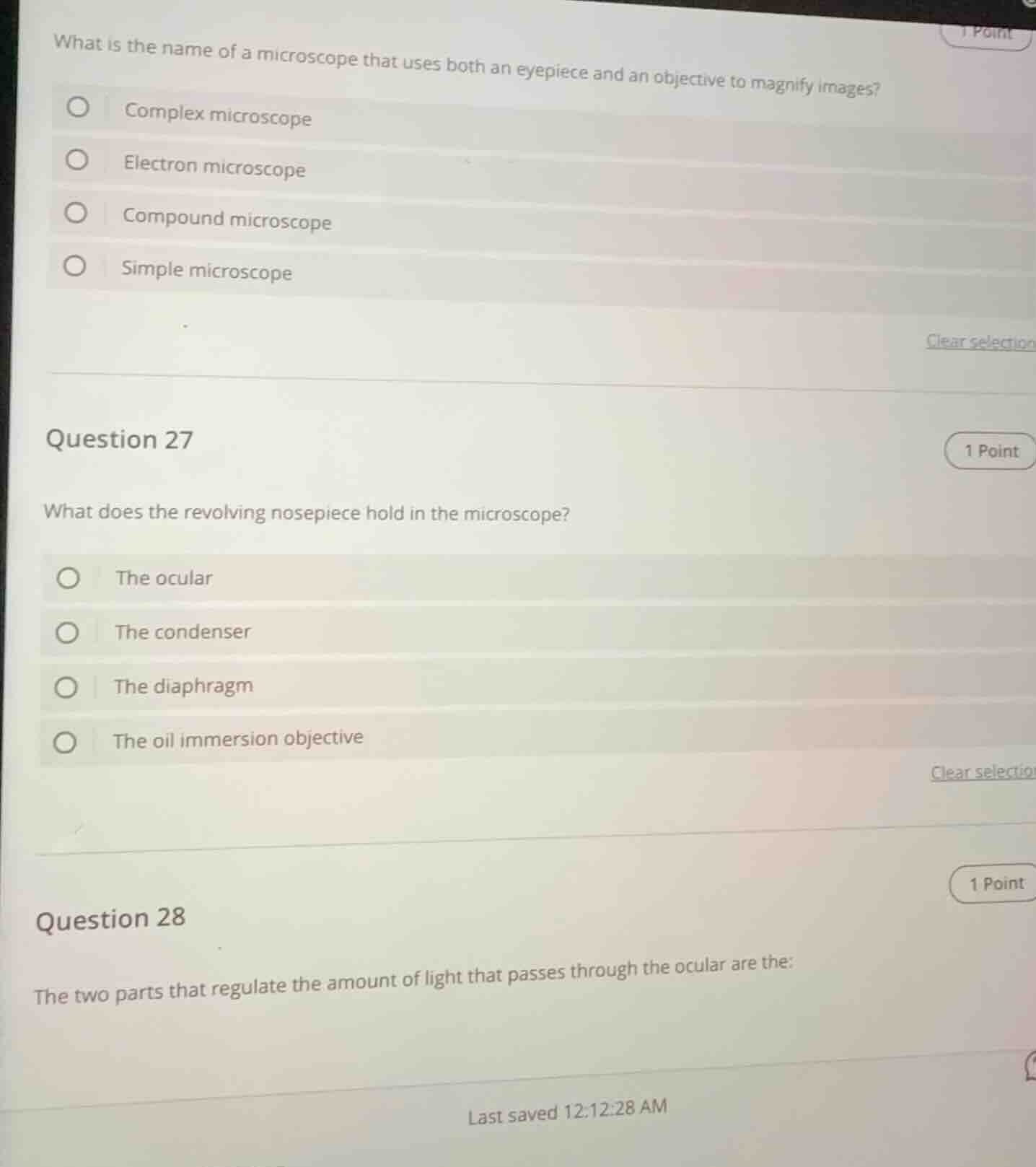
what is the name of a microscope that uses both an eyepiece and an objective to magnify images?
complex microscope
electron microscope
compound microscope
simple microscope
question 27
what does the revolving nosepiece hold in the microscope?
the ocular
the condenser
the diaphragm
the oil immersion objective
question 28
the two parts that regulate the amount of light that passes through the ocular are the:
Brief Explanations
- For the first question: A compound microscope is defined as using both an eyepiece (ocular) and objective lenses to magnify images. Electron microscopes use electron beams, simple microscopes only use one lens, and "complex microscope" is not a standard term.
- For Question 27: The revolving nosepiece of a microscope is the component that holds objective lenses (including the oil immersion objective, which is a type of objective). The ocular is the eyepiece at the top, the condenser focuses light, and the diaphragm controls light intensity.
- For Question 28 (partial question completed based on standard microscope knowledge): The diaphragm (adjusts aperture size) and the light source intensity control (or rheostat) regulate light passing through the optical path to the ocular; alternatively, the condenser aperture diaphragm and field diaphragm are the two key parts for light regulation.

Snap & solve any problem in the app
Get step-by-step solutions on Sovi AI
Photo-based solutions with guided steps
Explore more problems and detailed explanations
- Compound microscope
- The oil immersion objective
- The diaphragm and the condenser (or the diaphragm and light intensity control/rheostat)