QUESTION IMAGE
Question
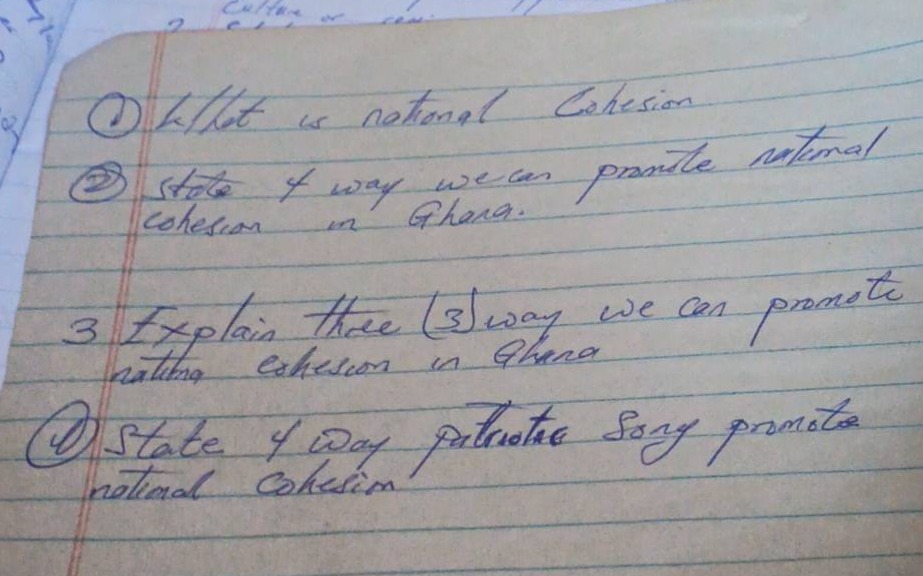
- what is national cohesion
- state 4 way we can promote national cohesion in ghana.
- explain three (3) way we can promote national cohesion in ghana
- state 4 way patriotic song promote national cohesion
Sub - question 1: What is national cohesion?
National cohesion refers to the sense of unity, togetherness, and shared identity among the citizens of a nation. In the context of Ghana, it involves different ethnic groups, religious groups, and social classes coming together, having a common vision for the country's development, respecting each other's cultures and values, and working towards the common good. It helps in reducing divisions based on ethnicity, religion, or region and fosters a sense of belonging to the nation of Ghana.
- Promote Cultural Diversity and Inclusion: Ghana has many ethnic groups with rich cultures. By celebrating and promoting the cultures of all ethnic groups (e.g., through cultural festivals, teaching about different cultures in schools), citizens will appreciate each other's heritage, reducing ethnic - based divisions.
- Equal Access to Resources and Opportunities: Ensure that resources like education, healthcare, and employment opportunities are distributed fairly across different regions and social groups. For example, if all regions have good schools and job prospects, people will feel that they are part of a just nation, promoting cohesion.
- Inter - ethnic and Inter - religious Dialogue: Encourage dialogue between different ethnic and religious groups. This can be done through community meetings, inter - faith events. When people talk and understand each other's beliefs and lifestyles, misunderstandings and conflicts are reduced.
- National Symbols and Events: Promote national symbols like the flag, national anthem, and national holidays. Celebrating events like Independence Day together can instill a sense of national pride and unity among Ghanaians.
- Education Reform for National Cohesion: Revise the school curriculum to include topics on Ghana's diverse ethnic groups, their histories, and contributions. For example, in history classes, teach about the roles of different ethnic groups in Ghana's independence struggle. In social studies, discuss the cultural practices of all major ethnic groups. This will help students (future citizens) understand and appreciate the diversity of Ghana, reducing ethnic prejudices and promoting a sense of shared national history.
- Infrastructure Development Across Regions: Invest in infrastructure (roads, electricity, water supply) in all regions of Ghana, especially in under - developed areas. For instance, if the Northern region has good roads connecting to the Southern regions, it will boost trade and movement of people between regions. When people from different regions interact more due to better infrastructure, they will build relationships, and a sense of national unity will grow as they see the nation developing as a whole.
- Media as a Tool for Cohesion: The media (TV, radio, newspapers) can play a big role. Media houses should air programs that promote national unity, like stories of successful Ghanaians from different ethnic groups, documentaries on national achievements, and shows that highlight the common values of Ghanaians. Also, media should avoid spreading content that could incite ethnic or religious hatred. By presenting a positive and unified image of Ghana, the media can influence public opinion towards cohesion.

Snap & solve any problem in the app
Get step-by-step solutions on Sovi AI
Photo-based solutions with guided steps
Explore more problems and detailed explanations
National cohesion in Ghana is the sense of unity, shared identity, and togetherness among Ghanaian citizens (from different ethnic, religious, and social groups) who work towards the common good, respect diverse cultures/values, and feel a strong sense of belonging to Ghana.