QUESTION IMAGE
Question
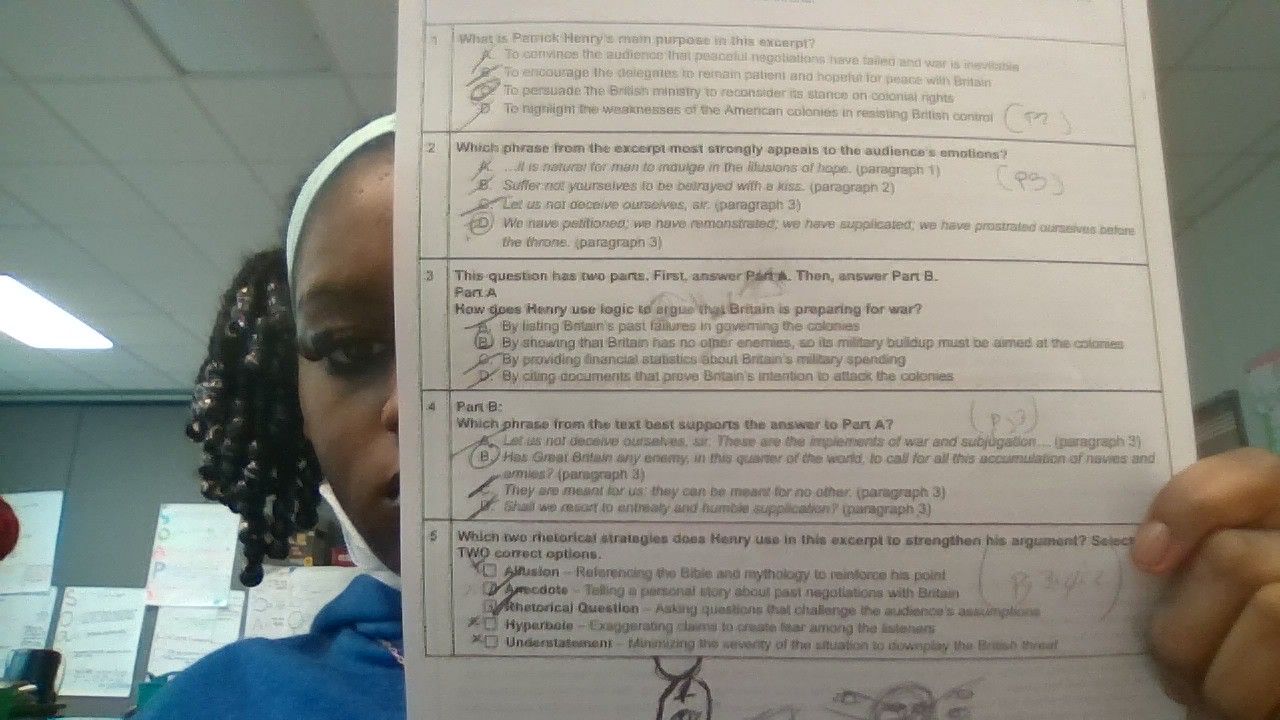
1 what is patrick henrys main purpose in this excerpt?a. to convince the audience that peaceful negotiations have failed and war is inevitableb. to encourage the delegates to remain patient and hopeful for peace with britainc. to persuade the british ministry to reconsider its stance on colonial rightsd. to highlight the weaknesses of the american colonies in resisting british control2 which phrase from the excerpt most strongly appeals to the audiences emotions?a. ...it is natural for man to indulge in the illusions of hope. (paragraph 1)b. suffer not yourselves to be betrayed with a kiss. (paragraph 2)c. let us not deceive ourselves, sir. (paragraph 3)d. we have petitioned; we have remonstrated; we have supplicated; we have prostrated ourselves before the throne. (paragraph 3)3 this question has two parts. first, answer part a. then, answer part b.part ahow does henry use logic to argue that britain is preparing for war?a. by listing britains past failures in governing the coloniesb. by showing that britain has no other enemies, so its military buildup must be aimed at the coloniesc. by providing financial statistics about britains military spendingd. by citing documents that prove britains intention to attack the colonies4 part b:which phrase from the text best supports the answer to part a?a. let us not deceive ourselves, sir. these are the implements of war and subjugation... (paragraph 3)b. has great britain any enemy, in this quarter of the world, to call for all this accumulation of navies and armies? (paragraph 3)c. they are meant for us: they can be meant for no other. (paragraph 3)d. shall we resort to entreaty and humble supplication? (paragraph 3)5 which two rhetorical strategies does henry use in this excerpt to strengthen his argument? select two correct options.□ allusion - referencing the bible and mythology to reinforce his point□ anecdote - telling a personal story about past negotiations with britain□ rhetorical question - asking questions that challenge the audiences assumptions□ hyperbole - exaggerating claims to create fear among the listeners□ understatement - minimizing the severity of the situation to downplay the british threat
- Patrick Henry's "Give Me Liberty or Give Me Death" speech centers on arguing that peaceful attempts with Britain have failed, making war necessary, matching option A.
- "Let us not deceive ourselves, sir" directly appeals to the audience's sense of urgency and honesty, stirring emotional recognition of the crisis, stronger than the other options.
- Part A: Henry's logical argument focuses on Britain's unprovoked military buildup near the colonies, with no other regional enemies, so it must target them, matching option B.
- Part B: The question about Britain having no regional enemies directly supports the logic that its military buildup is for the colonies, aligning with Part A's answer.
- Henry uses allusions (like the "betrayed with a kiss" biblical reference) and rhetorical questions (e.g., the one about Britain's enemies) to strengthen his persuasive argument.

Snap & solve any problem in the app
Get step-by-step solutions on Sovi AI
Photo-based solutions with guided steps
Explore more problems and detailed explanations
- A. To convince the audience that peaceful negotiations have failed and war is inevitable
- C. Let us not deceive ourselves, sir. (paragraph 3)
- Part A: B. By showing that Britain has no other enemies, so its military buildup must be aimed at the colonies
- Part B: B. Has Great Britain any enemy, in this quarter of the world, to call for all this accumulation of navies and armies? (paragraph 3)
- Allusion - Referencing the Bible and mythology to reinforce his point; Rhetorical Question - Asking questions that challenge the audience's assumptions