QUESTION IMAGE
Question
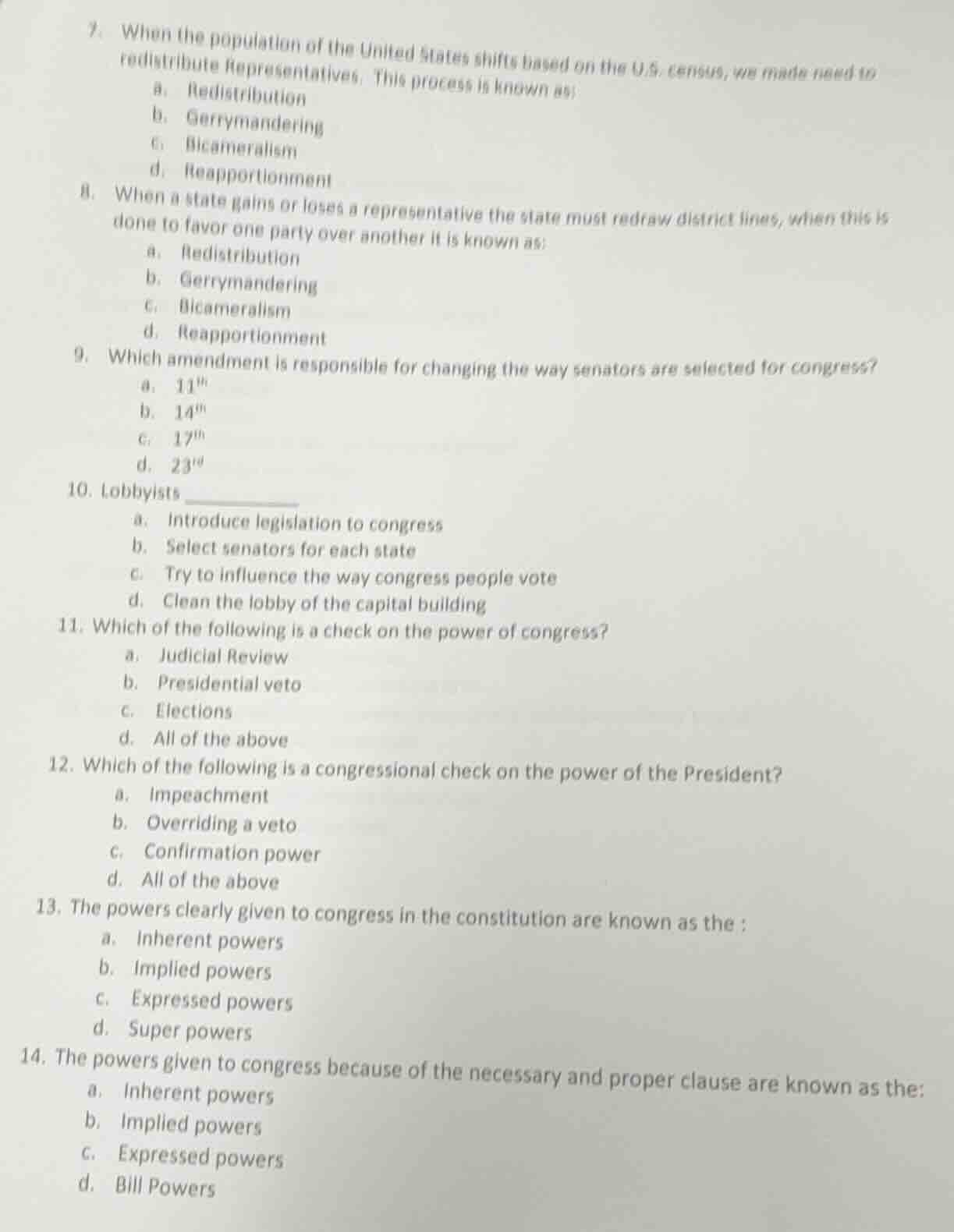
- when the population of the united states shifts based on the u.s. census, we made need to redistribute representatives. this process is known as:
a. redistribution
b. gerrymandering
c. bicameralism
d. reapportionment
- when a state gains or loses a representative the state must redraw district lines, when this is done to favor one party over another it is known as:
a. redistribution
b. gerrymandering
c. bicameralism
d. reapportionment
- which amendment is responsible for changing the way senators are selected for congress?
a. 11th
b. 14th
c. 17th
d. 23rd
- lobbyists ________
a. introduce legislation to congress
b. select senators for each state
c. try to influence the way congress people vote
d. clean the lobby of the capital building
- which of the following is a check on the power of congress?
a. judicial review
b. presidential veto
c. elections
d. all of the above
- which of the following is a congressional check on the power of the president?
a. impeachment
b. overriding a veto
c. confirmation power
d. all of the above
- the powers clearly given to congress in the constitution are known as the :
a. inherent powers
b. implied powers
c. expressed powers
d. super powers
- the powers given to congress because of the necessary and proper clause are known as the:
a. inherent powers
b. implied powers
c. expressed powers
d. bill powers
Question 7
Reapportionment is the process of redistributing seats in the House of Representatives based on population changes from the census. Redistribution is a broader term, gerrymandering is about district manipulation for partisan gain, and bicameralism is about a two - chamber legislature.
Gerrymandering is the practice of redrawing district lines to favor one political party. Redistribution is just redrawing lines (not necessarily for partisan gain), reapportionment is about seat distribution, and bicameralism is about the two - chamber system.
The 17th Amendment changed the election of senators from being chosen by state legislatures to being directly elected by the people. The 11th Amendment deals with state sovereign immunity, the 14th with citizenship and equal protection, and the 23rd with Washington D.C. electoral votes.

Snap & solve any problem in the app
Get step-by-step solutions on Sovi AI
Photo-based solutions with guided steps
Explore more problems and detailed explanations
d. Reapportionment