QUESTION IMAGE
Question
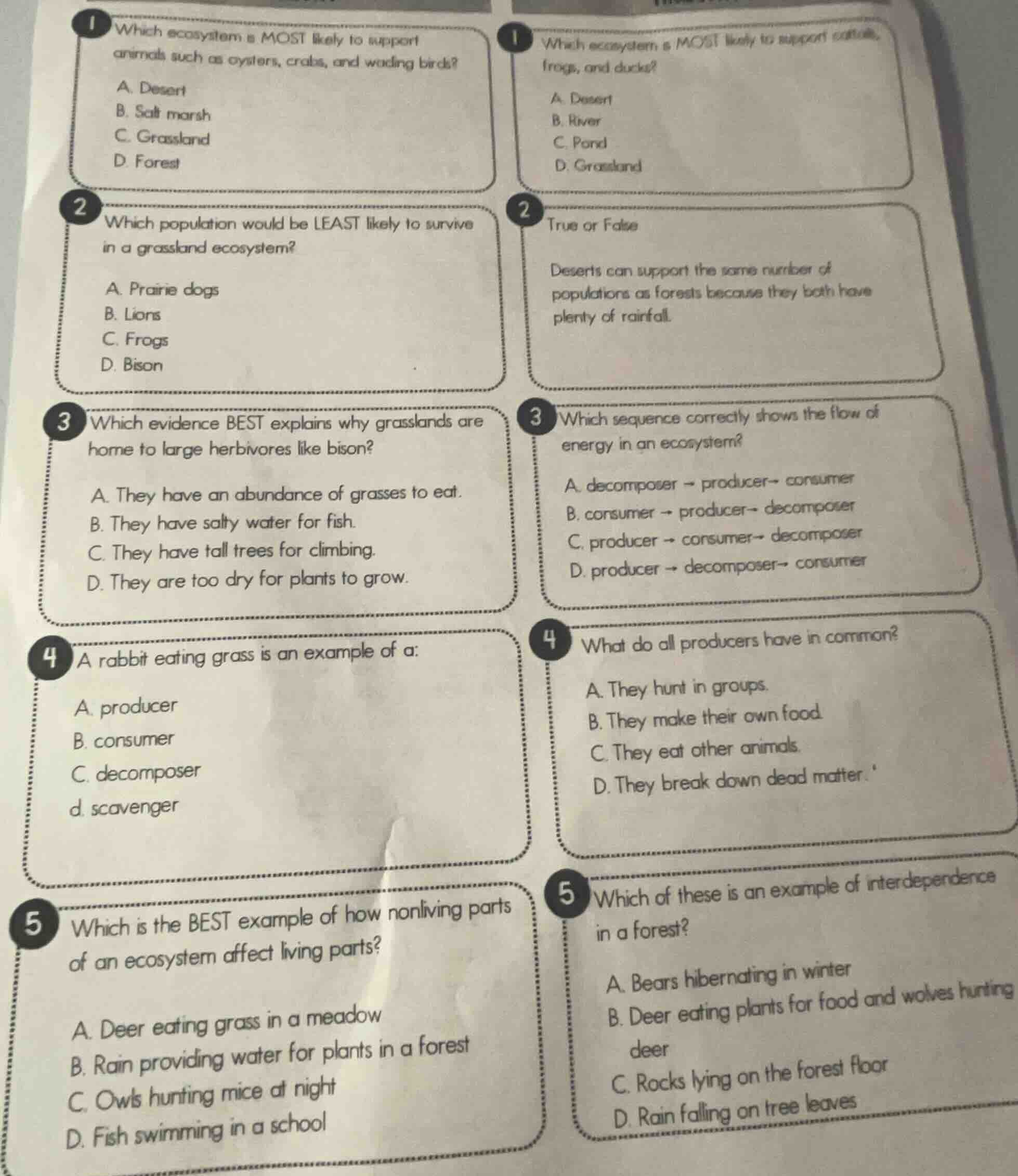
1 which ecosystem is most likely to support animals such as oysters, crabs, and wading birds? a. desert b. salt marsh c. grassland d. forest 2 which population would be least likely to survive in a grassland ecosystem? a. prairie dogs b. lions c. frogs d. bison 3 which evidence best explains why grasslands are home to large herbivores like bison? a. they have an abundance of grasses to eat. b. they have salty water for fish. c. they have tall trees for climbing. d. they are too dry for plants to grow. 4 a rabbit eating grass is an example of a: a. producer b. consumer c. decomposer d. scavenger 5 which is the best example of how nonliving parts of an ecosystem affect living parts? a. deer eating grass in a meadow b. rain providing water for plants in a forest c. owls hunting mice at night d. fish swimming in a school 1 which ecosystem is most likely to support cattails, frogs, and ducks? a. desert b. river c. pond d. grassland 2 true or false deserts can support the same number of populations as forests because they both have plenty of rainfall. 3 which sequence correctly shows the flow of energy in an ecosystem? a. decomposer → producer→ consumer b. consumer → producer→ decomposer c. producer → consumer→ decomposer d. producer → decomposer→ consumer 4 what do all producers have in common? a. they hunt in groups. b. they make their own food. c. they eat other animals. d. they break down dead matter. 5 which of these is an example of interdependence in a forest? a. bears hibernating in winter b. deer eating plants for food and wolves hunting deer c. rocks lying on the forest floor d. rain falling on tree leaves
Left Column (Questions 1 - 5)
Question 1
Oysters, crabs, and wading birds are associated with coastal, brackish water habitats. A salt marsh is a coastal wetland with such conditions, while deserts, grasslands, and forests do not support these species.
Grasslands are dryish, grass - dominated. Frogs need water - rich environments (ponds, streams) to breed and live. Prairie dogs, lions, and bison are adapted to grassland conditions.
Grasslands have lots of grasses (producers). Large herbivores like bison eat grass. Option A says there's an abundance of grasses to eat, which explains why bison live there. Option B is about salty water (not grassland), C about tall trees (grasslands have few trees), D says too dry for plants (false, grasslands have grasses).

Snap & solve any problem in the app
Get step-by-step solutions on Sovi AI
Photo-based solutions with guided steps
Explore more problems and detailed explanations
B. Salt marsh