QUESTION IMAGE
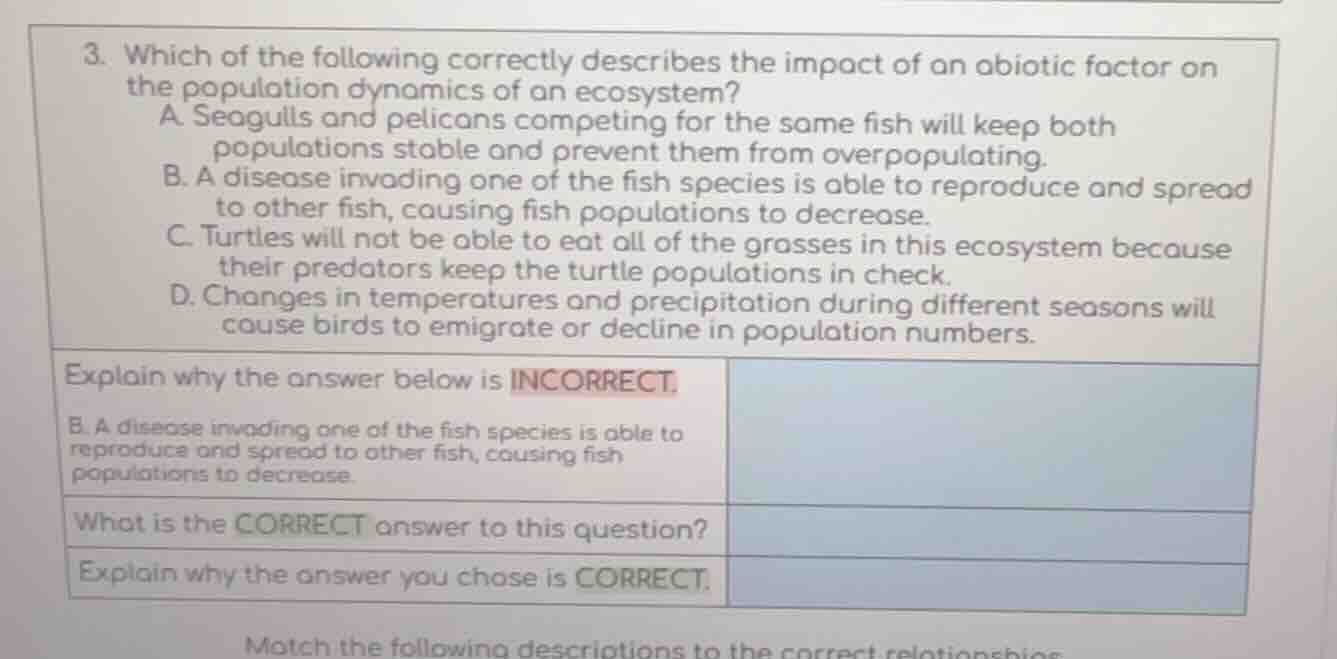
Question
- which of the following correctly describes the impact of an abiotic factor on the population dynamics of an ecosystem?
a. seagulls and pelicans competing for the same fish will keep both populations stable and prevent them from overpopulating.
b. a disease invading one of the fish species is able to reproduce and spread to other fish, causing fish populations to decrease.
c. turtles will not be able to eat all of the grasses in this ecosystem because their predators keep the turtle populations in check.
d. changes in temperatures and precipitation during different seasons will cause birds to emigrate or decline in population numbers.
explain why the answer below is incorrect.
b. a disease invading one of the fish species is able to reproduce and spread to other fish, causing fish populations to decrease.
what is the correct answer to this question?
explain why the answer you chose is correct.
- Why Option B is incorrect: Disease is a biotic (living) factor, not abiotic.
- Correct answer reasoning: Abiotic factors are non-living environmental elements. Temperature and precipitation are non-living, and they directly impact bird population dynamics by driving emigration or population decline.
- Why other options are wrong: Option A describes biotic competition; Option C describes biotic predator-prey control, both involve living factors, not abiotic ones.

Snap & solve any problem in the app
Get step-by-step solutions on Sovi AI
Photo-based solutions with guided steps
Explore more problems and detailed explanations
- Explanation of incorrect answer (B): Disease is a biotic (living) factor, not an abiotic non-living factor, so it does not fit the question's requirement of an abiotic factor's impact.
- Correct answer: D. Changes in temperatures and precipitation during different seasons will cause birds to emigrate or decline in population numbers.
- Explanation of correct answer: Temperature and precipitation are abiotic (non-living) environmental factors. Seasonal changes in these factors directly affect bird populations by forcing emigration to more suitable habitats or causing population declines if conditions become unlivable, which matches the question's focus on abiotic impacts on population dynamics.