QUESTION IMAGE
Question
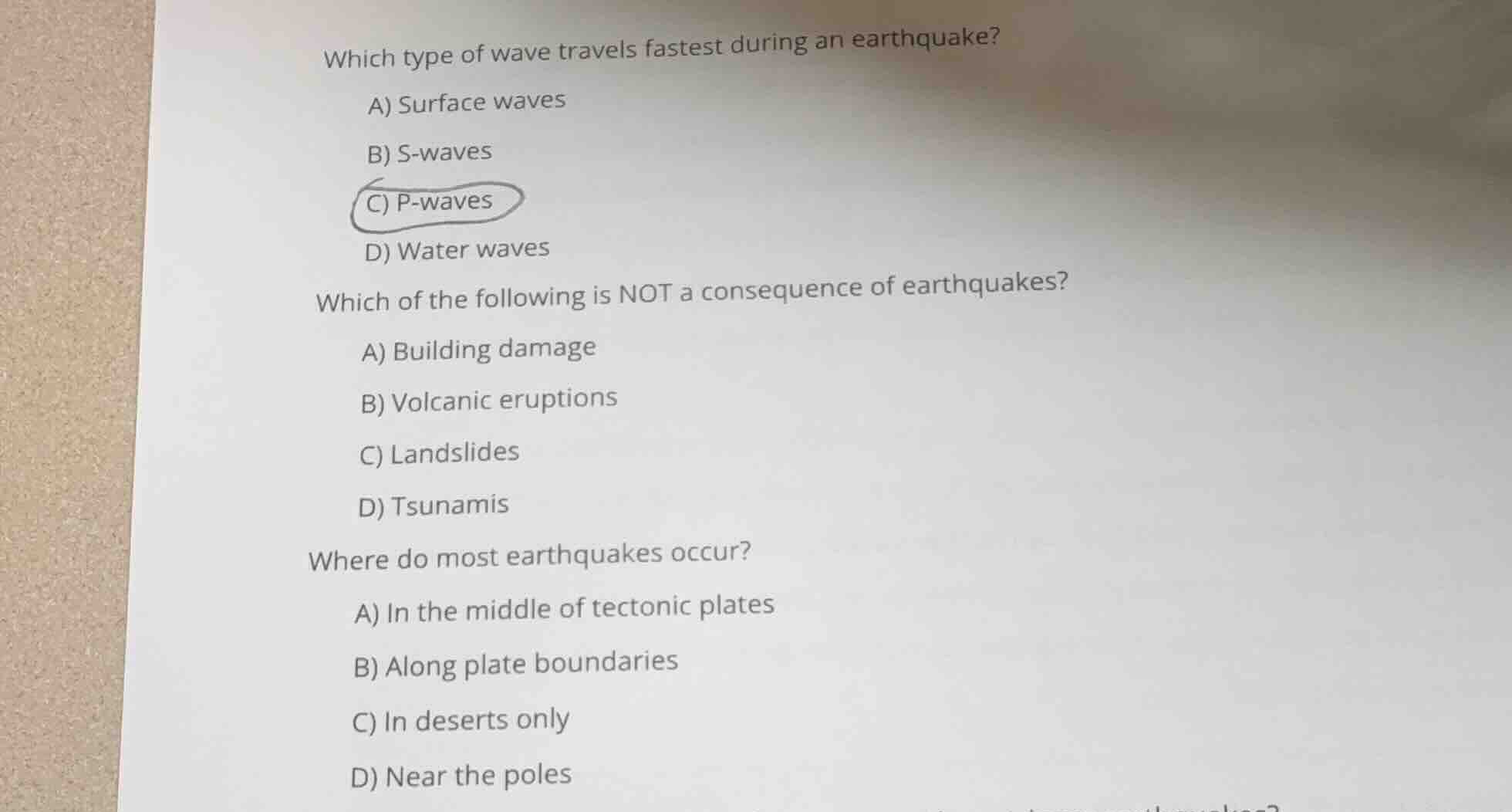
which type of wave travels fastest during an earthquake?
a) surface waves
b) s - waves
c) p - waves
d) water waves
which of the following is not a consequence of earthquakes?
a) building damage
b) volcanic eruptions
c) landslides
d) tsunamis
where do most earthquakes occur?
a) in the middle of tectonic plates
b) along plate boundaries
c) in deserts only
d) near the poles
Brief Explanations
- For the first question: P-waves are primary seismic waves that compress and expand the ground, making them the fastest seismic waves. Surface waves and S-waves are slower, and water waves are not earthquake body waves.
- For the second question: Earthquakes can trigger landslides, tsunamis, and building damage directly. Volcanic eruptions are driven by magma movement, not earthquakes (though earthquakes can sometimes be a precursor, they are not a consequence of earthquakes).
- For the third question: Most earthquakes form due to the movement and interaction of tectonic plates at their boundaries, where stress builds up and releases. Earthquakes in plate interiors, deserts, or near poles are rare.

Snap & solve any problem in the app
Get step-by-step solutions on Sovi AI
Photo-based solutions with guided steps
Explore more problems and detailed explanations
- C) P-waves
- B) Volcanic eruptions
- B) Along plate boundaries