QUESTION IMAGE
Question
why was 2023 canadas smokiest year on record?
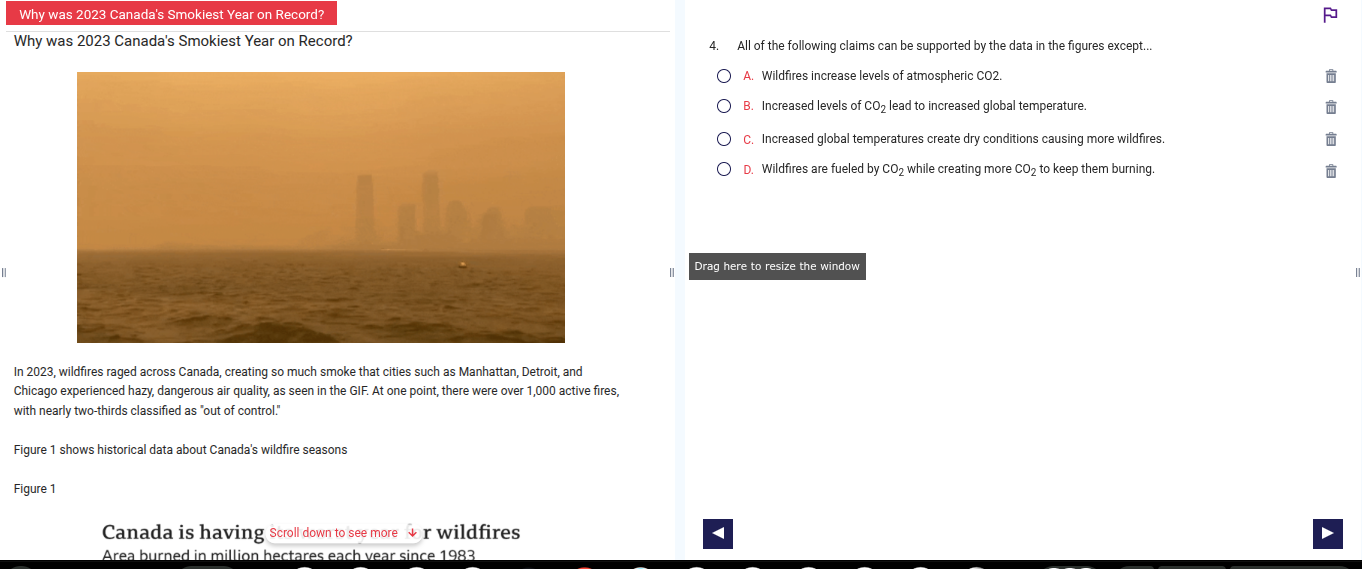
in 2023, wildfires raged across canada, creating so much smoke that cities such as manhattan, detroit, and chicago experienced hazy, dangerous air quality, as seen in the gif. at one point, there were over 1,000 active fires, with nearly two - thirds classified as out of control.
figure 1 shows historical data about canadas wildfire seasons
figure 1
- all of the following claims can be supported by the data in the figures except...
a. wildfires increase levels of atmospheric co₂.
b. increased levels of co₂ lead to increased global temperature.
c. increased global temperatures create dry conditions causing more wildfires.
d. wildfires are fueled by co₂ while creating more co₂ to keep them burning.
- Option A: Wildfires burn organic matter, releasing CO₂, so this can be supported.
- Option B: The data about wildfires and the context of climate change (implied by the smokiest year) align with the idea that increased CO₂ (from various sources including wildfires) leads to global warming, which is a well - known scientific relationship.
- Option C: Warmer temperatures (from increased CO₂) lead to drier conditions, which fuel more wildfires. This is a common climate - wildfire feedback loop and can be supported by the wildfire data (more wildfires in 2023).
- Option D: Wildfires are fueled by combustible materials like vegetation, not CO₂. CO₂ is a product of combustion, not a fuel for wildfires. So this claim cannot be supported by the data.

Snap & solve any problem in the app
Get step-by-step solutions on Sovi AI
Photo-based solutions with guided steps
Explore more problems and detailed explanations
D. Wildfires are fueled by CO₂ while creating more CO₂ to keep them burning.