QUESTION IMAGE
Question
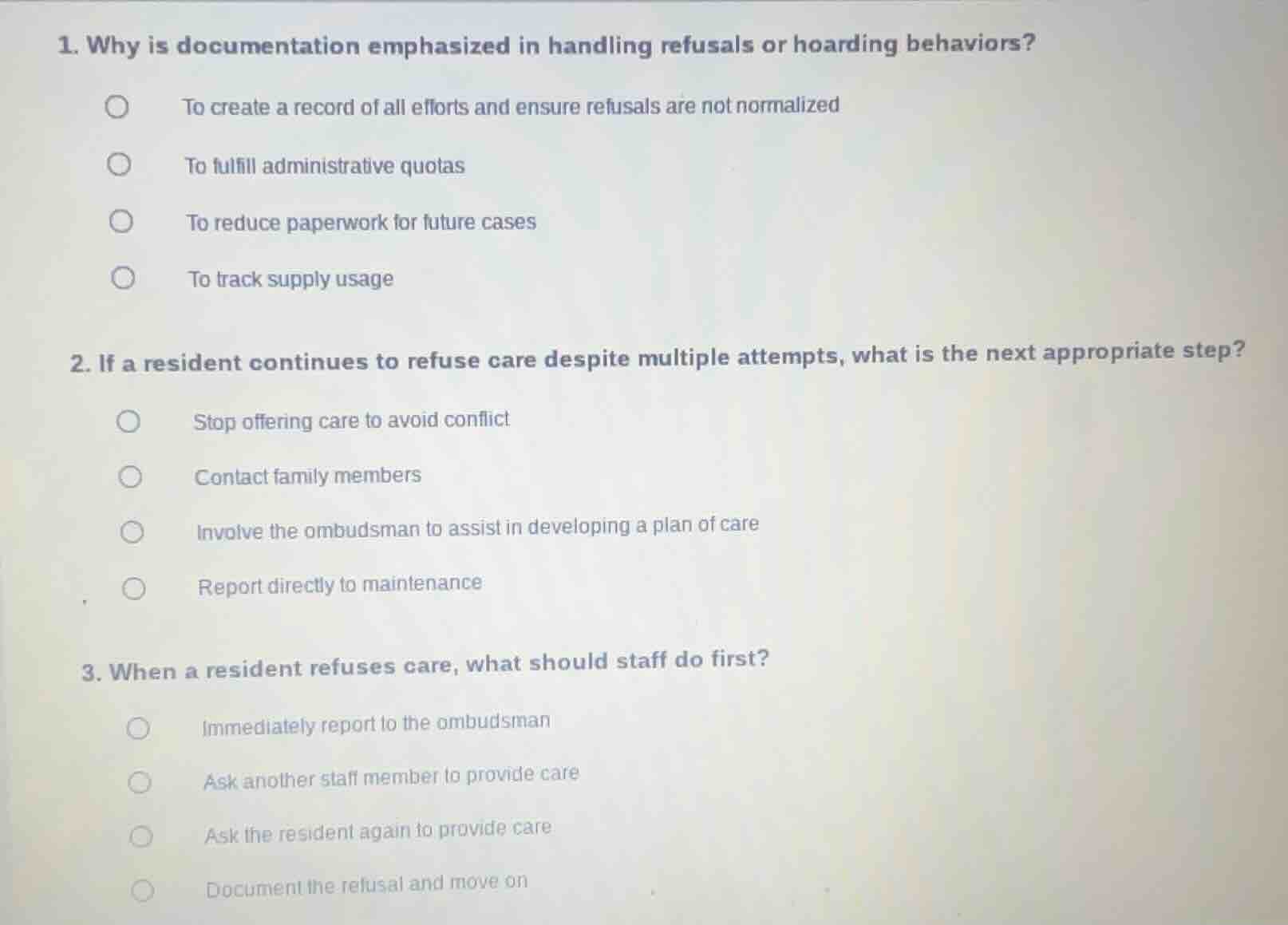
- why is documentation emphasized in handling refusals or hoarding behaviors?
to create a record of all efforts and ensure refusals are not normalized
to fulfill administrative quotas
to reduce paperwork for future cases
to track supply usage
- if a resident continues to refuse care despite multiple attempts, what is the next appropriate step?
stop offering care to avoid conflict
contact family members
involve the ombudsman to assist in developing a plan of care
report directly to maintenance
- when a resident refuses care, what should staff do first?
immediately report to the ombudsman
ask another staff member to provide care
ask the resident again to provide care
document the refusal and move on
Question 1
Documentation in handling refusals/hoarding is to record efforts and prevent normalizing refusals. Fulfilling quotas, reducing paperwork, or tracking supplies are not the main reasons.
If a resident keeps refusing care, involving an ombudsman to develop a care plan is appropriate. Stopping care, contacting family (not the next step here), or reporting to maintenance (irrelevant) are not right.
When a resident refuses care, first, staff should document the refusal and proceed. Immediate ombudsman report, asking another staff, or re - asking right away are not the first steps.

Snap & solve any problem in the app
Get step-by-step solutions on Sovi AI
Photo-based solutions with guided steps
Explore more problems and detailed explanations
A. To create a record of all efforts and ensure refusals are not normalized