QUESTION IMAGE
Question
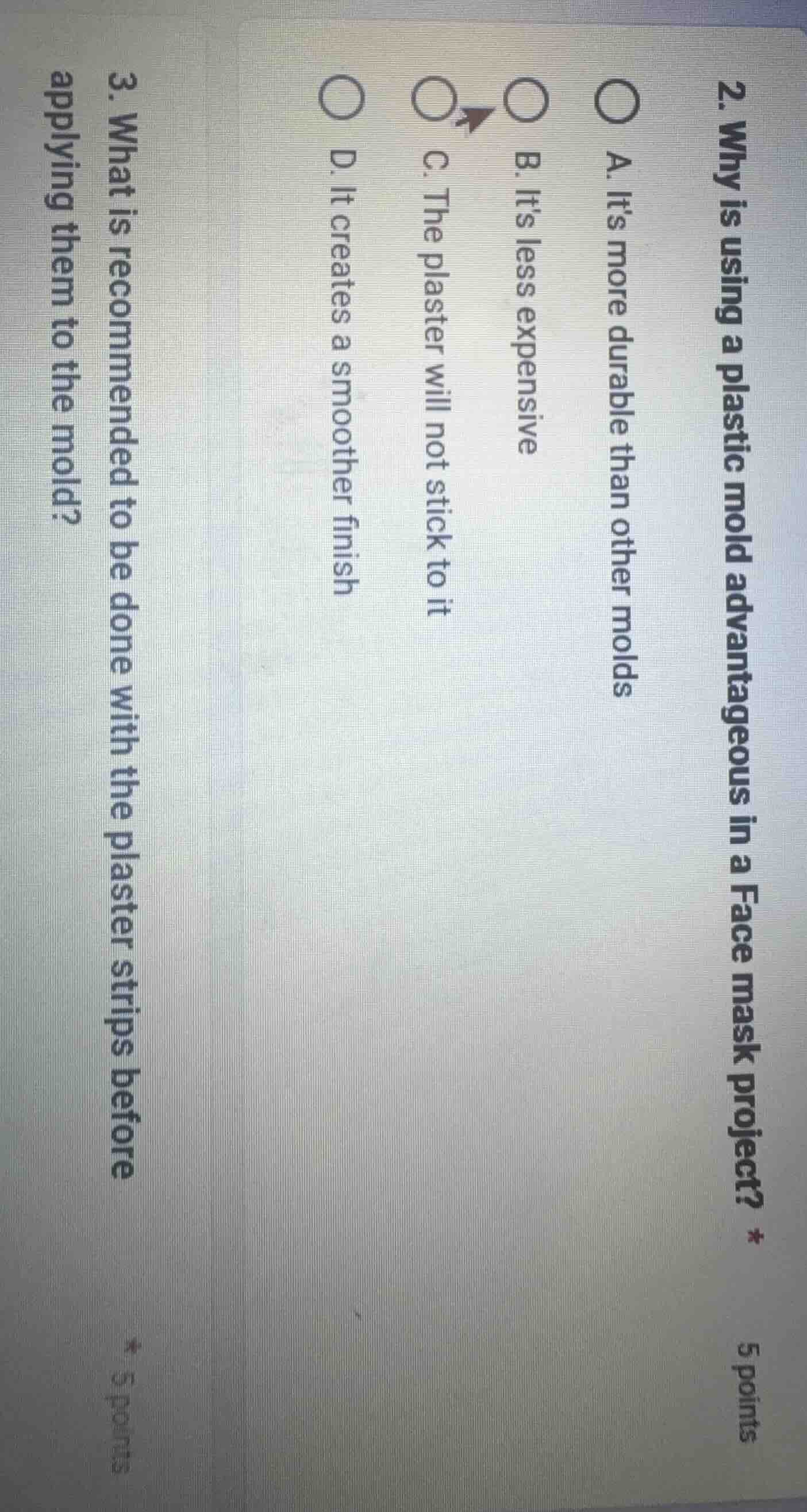
- why is using a plastic mold advantageous in a face mask project? * 5 points
a. its more durable than other molds
b. its less expensive
c. the plaster will not stick to it
d. it creates a smoother finish
- what is recommended to be done with the plaster strips before applying them to the mold? * 5 points
Question 2
To determine the advantage of a plastic mold in a face mask project, we analyze each option:
- Option A: Plastic molds aren't necessarily more durable than all other molds (e.g., metal might be more durable).
- Option B: Cost - effectiveness isn't the primary advantage for a face mask project related to plaster.
- Option C: Plastic has non - stick properties, so plaster won't adhere to it, which is crucial for mold release in a face mask (plaster) project.
- Option D: The smooth finish is more about the plaster application or the mold's design, not a unique advantage of plastic over other mold materials for this purpose.
So the correct option is the one related to plaster not sticking.
In plaster - based mold projects (like face masks), plaster strips need to be soaked in water. This hydrates the plaster, making it flexible to apply to the mold, adhere properly, and take the mold's shape. Drying or other treatments would make them rigid and unusable for molding.

Snap & solve any problem in the app
Get step-by-step solutions on Sovi AI
Photo-based solutions with guided steps
Explore more problems and detailed explanations
C. The plaster will not stick to it
Question 3
Since the question is about what to do with plaster strips before applying to a mold (likely in a face mask or art - related project), typically, plaster strips are soaked in water before application. This softens them, makes them malleable, and allows for proper adhesion and shaping on the mold. Without the options, we can infer the recommended step is soaking the plaster strips in water. But if we assume common options (like soak in water, dry, etc.), the standard practice is soaking.