QUESTION IMAGE
Question
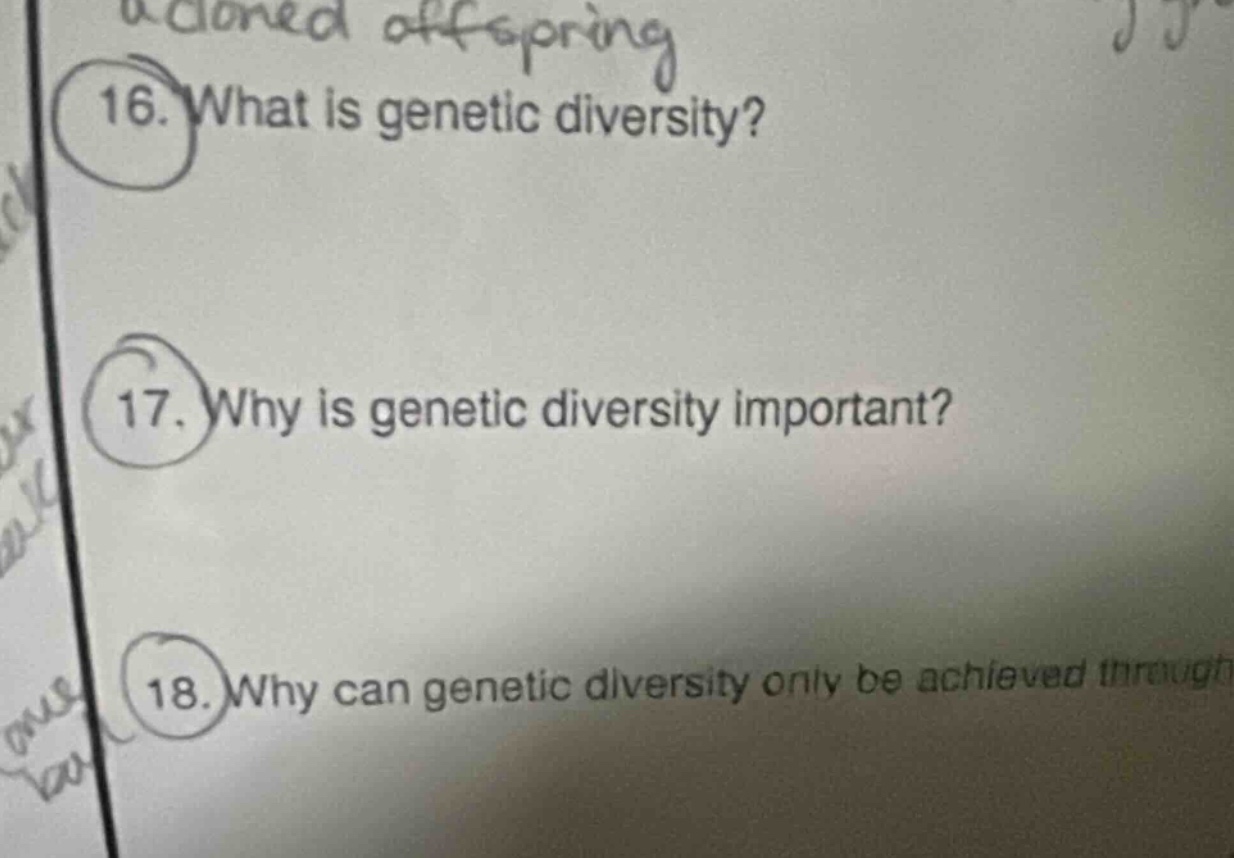
- what is genetic diversity? 17. why is genetic diversity important? 18. why can genetic diversity only be achieved through
Question 16: What is genetic diversity?
Genetic diversity refers to the variety of genetic information (alleles, genes, genotypes) within a species or a population. It arises from mutations, genetic recombination during sexual reproduction, and gene flow between populations. Different individuals within a group have different combinations of genes, leading to variations in traits like physical characteristics, disease resistance, and adaptability.
- Adaptation to Change: Higher genetic diversity means more trait variations. In changing environments (e.g., climate shifts, new diseases), some individuals with suitable traits (e.g., drought tolerance, disease resistance) will survive and reproduce, helping the population adapt.
- Disease Resistance: A diverse gene pool reduces the risk of a single disease wiping out a population. If some individuals have genes that resist a pathogen, they can survive and pass those genes on.
- Ecosystem Stability: Species with genetic diversity are more resilient, which supports healthy ecosystems. For example, diverse plant populations can better withstand pests, maintain soil health, and support pollinators.
- Reduced Inbreeding Depression: Inbreeding (mating between close relatives) increases the chance of harmful recessive traits being expressed. Genetic diversity from outbreeding (mating with non - relatives) minimizes this risk.
Asexual reproduction (e.g., binary fission in bacteria, budding in yeast) produces offspring that are genetically identical or nearly identical to the parent (clones). In contrast, sexual reproduction involves two key processes:
- Meiosis: During meiosis, homologous chromosomes exchange genetic material (crossing - over), creating new combinations of alleles on chromosomes.
- Fertilization: The fusion of gametes (sperm and egg) from two different parents combines their unique sets of genes. This recombination of genes from two distinct lineages generates novel genotypes in offspring, increasing genetic diversity. Asexual reproduction lacks these processes, so genetic diversity (beyond rare mutations) is not generated.

Snap & solve any problem in the app
Get step-by-step solutions on Sovi AI
Photo-based solutions with guided steps
Explore more problems and detailed explanations
Genetic diversity is the variety of genetic information (e.g., alleles, genes, genotypes) within a species or population, resulting from factors like mutations, sexual recombination, and gene flow, and causing trait variations among individuals.