QUESTION IMAGE
Question
1844\tnavy
james m. porter, 1844\tsecretary of war
james s. green, 1844\tsecretary of the treasury
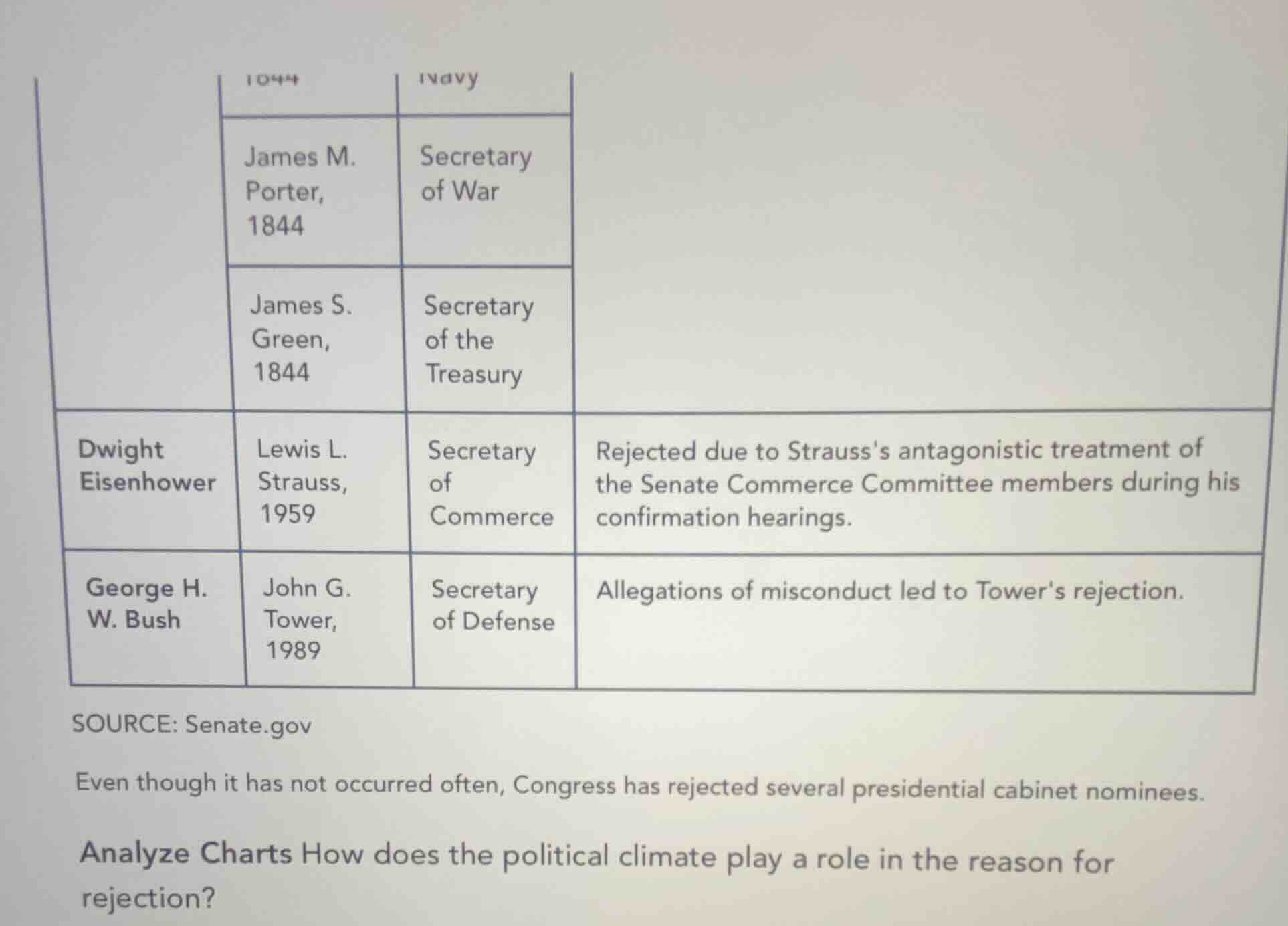
dwight eisenhower\tlewis l. strauss, 1959\tsecretary of commerce\trejected due to strausss antagonistic treatment of the senate commerce committee members during his confirmation hearings.
george h. w. bush\tjohn g. tower, 1989\tsecretary of defense\tallegations of misconduct led to towers rejection.
source: senate.gov
even though it has not occurred often, congress has rejected several presidential cabinet nominees.
analyze charts how does the political climate play a role in the reason for rejection?
- For Lewis L. Strauss (1959), the political climate of congressional oversight and inter-branch tensions shaped his rejection: his confrontational attitude toward Senate committee members (a key part of the legislative branch) clashed with the Senate's expectation of respectful, collaborative engagement during confirmations, leading them to reject his nomination as a rebuke of his disregard for their role.
- For John G. Tower (1989), the political climate included heightened scrutiny of public officials' personal conduct. Allegations of misconduct resonated with a Congress and public that demanded accountability from cabinet-level nominees, leading to his rejection as the body judged his behavior incompatible with the role of Secretary of Defense.

Snap & solve any problem in the app
Get step-by-step solutions on Sovi AI
Photo-based solutions with guided steps
Explore more problems and detailed explanations
Political climate impacts rejection in two key ways shown:
- For Lewis L. Strauss (1959): Tensions between the executive and legislative branches, and the Senate's expectation of respectful engagement during confirmations, led to rejection after he treated Senate committee members antagonistically, violating unwritten norms of inter-branch cooperation.
- For John G. Tower (1989): A political climate focused on official accountability and scrutiny of personal conduct led to his rejection, as allegations of misconduct were deemed incompatible with the trust required for a cabinet-level national security role.