QUESTION IMAGE
Question
analyzing sphere interactions
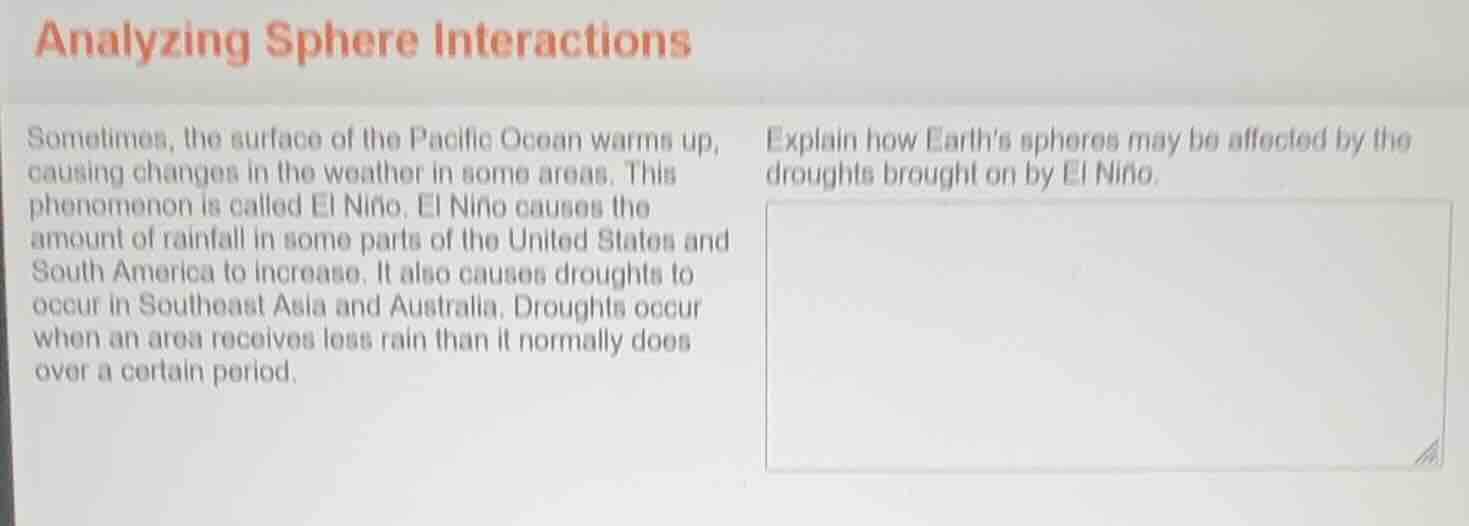
sometimes, the surface of the pacific ocean warms up, causing changes in the weather in some areas. this phenomenon is called el niño. el niño causes the amount of rainfall in some parts of the united states and south america to increase. it also causes droughts to occur in southeast asia and australia. droughts occur when an area receives less rain than it normally does over a certain period.
explain how earth’s spheres may be affected by the droughts brought on by el niño.
Brief Explanations
- Hydrosphere: Droughts reduce surface water (lakes, rivers) and groundwater levels, lowering overall water volume and increasing water salinity in remaining bodies.
- Biosphere: Plant life dies from lack of water, reducing food sources for herbivores, which in turn impacts carnivores; this disrupts food webs and can cause species migration or population decline.
- Atmosphere: Dry soil releases more dust and aerosols into the air, reduced plant transpiration lowers atmospheric moisture, and warmer surface temperatures from less evaporative cooling alter local air circulation patterns.
- Geosphere: Dry, compacted soil increases erosion risk; lack of water weakens plant roots that hold soil in place, leading to wind erosion and potential desertification.
- Anthroposphere (human sphere): Agricultural crop failures lead to food shortages, reduced water access impacts drinking supplies and industrial operations, and increased wildfire risk threatens human settlements and infrastructure.

Snap & solve any problem in the app
Get step-by-step solutions on Sovi AI
Photo-based solutions with guided steps
Explore more problems and detailed explanations
Earth's spheres are impacted by El Niño-induced droughts as follows:
- Hydrosphere: Reduced surface/groundwater, higher water salinity.
- Biosphere: Disrupted food webs, species population decline/migration.
- Atmosphere: More dust/aerosols, altered moisture and circulation.
- Geosphere: Increased soil erosion, desertification risk.
- Anthroposphere: Crop failures, water scarcity, wildfire threats to humans.