QUESTION IMAGE
Question
the byzantine empire
glossary
term definition
vandalize
icon
iconoclasm the destruction of icons or the beliefs they represented
excommunicate
schism
illuminated manuscript
codex a group of manuscript pages bound together by stitching to form a notebook
objective
in this lesson, you will
the origin and rise of the byzantine empire
the byzantine empire lasted for more than ____ years. at its height, it was the ______ and most ______ empire in the world. during the byzantine empire, ________ was a major source of conflict.
the origin of the byzantine empire
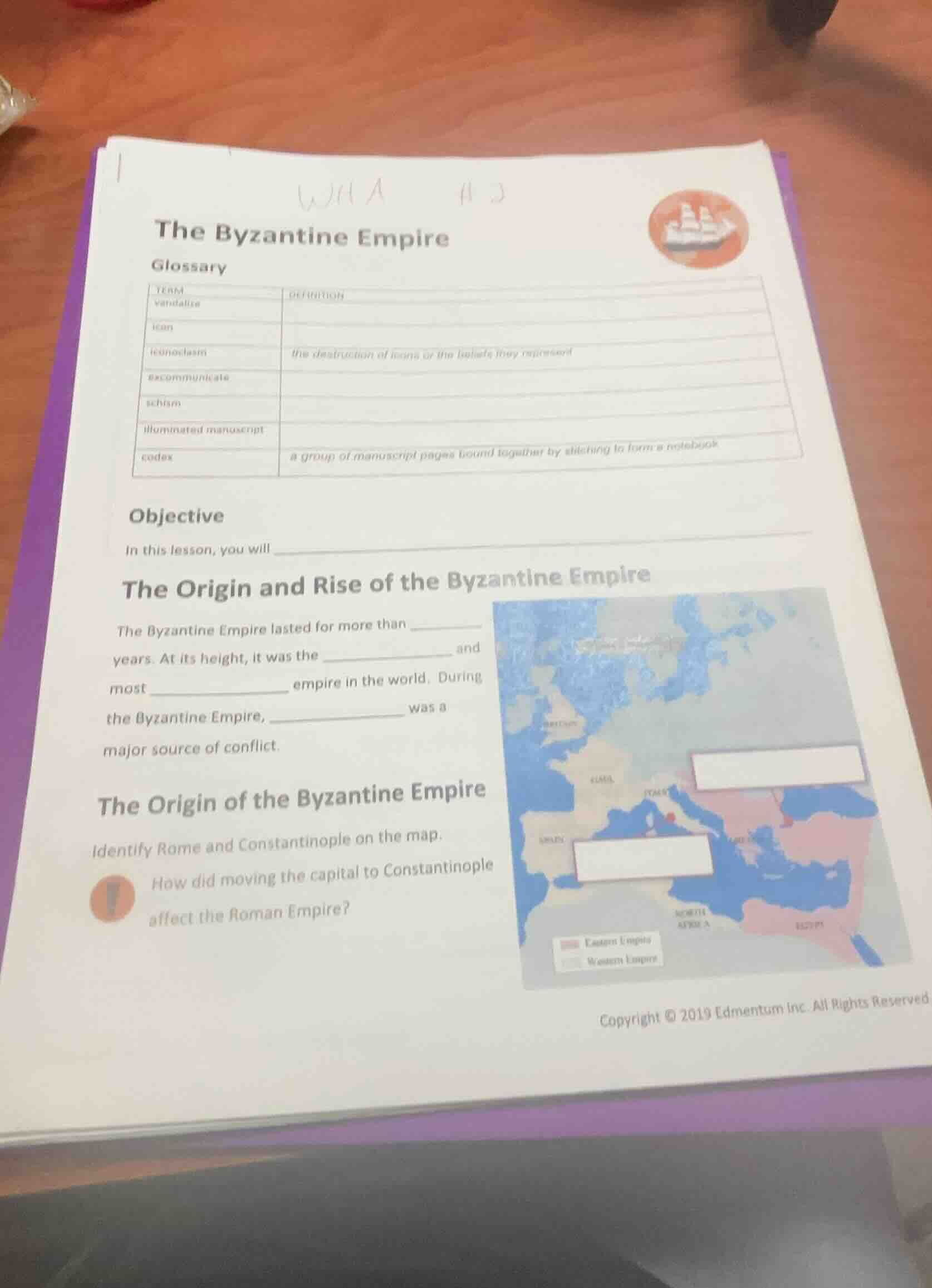
identify rome and constantinople on the map.
how did moving the capital to constantinople affect the roman empire?
copyright © 2019 edmentum inc. all rights reserved
Glossary
- vandalize: To deliberately damage or destroy property.
- icon: A religious image or symbol, typically of a saint or holy figure, used in Christian worship (especially Eastern Orthodox).
- excommunicate: To exclude someone from the sacraments and fellowship of a Christian church as a punishment.
- schism: A formal split within a religious organization, or a division between strongly opposed sections or parties.
- illuminated manuscript: A handwritten book decorated with gold, silver, or colored illustrations, common in medieval Europe.
Objective
In this lesson, you will learn about the origins, rise, and key conflicts of the Byzantine Empire.
The Origin and Rise of the Byzantine Empire
- The Byzantine Empire lasted for more than 1,000 years. At its height, it was the largest and most powerful/wealthy empire in the world. During the Byzantine Empire, iconoclasm was a major source of conflict.
Map Identification
- The upper (northern Italian peninsula) blank box: Rome (part of the Western Empire)
- The lower (Bosphorus Strait) blank box: Constantinople (capital of the Eastern/Byzantine Empire)
Capital Movement Question
Moving the capital to Constantinople shifted the Roman Empire's power and focus eastward. Constantinople's strategic location (on a trade crossroads, easily defensible) helped the Eastern Empire (Byzantine) survive long after the Western Roman Empire fell, while the Western Empire became more vulnerable to invasions without the central support of the imperial capital.

Snap & solve any problem in the app
Get step-by-step solutions on Sovi AI
Photo-based solutions with guided steps
Explore more problems and detailed explanations
Glossary
- vandalize: To deliberately damage property
- icon: A religious holy figure image
- excommunicate: Expel from church fellowship
- schism: A formal religious/ideological split
- illuminated manuscript: Handwritten book with decorative art
Objective
learn about the Byzantine Empire's origins, rise, and conflicts
The Origin and Rise of the Byzantine Empire
1,000; largest; powerful/wealthy; iconoclasm
Map Identification
Upper box: Rome
Lower box: Constantinople
Capital Movement Question
It shifted Roman power east, let the Eastern (Byzantine) Empire survive via Constantinople's strategic location, while leaving the Western Empire more vulnerable to collapse.