QUESTION IMAGE
Question
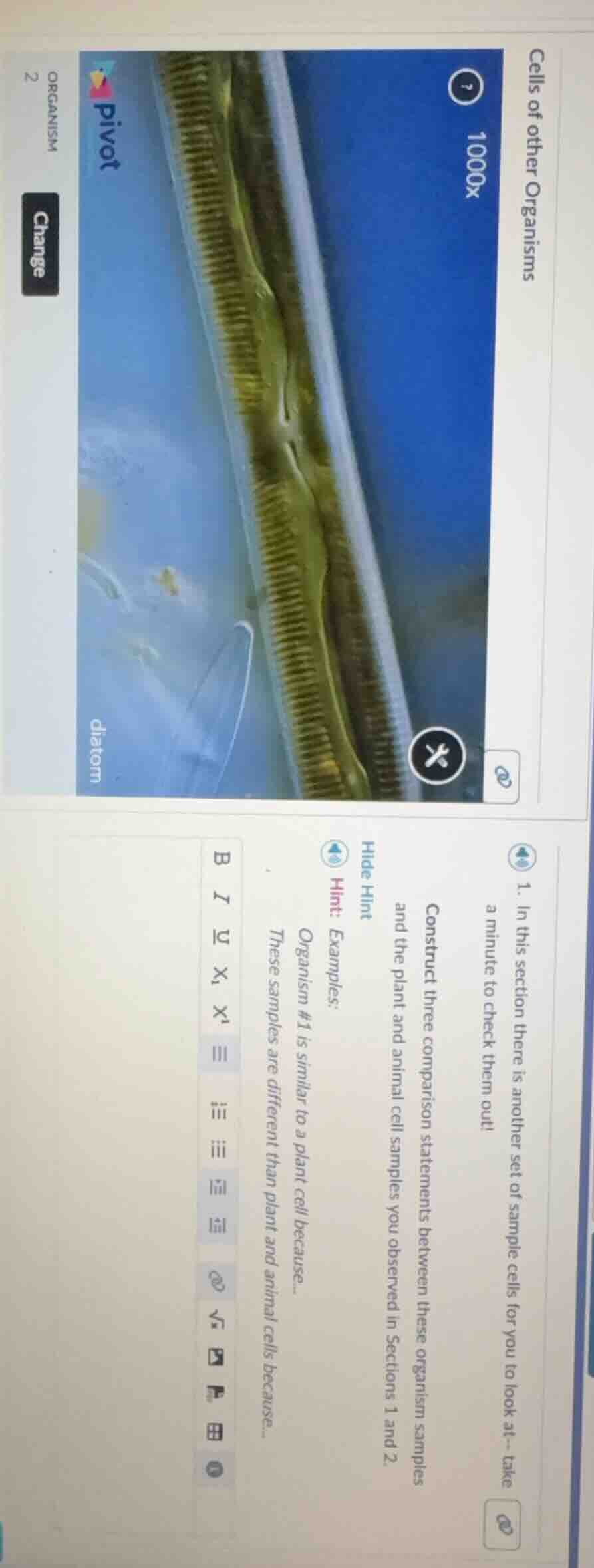
cells of other organisms
1000x
diatom
pivot
organism
2
change
- in this section there is another set of sample cells for you to look at-- take a minute to check them out!
construct three comparison statements between these organism samples and the plant and animal cell samples you observed in sections 1 and 2.
hide hint
hint: examples:
organism #1 is similar to a plant cell because...
these samples are different than plant and animal cells because...
Brief Explanations
- The diatom (Organism #1) is similar to a plant cell because it has a rigid, cellulosic-based cell wall (frustule) and contains chloroplasts for photosynthesis, just like plant cells.
- These samples are different than plant cells because diatoms have a unique silica-based frustule (not a purely cellulose cell wall) and lack structures like a large central vacuole or specialized organelles such as plasmodesmata found in many plant cells.
- These samples are different than animal cells because diatoms have a cell wall/frustule and chloroplasts, while animal cells lack both structures and are heterotrophic rather than photosynthetic.

Snap & solve any problem in the app
Get step-by-step solutions on Sovi AI
Photo-based solutions with guided steps
Explore more problems and detailed explanations
- Organism #1 is similar to a plant cell because it has a cell wall and chloroplasts for photosynthesis.
- These samples are different than plant cells because they have a silica-based frustule instead of a cellulose-only cell wall, and lack plant-specific organelles like large central vacuoles.
- These samples are different than animal cells because they have a rigid cell covering (frustule) and chloroplasts, which animal cells do not possess.